

Inside the MCAT Scoring System: How to Beat the Curve and Rank Higher
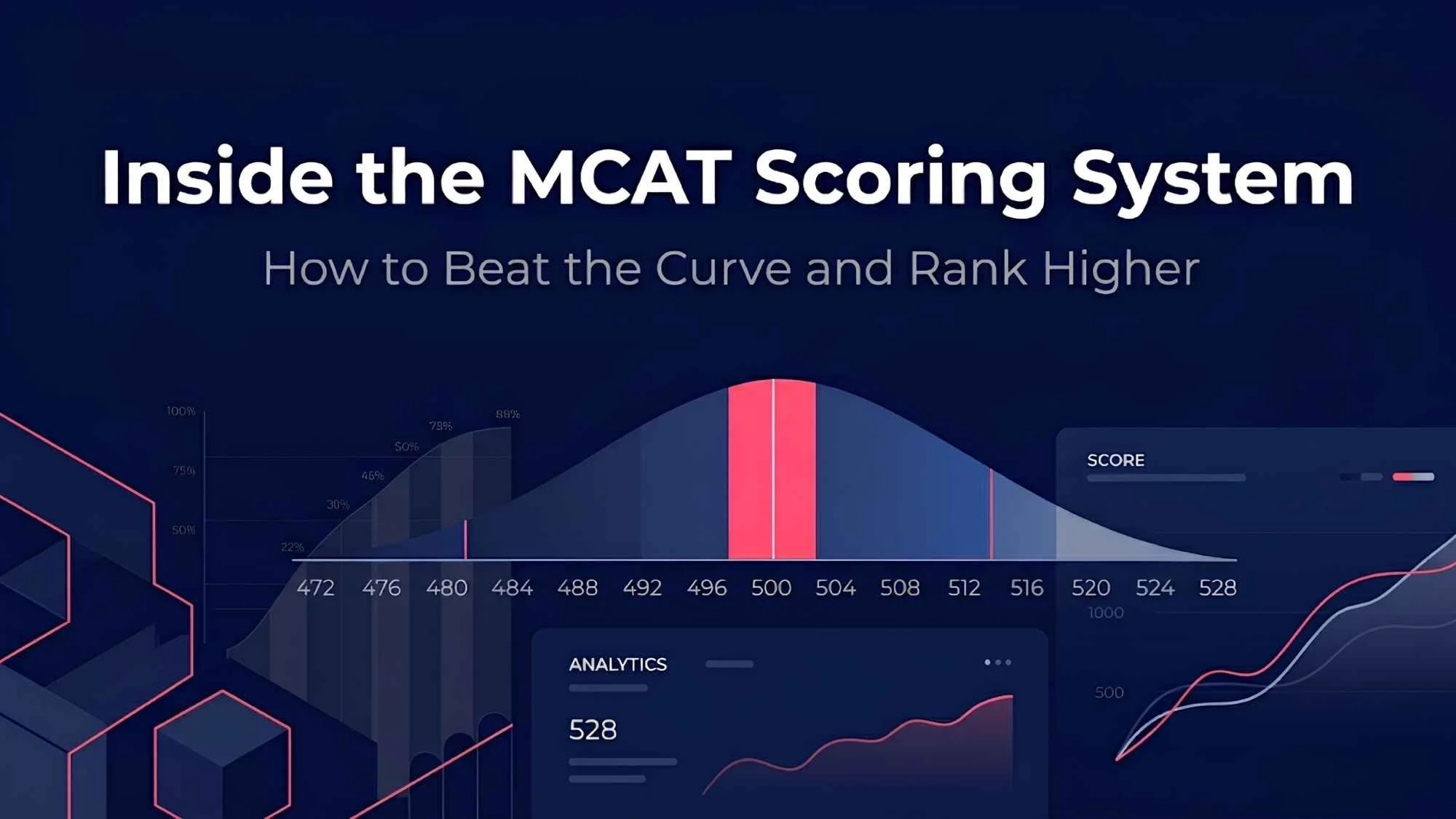
You get the email. You open it. And suddenly there’s a number staring back at you — four section scores, a total, and a percentile rank — and you have no idea whether to celebrate or panic. I’ve sat across from hundreds of students in exactly that moment. After scoring a 522 on the MCAT (Medical College Admission Test) myself and spending 15 years mentoring pre-med students at HYE Tutors, I’ve heard the same question more times than I can count: “What do these numbers actually mean for my future?”
The MCAT scoring system isn't complicated — but it is specific, and misreading it costs students real opportunities. By the end of this article, you'll know exactly what your score means, what schools expect, and what to do next.
How Does the MCAT Scoring System Work?
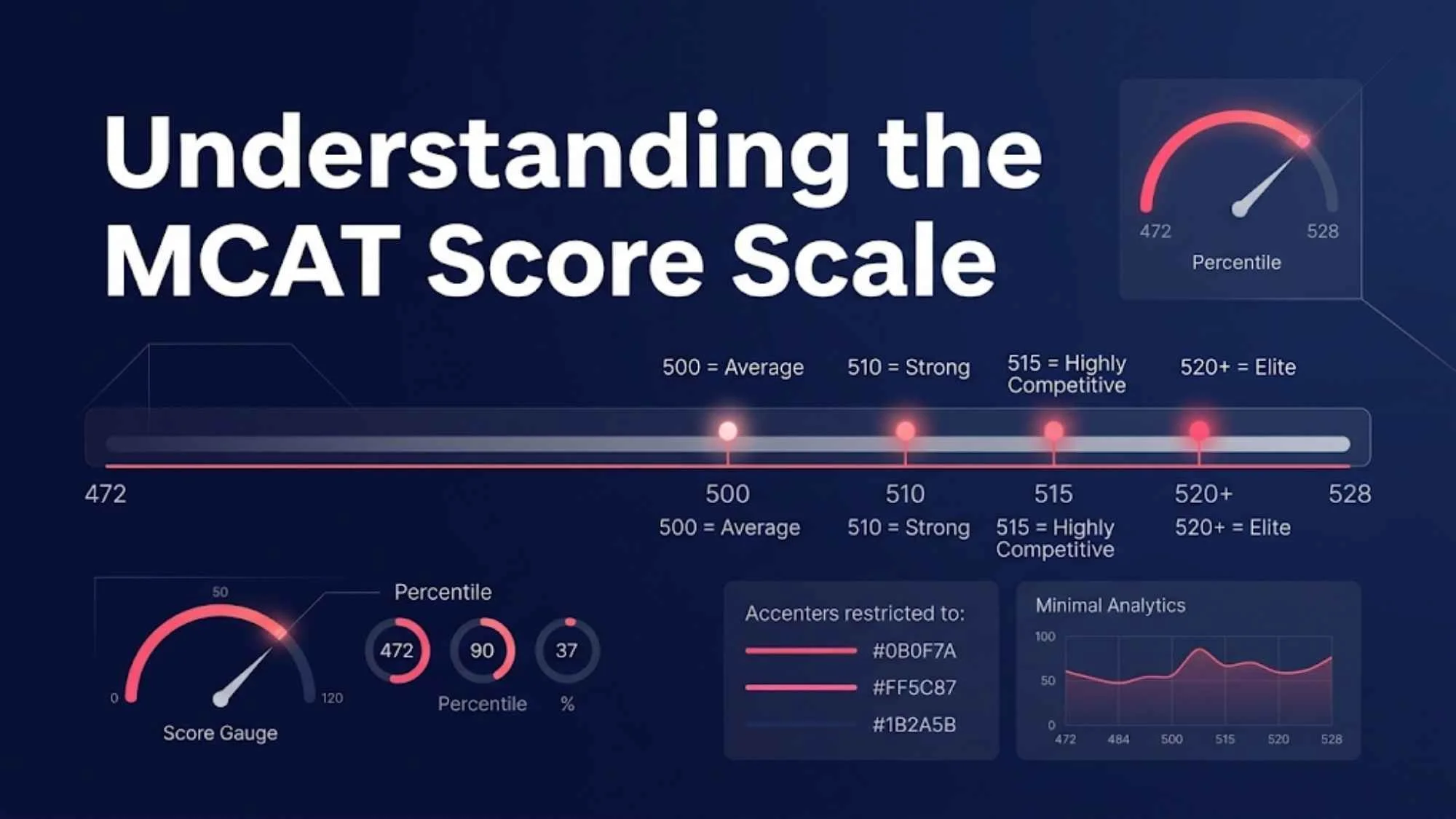
The MCAT has four sections, each scored on a scale of 118–132. Total scores range from 472–528, with 500 representing the 50th percentile. A score of 510–511 typically places a student in the 80th percentile. Medical schools evaluate both the total score and individual section scores. Understanding this breakdown is the first step to targeting the right score for your school list.
How the MCAT Scoring System Works — Section by Section
The first thing I tell every student sitting down with their score report: forget the total for a moment. Section scores tell the real story. In 15 years of mentoring, I've seen students with identical totals get very different admissions results — because schools look at how you scored in each section, not just the sum. A 510 with a 124 in CARS reads very differently to an admissions committee than a 510 with a 129 in CARS.
Here's the full breakdown of the four sections:
| Section | Abbreviation | Score Range | What It Tests |
|---|---|---|---|
| Chemical & Physical Foundations of Biological Systems | C/P | 118–132 | General chemistry, physics, biochemistry |
| Critical Analysis & Reasoning Skills | CARS | 118–132 | Reading, reasoning, analysis |
| Biological & Biochemical Foundations of Living Systems | B/B | 118–132 | Biology, biochemistry, organic chemistry |
| Psychological, Social & Biological Foundations of Behavior | P/S | 118–132 | Psychology, sociology, biology |
| Total Score | — | 472–528 | All four sections combined |
What Is a Good MCAT Score?
"Good" is always relative to your target school list — not to some universal standard. Every year I ask students the same question: what is your target school's median MCAT? That number — not 520 — is your real target. Here's a practical breakdown by score band:
500–504: Average range; competitive for some DO programs and Caribbean schools, but below average for most MD programs
505–509: Competitive for many MD and DO programs; within range for a strong application to many programs
510–514: Strong for MD programs; puts you above average at most U.S. medical schools
515+: Highly competitive for top-tier MD programs; you're in the conversation at the most selective schools
The average MCAT score for medical school matriculants at MD-granting schools hovers around 511–512, according to data published by the Association of American Medical Colleges (AAMC). But that average masks enormous variation across programs — which is exactly why your school list drives your target, not the other way around.
MCAT Percentile Rankings Explained
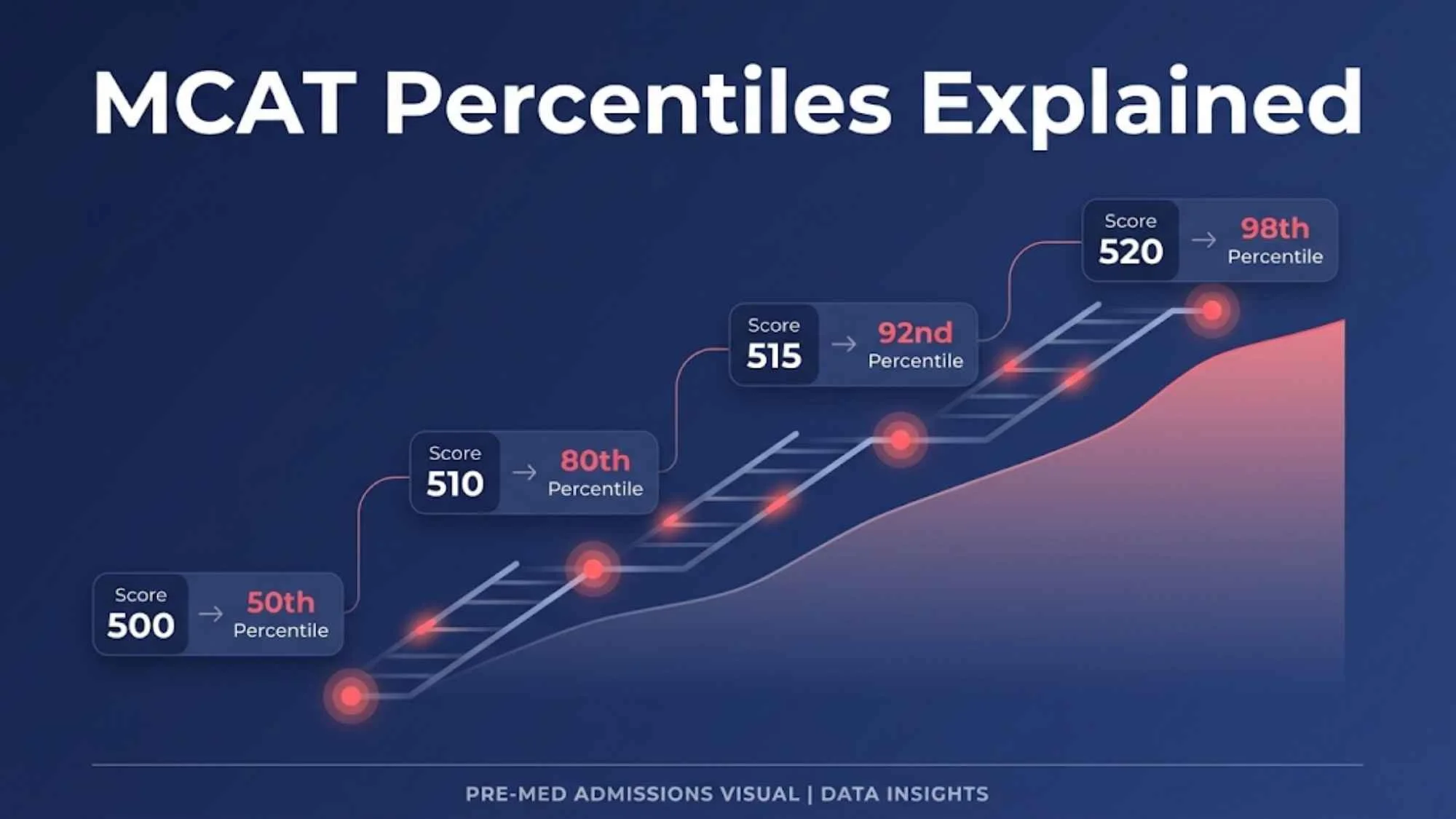
Percentiles confuse students more than raw scores — and understandably so. Here's the clearest way I know to explain it: a percentile tells you what percentage of test-takers you scored higher than. A score of 500 puts you at approximately the 50th percentile, meaning you outperformed half of everyone who sat the exam. A 510 lands near the 80th percentile — you're ahead of four out of five test-takers.
Here's the reference most students bookmark:
500 ≈ 50th percentile
510 ≈ 80th percentile
515 ≈ 92nd percentile
520 ≈ 98th percentile
One important nuance: AAMC recalculates percentile rankings annually. A 510 one year may represent a slightly different percentile the next, depending on the overall scoring distribution. Always verify current percentile data directly at aamc.org (no-follow).
This is the one insight I make sure every student I mentor internalizes: a 510 puts you ahead of 80% of test-takers. If your target school's median is 511, you are not far off — you are one strong retake away.
If you're still building your pre-med foundation and want to understand how the MCAT fits into your full medical school timeline, our MCAT Exam: Everything You Need to Know is the complete overview — start there.
How MCAT Scores Are Calculated — The Scaling Process
Here's one of the most practically important things a test-taker can know: there is no penalty for wrong answers on the MCAT. Your raw score is simply the total number of questions you answer correctly. From that raw score, the AAMC applies an equating process to convert it to the 118–132 scaled score for each section.
Why the equating step? Because different versions of the MCAT — administered on different test dates — vary slightly in difficulty. Equating corrects for those differences so that a 127 in C/P (Chemical and Physical Foundations of Biological Systems) means the same thing regardless of which date you tested. The goal is a level playing field across all test-takers, as described in the AAMC's official score reporting resources.
Mentor Tip
"One of the disciplines I followed rigorously when preparing for my 522 — I never left a question blank. With no penalty for wrong answers, a strategic guess is always better than nothing. If you've narrowed it to two options and time is running out, pick one. You cannot gain points by leaving blanks, and you lose nothing by guessing."
What MCAT Score Do You Actually Need?
Understanding how the scoring system works is step one. Using that understanding strategically is what separates the students who hit their targets from the ones who miss them by a few frustrating points. Your score goal should be anchored to your specific school list — not a general ambition to score as high as possible.
Here's the framework I walk every new student through at HYE Tutors:
Top-Tier MD Programs (Harvard, Johns Hopkins, Mayo Clinic School of Medicine, UCSF): Median scores range from 519–522. If these programs are on your list, target a minimum of 517 — and recognize that a very strong application overall is non-negotiable at this level.
Strong MD Programs: Median scores typically run 510–516. A score of 510+ puts you in a competitive position for a wide range of MD programs. This is the most strategically important range for the majority of applicants.
DO Programs and Caribbean Schools: Many programs in this tier accept scores in the 500–508 range. Research each program individually — medians and minimums vary significantly.
Section Score Minimums: Some schools screen applicants by section minimums (for example, no section below 127), not just total score. This is school-specific and student-specific; always verify requirements directly with each program.
Every year, I watch students apply to 20 schools with a 508 targeting programs with 515 medians. Research your school list before you set your score goal — not after. The AAMC's Medical School Admissions Requirements (MSAR) is the single best tool for verifying median MCAT scores by program.
For a full roadmap of how your MCAT score fits into the complete medical school application process, our How to Get into Medical School Step by Step Guidebook covers every milestone from GPA to interview prep.
Not sure what score your specific school list requires? Book a free session with an HYE Tutors MCAT mentor — we'll build your personalized target score roadmap in 30 minutes.
→ Book your free consultation at hyetutors.com
How to Improve Your MCAT Score — Mentor-Tested Strategies
Most students searching for MCAT scoring information aren't just trying to understand the numbers — they're trying to move them. Here are the strategies I've seen work consistently across hundreds of students at HYE Tutors. None of them are shortcuts. All of them are real.
1. Diagnose by Section First
Don't study everything equally. Pull your most recent practice test, identify your weakest section, and attack it first. Broad, unfocused studying is the most common reason students plateau. Your MCAT prep strategy should be a targeted intervention, not a review of everything you once learned.
2. CARS Requires Daily Practice — Not Cramming
Every year I see students lose 4–5 points in CARS (Critical Analysis and Reasoning Skills) by treating it like a content section. It isn't. You cannot cram your way to a 129 in CARS. Two passages a day, every day, from day one of your prep. That is the only CARS improvement strategy that consistently works, and it's backed by the structure of the test itself — as AAMC explains in its CARS section overview.
3. Use AAMC Official Materials as Your Final Benchmark
Third-party prep materials are valuable for building content knowledge. But AAMC's official practice materials — particularly the Full-Length Practice Exams — are your most accurate predictor of real test performance. Use them for calibration in the final weeks of your prep, not as a starting point.
4. Track Scaled Scores, Not Raw
Raw score fluctuations from practice test to practice test are normal and expected. What matters is the trend in your scaled scores over time. A scaled score improvement of even one point per section over a six-week period is a meaningful signal that your prep is working.
Choosing the right prep materials is just as important as strategy. Our breakdown of the Top 5 Best MCAT Prep Books 2026 will help you make sure you're studying from the right resources from day one.
FAQs
Q1: What is the highest possible MCAT score?
The highest possible MCAT score is 528, achieved by scoring a perfect 132 in each of the four sections. A 528 is extraordinarily rare — fewer than 0.1% of test-takers achieve it in any given year.
Q2: How many times can you take the MCAT?
According to current AAMC policy: 3 times per testing year, 4 times across two consecutive years, and 7 times in a lifetime. Verify the most current limits directly at aamc.org before registering, as policies can be updated.
Q3: How long are MCAT scores valid?
Most medical schools accept MCAT scores from the last 2–3 years; some accept scores up to 5 years old. Validity periods vary by program. Always verify each school's individual score policy before applying.
Q4: Is a 500 MCAT score good enough for medical school?
Honestly: a 500 is competitive for some DO programs and Caribbean schools, but it sits below average for most U.S. MD programs. If an MD program is your goal, setting a target above 504 gives you a much stronger applicant pool to work with.
Q5: Should I retake the MCAT if I scored 508?
It depends entirely on your target school list. If you're applying to top-50 MD programs with medians of 514–516, a retake is worth serious consideration. If your school list has medians in the 508–510 range, evaluate your full application holistically — GPA, research, clinical experience — before committing to a retake. We help students make this call every day. Book a free consultation at hyetutors.com and we'll work through it together.
Understanding your MCAT score is one piece of the admissions puzzle. If you're also working on your application, our guide on How to Write a Personal Statement for Medical School is the next step — and one of the most important documents you'll ever write.
The Bottom Line
The MCAT scoring system rewards students who understand it — and use that understanding strategically. Once you know how the four sections are scaled, what percentile your score represents, and what your target schools actually expect, you can stop studying in the dark and start building a real plan.
The insight I come back to most often, after 15 years and hundreds of students: the ones who break 515 aren't always the ones who studied the most hours. They're the ones who knew exactly what the score report meant and studied accordingly — diagnosing their weaknesses by section, building CARS endurance daily, timing themselves from week three, and calibrating with AAMC's official materials in the final stretch.
That's what the MCAT scoring system rewards: targeted, informed preparation.
If you want a personalized MCAT study plan built around your target score and school list, the mentors at HYE Tutors are ready.
Book your free consultation today
at hyetutors.com — and let's get to work.
About the Author:
This article was written by a senior HYE Tutors MCAT mentor affiliated with Columbia University and with experience teaching across UCLA and Harvard-affiliated programs. With a personal MCAT score of 522 and over 15 years of pre-med mentoring, our author has guided hundreds of students through every stage of the medical school admissions process — from initial score targets to acceptance letters. Their specialty is helping students translate a clear understanding of the MCAT scoring system into a strategic, personalized study plan that actually moves the needle.
