

MD vs DO: What’s the Difference Between These Two Medical Degrees?
If you're considering a career in medicine or simply choosing a physician, you've likely wondered: what is the difference between MD and DO?
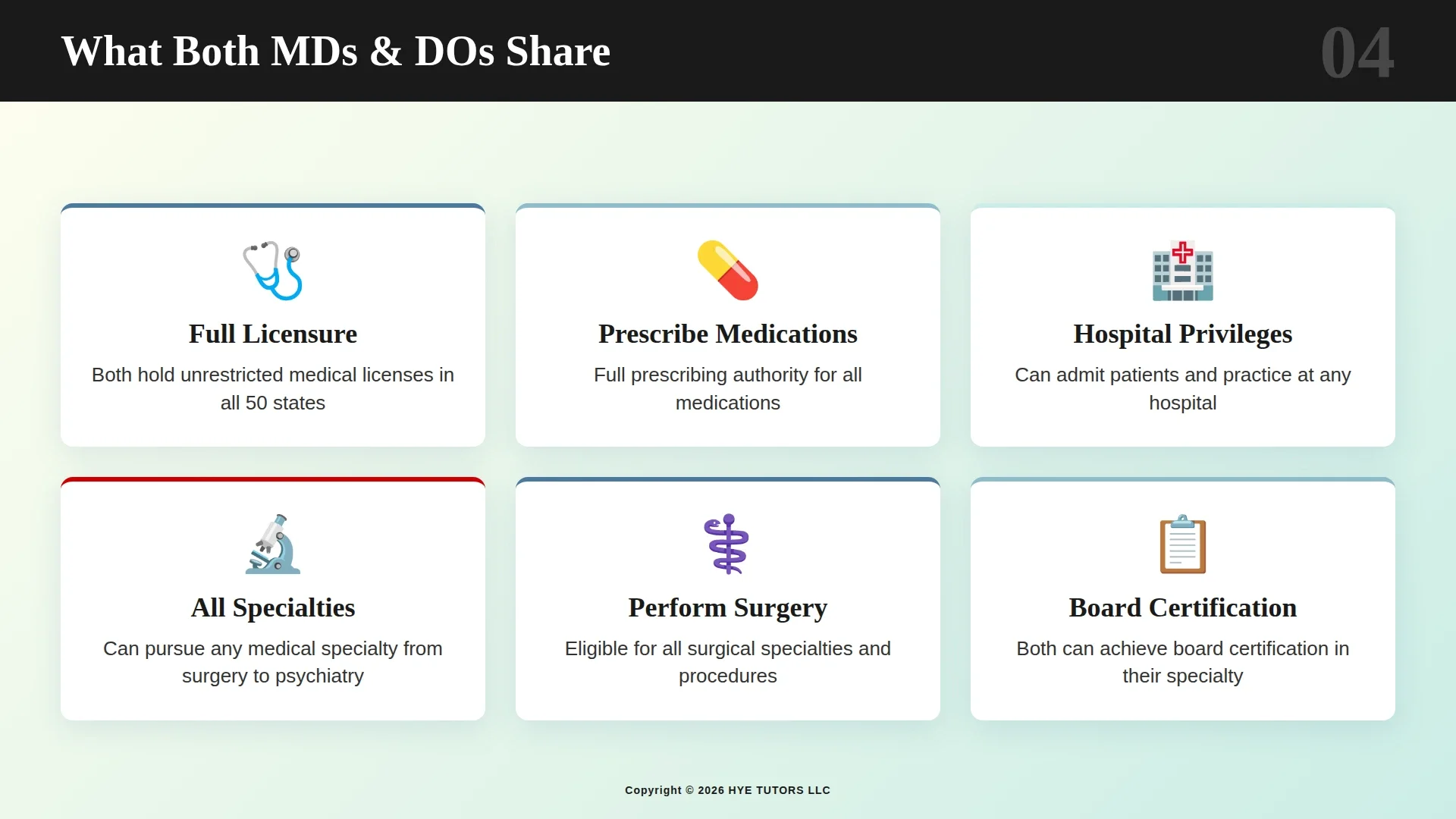
It's one of the most common questions among pre-med students, patients, and parents alike. The good news is that both MDs (Doctors of Medicine) and DOs (Doctors of Osteopathic Medicine) are fully licensed physicians who can diagnose, treat, prescribe medications, and perform surgery.
This guide will walk you through the similarities and differences between these two pathways—covering training, philosophy, licensing, specialties, and career outlook—so you can make informed decisions with confidence.
“MD (Doctor of Medicine) and DO (Doctor of Osteopathic Medicine) are both fully licensed physicians in the U.S. MDs practice allopathic medicine, while DOs include a whole-person and musculoskeletal-focused approach called Osteopathic Manipulative Treatment (OMT). Both complete medical school, residency, licensing exams, and can work in any specialty.”
What Is the Difference Between MD and DO?
Understanding what is the difference between MD and DO starts with recognizing that both degrees lead to the same destination: becoming a fully licensed physician. The distinctions lie primarily in educational philosophy, certain training elements, and the licensing exams required. Let's break down each component.
MD vs DO: Meaning and Philosophy
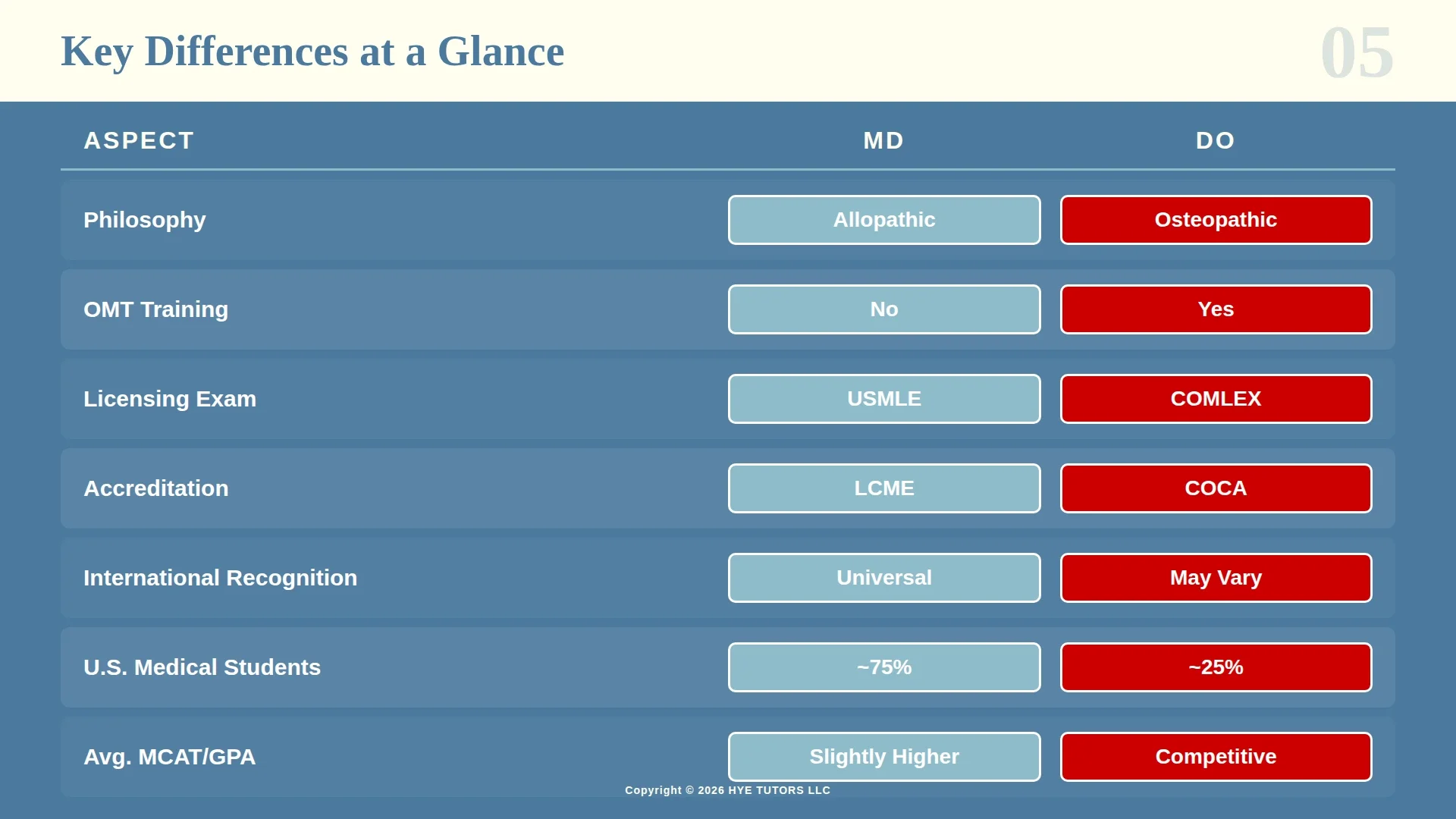
MD stands for Doctor of Medicine and represents the allopathic medical tradition. Allopathic medicine focuses on diagnosing and treating diseases using evidence-based interventions such as medications, surgery, and other therapies.
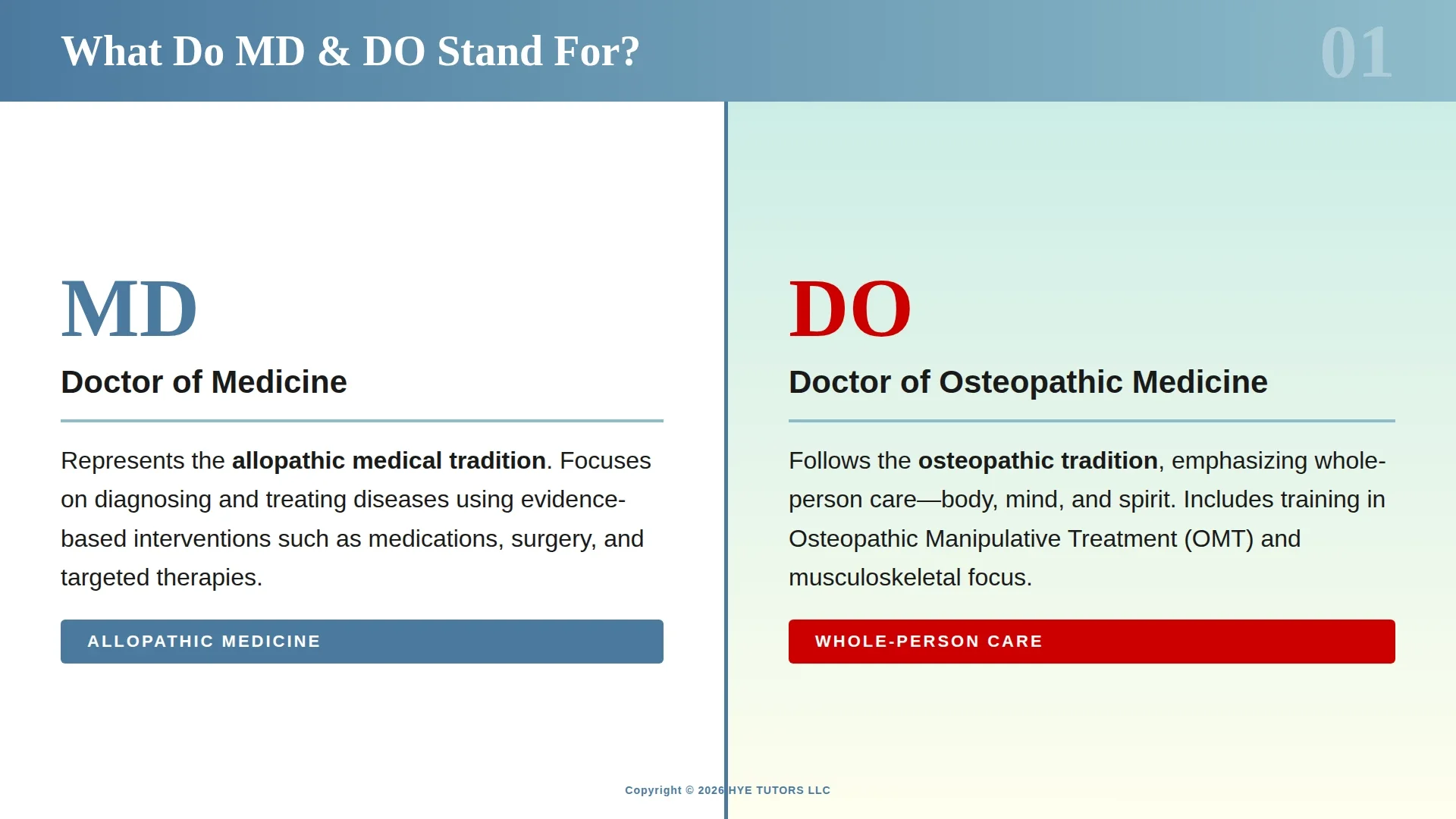
DO stands for Doctor of Osteopathic Medicine and follows the osteopathic tradition, which emphasizes treating the whole person—body, mind, and spirit—rather than just symptoms. DOs are trained to consider how the body's systems interconnect, with particular attention to the musculoskeletal system. They also learn Osteopathic Manipulative Treatment (OMT), a hands-on diagnostic and treatment approach.
Both MDs and DOs diagnose conditions, prescribe medications, order tests, and perform surgeries. Neither degree is inherently "better"—they represent different philosophical approaches to the same goal of patient care.
Medical School Training
Both MD and DO programs require four years of medical school following an undergraduate degree. The curriculum covers the same foundational sciences: anatomy, physiology, biochemistry, pharmacology, pathology, and clinical medicine. Students in both tracks complete extensive clinical rotations in hospitals and clinics during their third and fourth years.
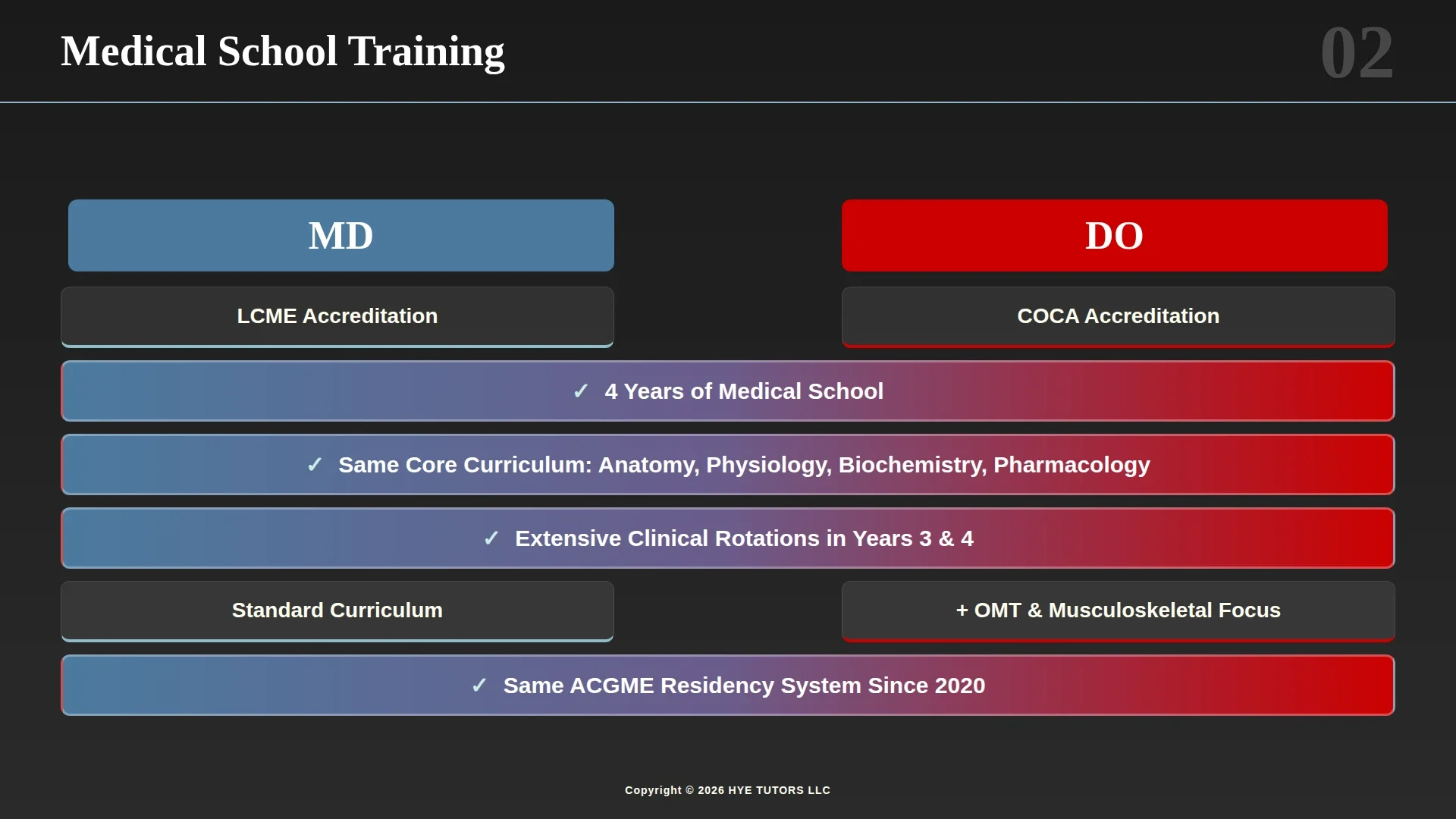
The key difference is that DO students receive additional training in the musculoskeletal system and learn OMT techniques. MD programs are accredited by theLiaison Committee on Medical Education (LCME), while DO programs are accredited by the Commission on Osteopathic College Accreditation (COCA). Both accreditation bodies maintain rigorous standards.
Licensing Exams: USMLE vs COMLEX
MDs take the United States Medical Licensing Examination (USMLE), a three-step exam series required for medical licensure. DOs take the Comprehensive Osteopathic Medical Licensing Examination (COMLEX-USA), which covers similar content plus osteopathic principles.
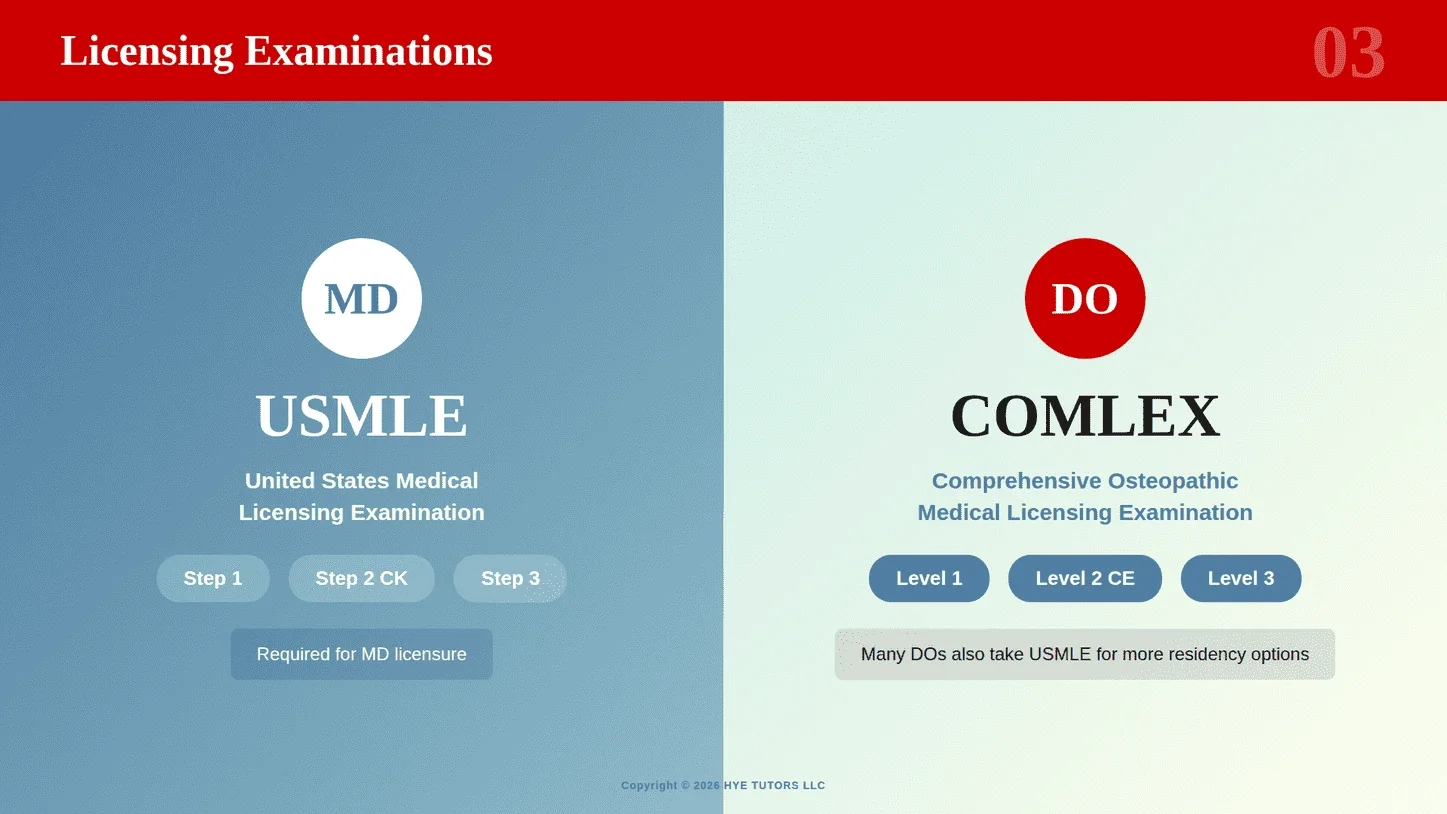
Many DO students choose to take both COMLEX and USMLE to maximize residency options, though this is not required. Both exam pathways qualify physicians for residency training and state medical licensure.
Residency & Specialties
Since 2020, all residency programs in the United States operate under a single accreditation system managed by the Accreditation Council for Graduate Medical Education (ACGME). This means MDs and DOs apply to and match into the same residency programs.
Both can pursue any specialty—from family medicine and pediatrics to orthopedic surgery, cardiology, and neurosurgery. While historical data showed DOs more commonly entering primary care, this trend is shifting as more DOs match into competitive specialties. Residency length depends on the specialty chosen (typically 3–7 years), not the medical degree type.
OMT (Osteopathic Manipulative Treatment)
OMT is a distinctive component of osteopathic training. It involves hands-on techniques to diagnose, treat, and prevent illness or injury. DOs may use OMT to address musculoskeletal pain, improve circulation, and support the body's natural healing processes.
Not all DOs use OMT regularly in practice—it depends on their specialty and patient population. Some integrate it into routine care, while others rarely use it. OMT is an additional tool in a DO's training, not a replacement for conventional medicine.
Recognition & Licensing
In the United States, both MDs and DOs hold full, unrestricted medical licenses. They have identical practice rights: prescribing medications, performing surgery, admitting patients to hospitals, and practicing in any state.
International recognition varies. MDs are universally recognized worldwide, while DO credentials may require additional verification in some countries. Physicians planning international careers should research specific country requirements.
Patient Care & Approach
Ultimately, the quality of patient care depends on the individual physician—not the letters after their name. Factors like training quality, clinical experience, communication skills, and ongoing education matter far more than whether someone holds an MD or DO.
Many MDs practice holistically, and many DOs work in highly specialized fields. The degree provides a foundation; the physician builds their practice from there.
MD vs DO: Salary, Residency Competitiveness & Job Outlook
One of the most common questions is whether MDs earn more than DOs. The answer: salary depends on specialty, not degree type. An orthopedic surgeon earns significantly more than a family medicine physician regardless of whether they hold an MD or DO. According to physician compensation surveys, there is no meaningful salary difference between MDs and DOs in the same specialty with similar experience.
Residency competitiveness follows similar patterns. Highly competitive specialties (dermatology, plastic surgery, orthopedics) are challenging for all applicants. Strong board scores, research experience, and clinical performance matter more than degree type. The Association of American Medical Colleges (AAMC) publishes annual match data showing both MDs and DOs successfully matching into all specialties.
The job outlook for both is excellent. The U.S. faces a projected physician shortage, creating strong demand across specialties. DO graduates have grown significantly—now representing about 25% of U.S. medical students—and this number continues rising.
MD vs DO: Acceptance Rates & Admissions Differences
MD programs have historically been more competitive statistically, with lower acceptance rates and higher average MCAT scores and GPAs among admitted students. However, this gap has narrowed considerably as osteopathic medicine has grown in prestige and popularity.
Both MD and DO admissions committees use holistic review, evaluating applicants on academics, clinical experience, research, extracurriculars, personal statements, and interviews. DO programs often emphasize demonstrated interest in primary care, community service, and patient-centered values—though applicants with all career interests are welcome.
Many students apply to both MD and DO programs to maximize their chances of admission. The number of osteopathic medical schools has grown substantially, creating more opportunities for aspiring physicians.
Should You Choose MD or DO? (For Students)
Choosing between MD and DO programs should be based on fit, not perceived prestige. Consider these factors:
Career goals: Both degrees lead to all specialties. If you're drawn to the osteopathic philosophy or OMT, DO programs align naturally. If you're certain about a highly competitive specialty, research match rates for specific schools.
School culture and location: Visit campuses, talk to current students, and evaluate where you'll thrive academically and personally.
Personal values: If whole-person care and the mind-body connection resonate with you, osteopathic programs may feel like home. Many MD programs also embrace holistic approaches.
Ultimately, becoming an excellent physician depends on your dedication, not your degree type. Apply where you believe you'll receive strong training and support.
Do Patients Need to Prefer One Over the Other?
For patients choosing a physician, the MD vs DO distinction matters far less than other factors. Both are fully qualified to provide medical care. When selecting a doctor, consider:
Board certification confirms the physician has completed rigorous training and passed specialty exams. Communication style matters—you want a doctor who listens and explains clearly. Experience in treating your specific condition is valuable. Most importantly, choose someone you trust and feel comfortable with.
If you're interested in OMT for musculoskeletal issues, seeking a DO might offer that additional option. Otherwise, focus on finding the right physician for your needs regardless of degree.
MD vs DO — Quick Comparison Table
| Area | MD | DO |
|---|---|---|
| Degree Name | Doctor of Medicine | Doctor of Osteopathic Medicine |
| Philosophy | Allopathic medicine | Osteopathic / whole-person approach |
| Medical School | 4 years | 4 years + OMT training |
| Licensing Exam | USMLE | COMLEX (may also take USMLE) |
| Residency System | ACGME | ACGME (same system) |
| Specialties Available | All specialties | All specialties |
| OMT Training | No | Yes |
| U.S. Licensure | Full license | Full license |
FAQs
Is a DO a real doctor?
Yes. DOs are fully licensed physicians who complete medical school, residency, and board certification. They have the same practice rights as MDs.
Can DOs perform surgery?
Absolutely. DOs can pursue any surgical specialty and perform all types of surgery after completing appropriate residency training.
Are DOs less competitive than MDs?
No. Both compete in the same residency match system. Success depends on individual qualifications, not degree type.
Are DOs recognized internationally?
Recognition varies by country. MDs are universally accepted, while DOs may need additional credential verification in some nations.
Do MDs learn holistic medicine?
Many MD programs incorporate holistic and patient-centered approaches. The philosophy isn't exclusive to osteopathic training.
Who earns more—MD or DO?
Salary depends on specialty and experience, not degree type. An MD and DO in the same specialty earn comparable incomes.
What is the difference between MD and DO in simple terms?
Both are fully licensed doctors. MDs follow allopathic training; DOs add osteopathic philosophy and OMT. Both can practice any specialty.
What is osteopathic medicine?
Osteopathic medicine emphasizes whole-person care, the body's self-healing ability, and the musculoskeletal system's role in health.
Which degree is better?
Neither is objectively better. Both lead to full physician licensure. Choose based on educational philosophy, school fit, and personal goals.
Conclusion
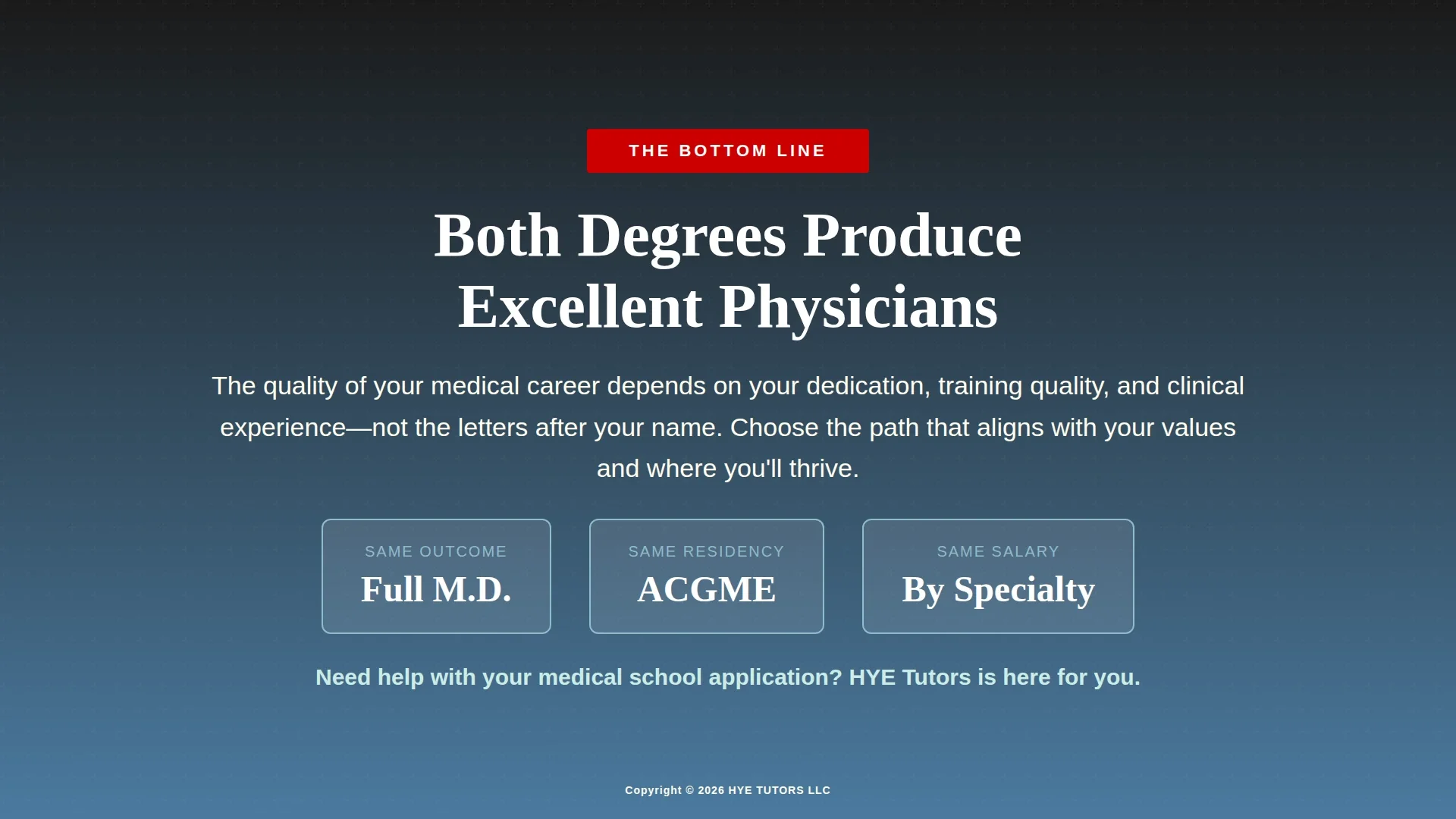
When it comes down to it, what is the difference between MD and DO? Both degrees produce fully licensed physicians capable of practicing in any specialty, prescribing medications, performing surgery, and providing excellent patient care. The primary distinction lies in educational philosophy—DOs receive additional training in osteopathic principles and OMT, while MDs follow the allopathic tradition.
For students, choose the path that aligns with your values and offers the training environment where you'll thrive. For patients, focus on finding a physician you trust—board certification, experience, and communication matter far more than the specific letters after their name. Both MDs and DOs are dedicated to the same mission: helping patients live healthier lives.
Preparing for medical school admissions? At HYE Tutors, we help pre-med students navigate the application process for both MD and DO programs. From MCAT preparation to personal statement coaching, our experienced tutors provide personalized guidance to help you put your best foot forward. Contact us today to start your journey toward medical school.