

30 STEM Education Activities for Elementary School.
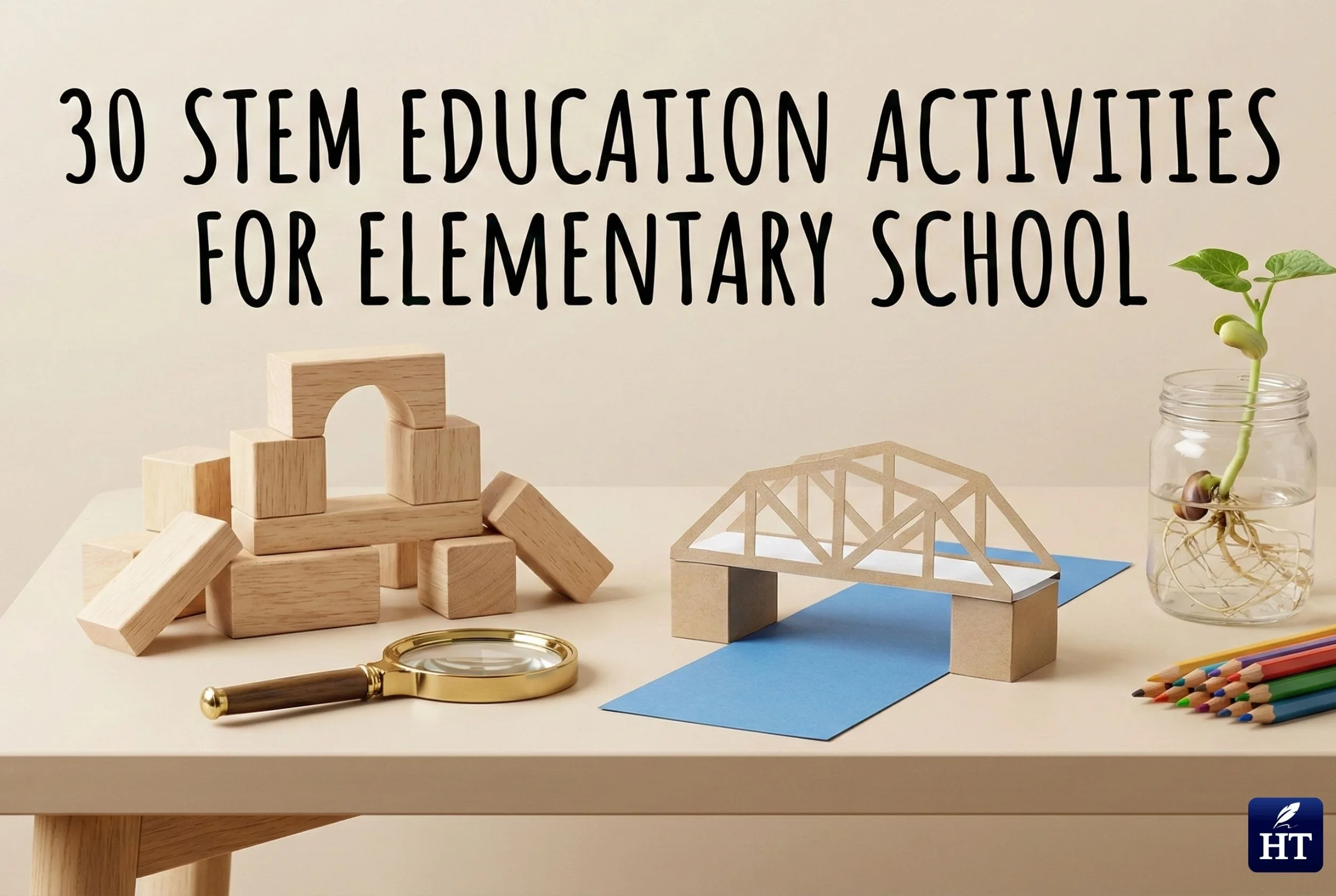
Children are natural scientists. They ask questions, test ideas, and explore the world around them with boundless curiosity. STEM education activities for elementary students tap into this innate wonder, transforming everyday moments into powerful learning opportunities. When a child builds a tower from blocks, measures ingredients for a recipe, or watches a caterpillar become a butterfly, they're already engaging in STEM thinking.
For parents and teachers, finding simple, practical activities that work in real classrooms and busy homes can feel overwhelming. The good news? Meaningful STEM learning doesn't require expensive equipment or advanced degrees. With a few household materials and a spirit of exploration, you can spark curiosity that lasts a lifetime.
In this guide, you'll learn what STEM education really means, why it matters during the elementary years, and discover 30 hands-on activities you can start using right away.
“STEM education activities for elementary students are hands-on learning projects that integrate science, technology, engineering, and math to build problem-solving and critical-thinking skills. Examples include building paper bridges, coding with simple apps, measuring plants, and experimenting with magnets. These activities make learning practical, creative, and engaging for young learners.”
What Is STEM Education in Elementary Schools?
STEM stands for Science, Technology, Engineering, and Math — but it's far more than four separate subjects taught in isolation. True STEM education weaves these disciplines together through real-world learning experiences. Instead of memorizing facts from a textbook, students investigate questions, design solutions, and discover how different fields connect.
In elementary classrooms, STEM often looks like play — and that's intentional. Young children learn best through hands-on exploration, collaboration with peers, and the freedom to make mistakes. A well-designed STEM activity invites students to ask "what if?" questions, test their predictions, and refine their ideas based on what they observe.
According to the National Science Teaching Association, effective STEM education emphasizes inquiry-based approaches that help students develop both content knowledge and essential skills like communication and teamwork.
Key elements of elementary STEM education include:
• Learning through real-life problem-solving scenarios
• Inquiry, experimentation, and creative thinking
• Collaboration and communication with classmates
• Exposure to future-ready thinking and digital literacy
Why STEM Education Matters in Elementary Grades
The elementary years represent a critical window for developing attitudes toward learning. Children who have positive, engaging experiences with science and math during these formative years are far more likely to maintain interest and confidence in these subjects later. Early exposure to STEM builds the foundational habits of curiosity, persistence, and logical thinking that serve students throughout their academic journey.
Why early STEM matters:
• Encourages logical thinking and systematic reasoning
• Builds resilience through trial-and-error learning
• Makes learning active, engaging, and memorable
• Connects classroom lessons to real-life situations
Benefits of STEM Education in Elementary Schools
Beyond academic achievement, STEM education nurtures social and emotional growth. When students work together to solve an engineering challenge or debate different approaches to a science question, they develop empathy, patience, and respect for diverse perspectives. Research from Edutopia consistently shows that project-based STEM learning improves student motivation and retention across all subject areas.
Key benefits include:
• Improves readiness for advanced math and science courses
• Develops teamwork and communication skills
• Promotes creativity and innovative thinking
• Builds confidence in approaching complex problems
30 STEM Education Activities for Elementary Students
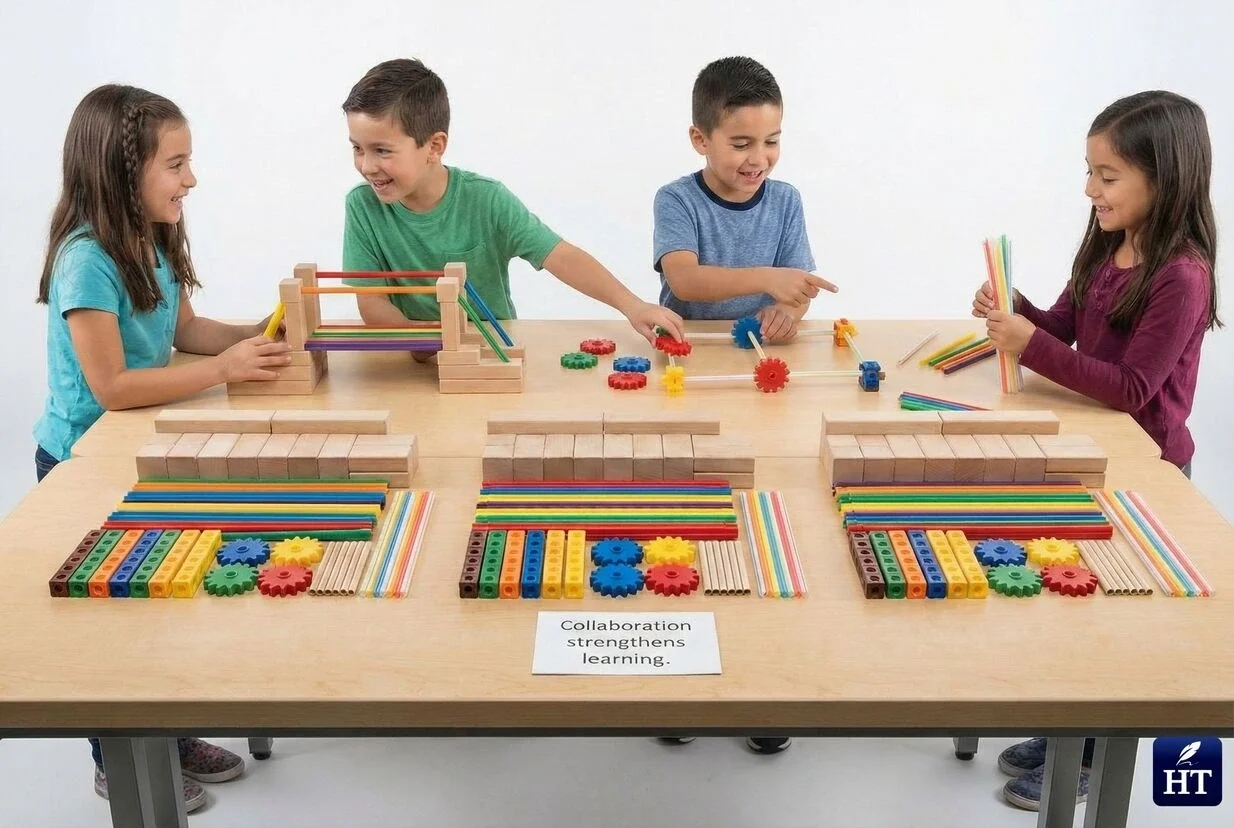
The following activities are designed to be easy, low-cost, and classroom-ready. Most require only basic materials you likely already have, and all can be adapted for different grade levels. Whether you're a teacher planning your next unit or a parent looking for weekend projects, these STEM education activities for elementary learners will inspire curiosity and discovery.
Simple Science Experiments
Science experiments allow children to observe cause and effect firsthand. These activities teach students to form hypotheses, conduct controlled tests, and draw conclusions from their observations — essential skills that extend far beyond the science classroom.
Volcano eruption experiment: Combine baking soda and vinegar to demonstrate chemical reactions and gas release.
Floating vs. sinking challenge: Test various objects to explore concepts of density and buoyancy.
Growing beans or plant observation: Track plant growth over time to learn about life cycles and variables affecting growth.
Magnet attraction exploration: Discover which materials are magnetic and investigate magnetic poles.
Shadow and sunlight investigation: Track shadows throughout the day to understand Earth's rotation.
Water cycle in a bag: Create a mini water cycle using a sealed plastic bag taped to a sunny window.
Color-mixing science: Mix primary colors to create secondary colors while discussing light and pigments.
Engineering & Building Challenges
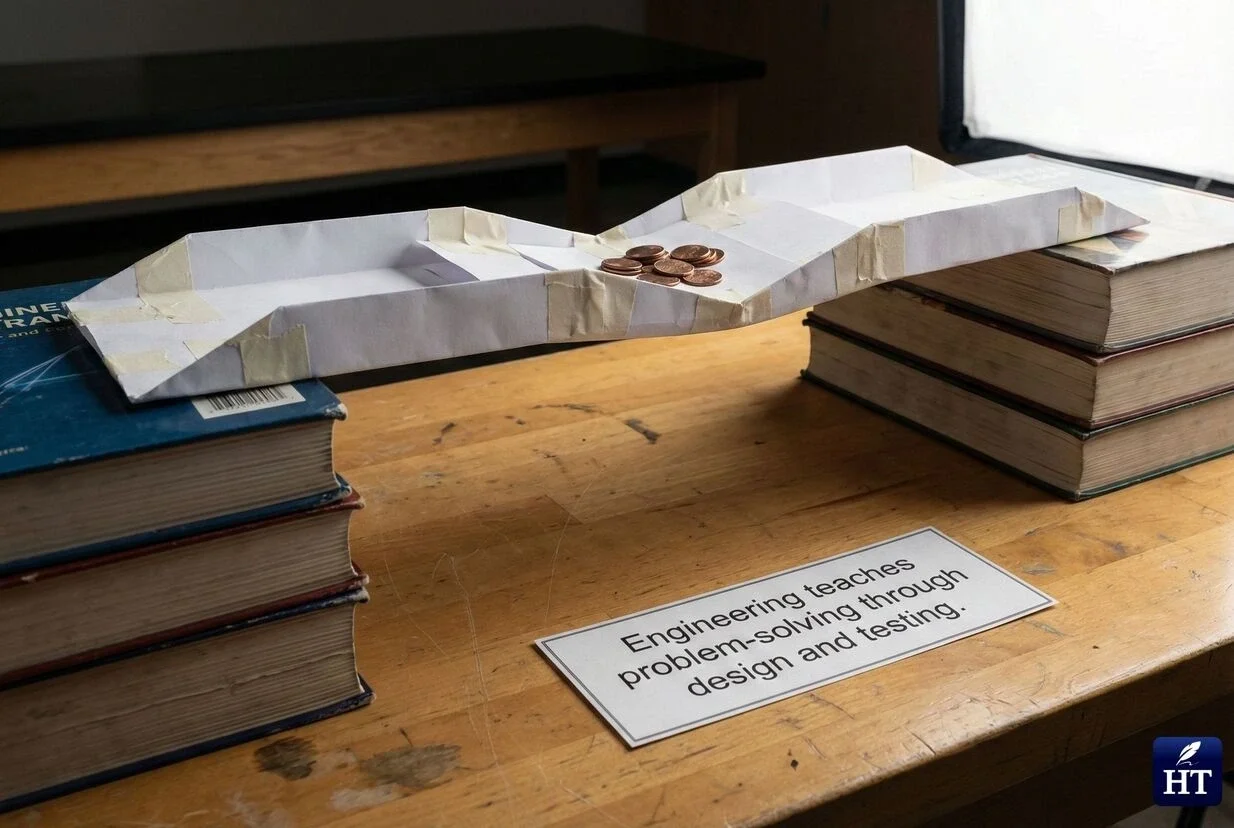
Engineering activities teach the design process: identifying a problem, brainstorming solutions, building prototypes, testing, and improving. Children learn that failure is a valuable part of learning, and that persistence leads to better outcomes.
Build a paper bridge: Design bridges using only paper and tape, then test how much weight they can hold.
Egg drop challenge: Create protective containers to keep an egg safe when dropped from height.
Design a mini roller coaster: Use cardboard tubes and tape to create tracks that keep a marble moving.
Build a newspaper tower: Construct the tallest freestanding tower possible using only newspaper and tape.
Create a popsicle-stick raft: Engineer a raft that floats and can carry small weights across water.
Marble run design: Build ramps and tunnels to guide a marble from start to finish.
Technology & Coding for Kids
Technology literacy begins with understanding that computers follow instructions. Even without devices, students can learn coding concepts through logical sequencing activities. When technology is available, beginner-friendly platforms make programming accessible and fun.
Block coding apps: Use platforms like Scratch Jr. or Code.org to learn programming through visual blocks.
Create digital storybooks: Combine creativity and technology by making interactive stories on tablets.
Robotics toys: Program simple robots like Bee-Bots to navigate mazes and complete missions.
Typing and computer basics: Build foundational digital skills through typing games and navigation practice.
Digital art projects: Use drawing applications to explore symmetry, patterns, and digital design.
Math-Based STEM Learning
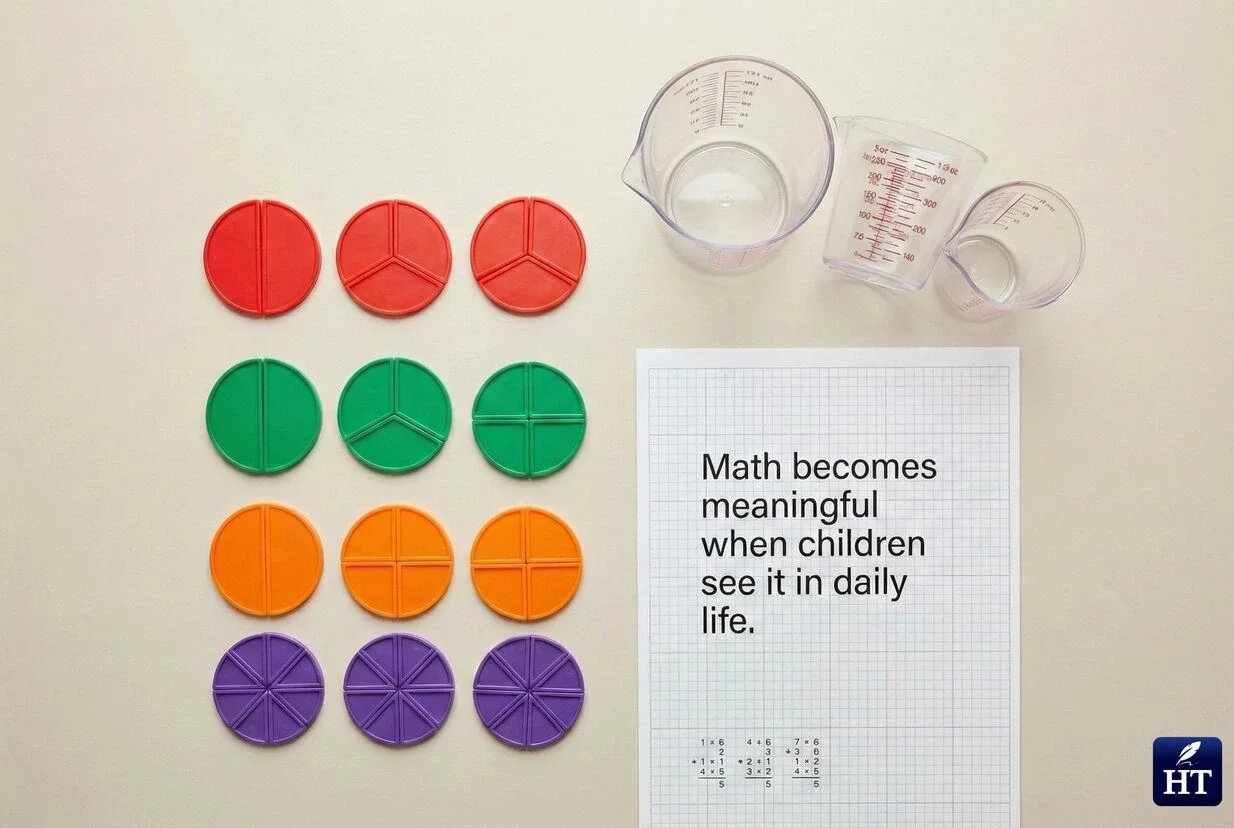
Mathematics comes alive when students see its relevance to daily life. These activities move beyond worksheets to show children how numbers, shapes, and patterns help us understand and navigate the world.
Real-life budgeting: Set up a classroom store where students use play money to practice addition and making change.
Shape-building: Use toothpicks and marshmallows to construct 2D and 3D geometric shapes.
Measuring ingredients: Follow recipes to practice fractions, measurement, and following sequential steps.
Fraction pizza: Create paper pizzas to visualize and compare fractions in a tangible way.
Pattern recognition projects: Identify and extend patterns using colors, shapes, or numbers.
Nature & Environmental STEM
Outdoor exploration connects STEM learning to environmental awareness. These activities encourage observation skills while fostering appreciation for the natural world and our responsibility to protect it.
Leaf classification: Collect and sort leaves by shape, size, color, and texture to practice categorization.
Weather recording: Track daily weather patterns and create graphs showing temperature and precipitation trends.
Bug-watching investigation: Observe insects in their habitats and document behaviors and characteristics.
Recycling challenge: Sort materials and design creative ways to reuse or reduce classroom waste.
Mini-garden planning: Design and plant a small garden, tracking growth and learning about ecosystems.
Team-Based STEM Challenges
Collaboration amplifies STEM learning. When students work together, they learn to communicate ideas, divide tasks, resolve disagreements, and celebrate shared achievements — skills essential for future careers in any field.
Group puzzle solving: Work together to solve logic puzzles that require multiple perspectives and approaches.
Build-and-test competitions: Teams design solutions to the same challenge and compare results.
Problem-based missions: Present real-world scenarios that require collaborative research and creative solutions.
Implementing STEM Education in the Elementary Classroom
Bringing STEM into your classroom doesn't require a complete curriculum overhaul. Start with small, manageable projects and gradually build complexity as you and your students gain confidence. The most important ingredient is a willingness to explore alongside your students — you don't need to have all the answers.
Safety should always come first. Review materials before activities, establish clear expectations for handling equipment, and create an environment where students feel comfortable asking questions and reporting concerns. The STEM.org Educational Research team recommends establishing consistent routines that help students know what to expect during hands-on activities.
Practical implementation strategies:
• Start small with simple projects that build confidence for both teacher and students
• Encourage trial-and-error by celebrating failed attempts as learning opportunities
• Ask open-ended questions that promote deeper thinking rather than single correct answers
• Allow creativity and variation in how students approach challenges
• Align activities with existing curriculum standards where possible
STEM Education for Elementary Teachers - Tips & Best Practices
You don't need to be a scientist or engineer to teach STEM effectively. Your role is to facilitate exploration, ask good questions, and create a safe space for experimentation. Some of the best STEM moments happen when teachers model genuine curiosity: "I'm not sure — let's find out together!"
Focus on the process rather than perfect outcomes. When a student's bridge collapses or their code doesn't work, that's not failure — it's valuable data for the next iteration. Celebrate effort, creative thinking, and persistence alongside successful results.
Best practices for STEM teaching:
• Use real-world examples that connect to students' lives and interests
• Celebrate progress and effort, not just perfect final products
• Encourage reflection and discussion after each activity
• Keep activities inclusive and accessible for all learning styles and abilities
FAQs
What is STEM education in elementary schools?
STEM education in elementary schools integrates science, technology, engineering, and math through hands-on, inquiry-based learning experiences. Rather than teaching these subjects separately, STEM approaches connect them through real-world projects that encourage exploration, problem-solving, and creative thinking in young learners.
Why is STEM important for elementary students?
STEM education during elementary years builds foundational thinking skills and positive attitudes toward learning. Early exposure develops curiosity, logical reasoning, and persistence — habits that benefit students across all subjects. Children who engage with STEM early are more likely to maintain confidence and interest in these fields throughout their education.
What are examples of STEM education activities for elementary students?
Examples include building paper bridges to test structural strength, growing plants to observe life cycles, coding with block-based apps like Scratch, creating simple machines from household materials, conducting sink-or-float experiments, and solving math puzzles through games. The best activities are hands-on, encourage questions, and connect to children's natural interests.
How do teachers implement STEM in classrooms?
Teachers can start by adding one hands-on activity per week, using simple materials already available. Effective implementation includes asking open-ended questions, encouraging multiple solutions to problems, allowing time for trial and error, and connecting activities to existing curriculum standards. Professional development and collaboration with other teachers also support successful STEM integration.
Is STEM only for advanced students?
Absolutely not. STEM education benefits all students regardless of academic level. Good STEM activities can be adapted for different abilities and learning styles. The focus on exploration and problem-solving means every child can contribute their unique perspective. In fact, STEM approaches often engage students who struggle with traditional instruction.
How does STEM help with problem-solving?
STEM activities teach structured problem-solving through the engineering design process: identifying problems, brainstorming solutions, building and testing prototypes, and refining based on results. Students learn to break complex challenges into manageable steps, analyze what works and what doesn't, and persist through setbacks — skills that transfer to challenges in any area of life.
Conclusion
STEM education transforms the elementary classroom into a place of wonder, discovery, and growth. When children build, experiment, code, and explore, they're not just learning content — they're developing the curiosity and confidence that will serve them throughout their lives.
You don't need fancy equipment or extensive training to make STEM happen. Start with one activity from this guide, watch your students engage, and build from there. Every paper bridge, every planted seed, every line of code is an investment in a child's future. STEM education activities for elementary students open doors to possibility — and the best time to open those doors is now.
Ready to get started? Pick one activity, gather your materials, and let the exploration begin.