

What Is a Compound Sentence? Definition and Examples
If you've ever wondered "what is a compound sentence," you're asking one of the most common questions in English grammar. Whether you're a student preparing for a test, a parent helping with homework, or someone brushing up on writing skills, understanding compound sentences will immediately improve your writing.
Many learners confuse compound sentences with complex sentences and compound-complex sentences — and honestly, the names don't make it easy! But here's the good news: once you understand the simple logic behind each type, the differences become crystal clear.
This guide will break down everything you need to know: what compound sentences are, how to build them correctly, the punctuation rules that trip people up, and how they compare to other sentence types. Let's make grammar simple.
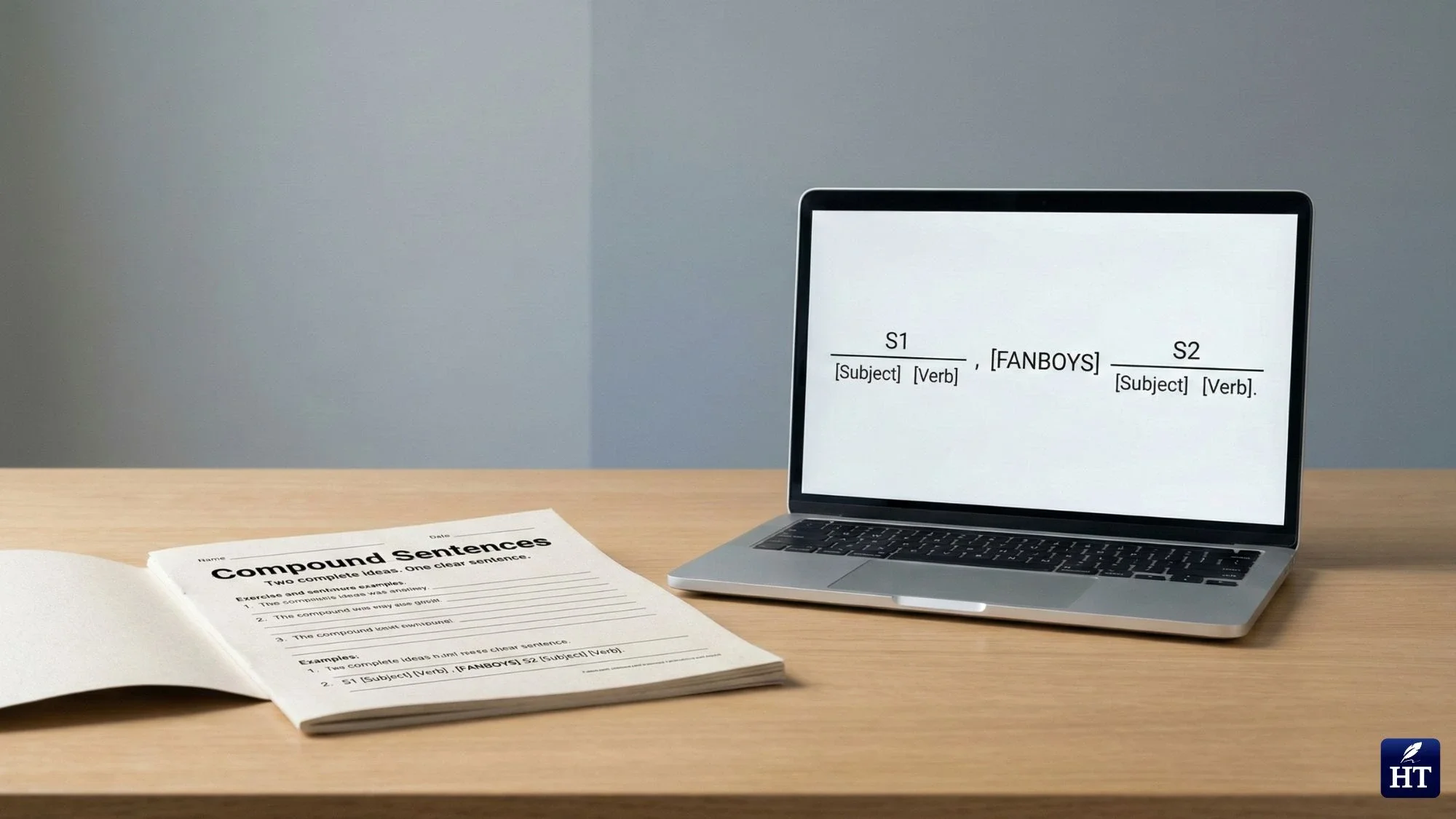
Compound Sentence:
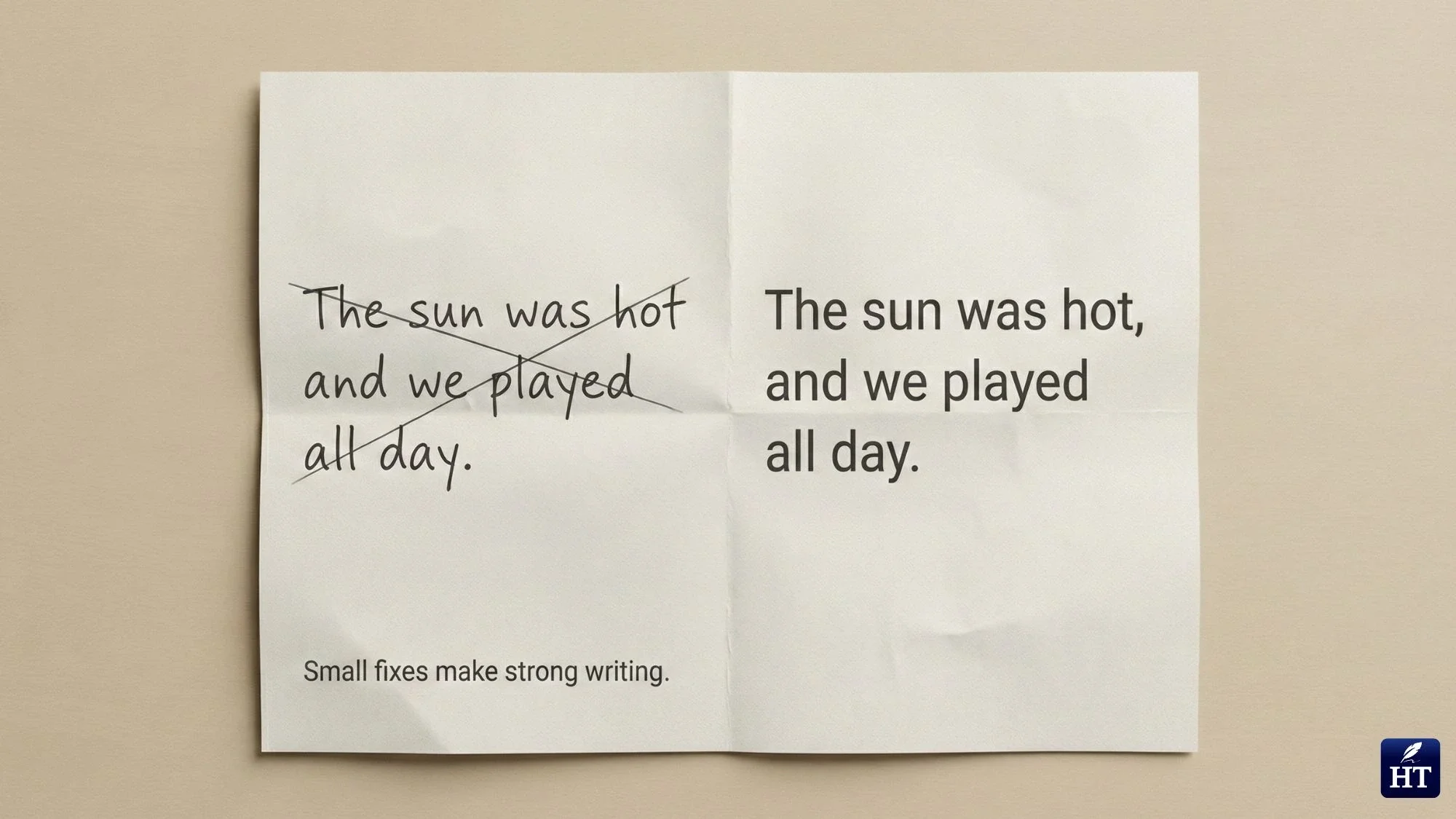
A compound sentence is a sentence made up of two independent clauses joined by a coordinating conjunction (like and, but, or) or a semicolon. Each clause can stand alone as a complete sentence. Example: I wanted to go for a walk, but it started raining.
What Is a Compound Sentence?
A compound sentence is one of the four main sentence types in English, and it's incredibly useful for making your writing flow smoothly. At its core, a compound sentence connects two complete thoughts that could each stand alone — but joining them shows the reader how the ideas relate to each other.
Think of it this way: instead of writing two short, choppy sentences, you combine them into one longer sentence that reads more naturally. Writers use compound sentences to show relationships between ideas — whether those ideas contrast, add to each other, or show cause and effect.
Definition
In plain English, a compound sentence contains two or more independent clauses connected by a coordinating conjunction or a semicolon. An independent clause is simply a group of words with a subject and verb that expresses a complete thought — in other words, it could be its own sentence.
According to the Purdue Online Writing Lab (OWL), understanding independent clauses is foundational to mastering sentence structure in English.
Key characteristics of compound sentences:
• Contains two (or more) independent clauses
• Clauses are joined with a coordinating conjunction or semicolon
• Each clause could stand alone as a complete sentence
• Used to connect related ideas smoothly and show relationships
Structure
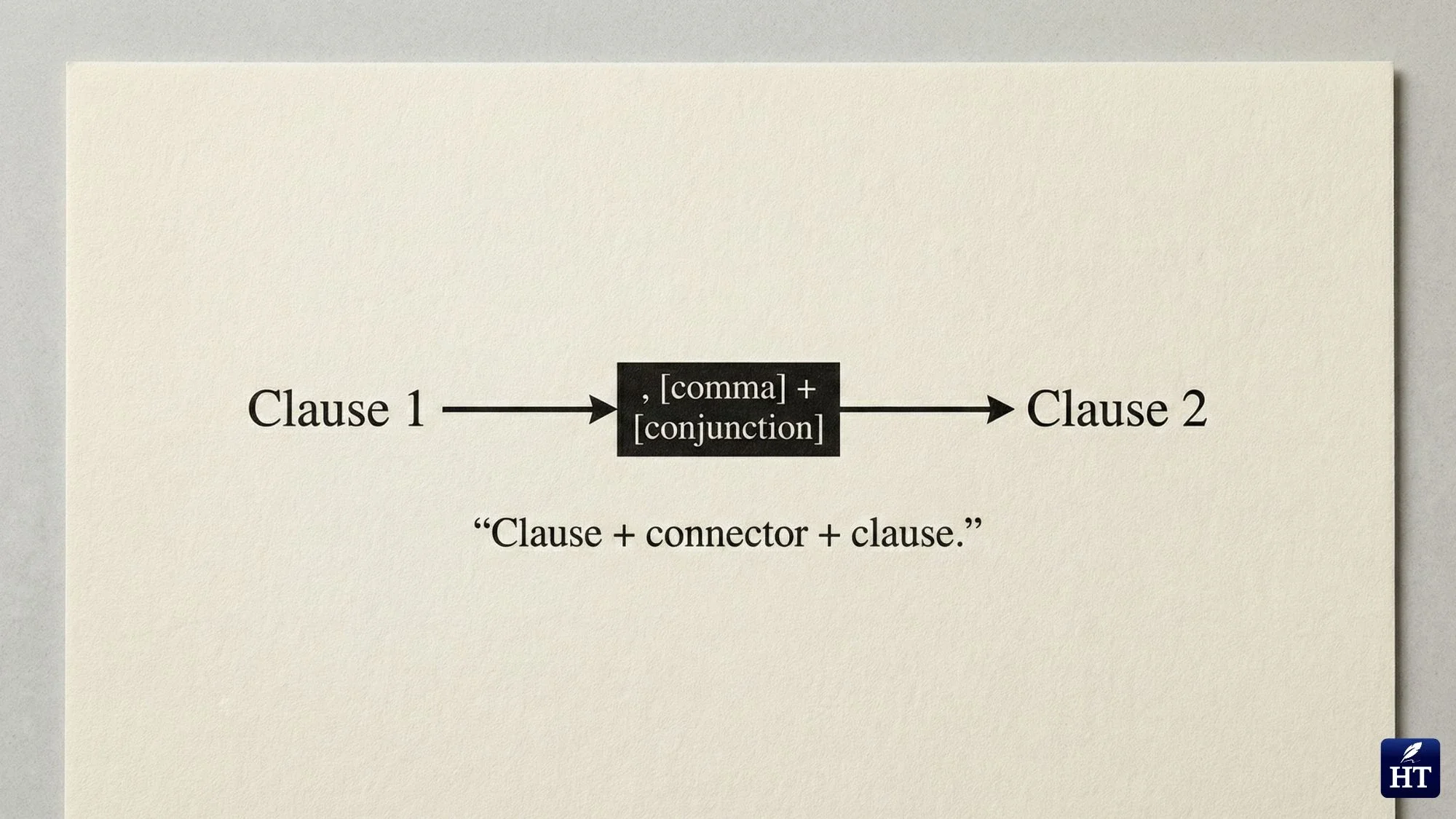
Every independent clause needs at least a subject (who or what the sentence is about) and a verb (what the subject does or is). When you combine two of these complete thoughts, you create a compound sentence. The key is that both parts must be able to stand alone — if one part depends on the other to make sense, you have a different sentence type.
The basic structure looks like this:
• Clause 1: Complete idea with subject + verb
• Connector: Coordinating conjunction (with comma) OR semicolon
• Clause 2: Another complete idea with subject + verb
• Important: Both clauses must relate logically to each other
Example: "The test was difficult, but I think I passed." Both "The test was difficult" and "I think I passed" are complete sentences on their own.
Coordinating Conjunctions (FANBOYS)
The most common way to create compound sentences is with coordinating conjunctions. There are seven of them, and English teachers use the acronym FANBOYS to help students remember them. Each conjunction signals a different relationship between the two clauses.
• F — For: Shows reason ("I brought an umbrella, for it looked like rain.")
• A — And: Adds information ("She finished her homework, and she went to bed.")
• N — Nor: Shows negative choice ("He doesn't like coffee, nor does he drink tea.")
• B — But: Shows contrast ("I studied hard, but I still found the test challenging.")
• O — Or: Offers a choice ("We can eat now, or we can wait until later.")
• Y — Yet: Shows unexpected contrast ("The movie got bad reviews, yet it became a huge hit.")
• S — So: Shows result ("It was raining, so we stayed inside.")
Punctuation Rules
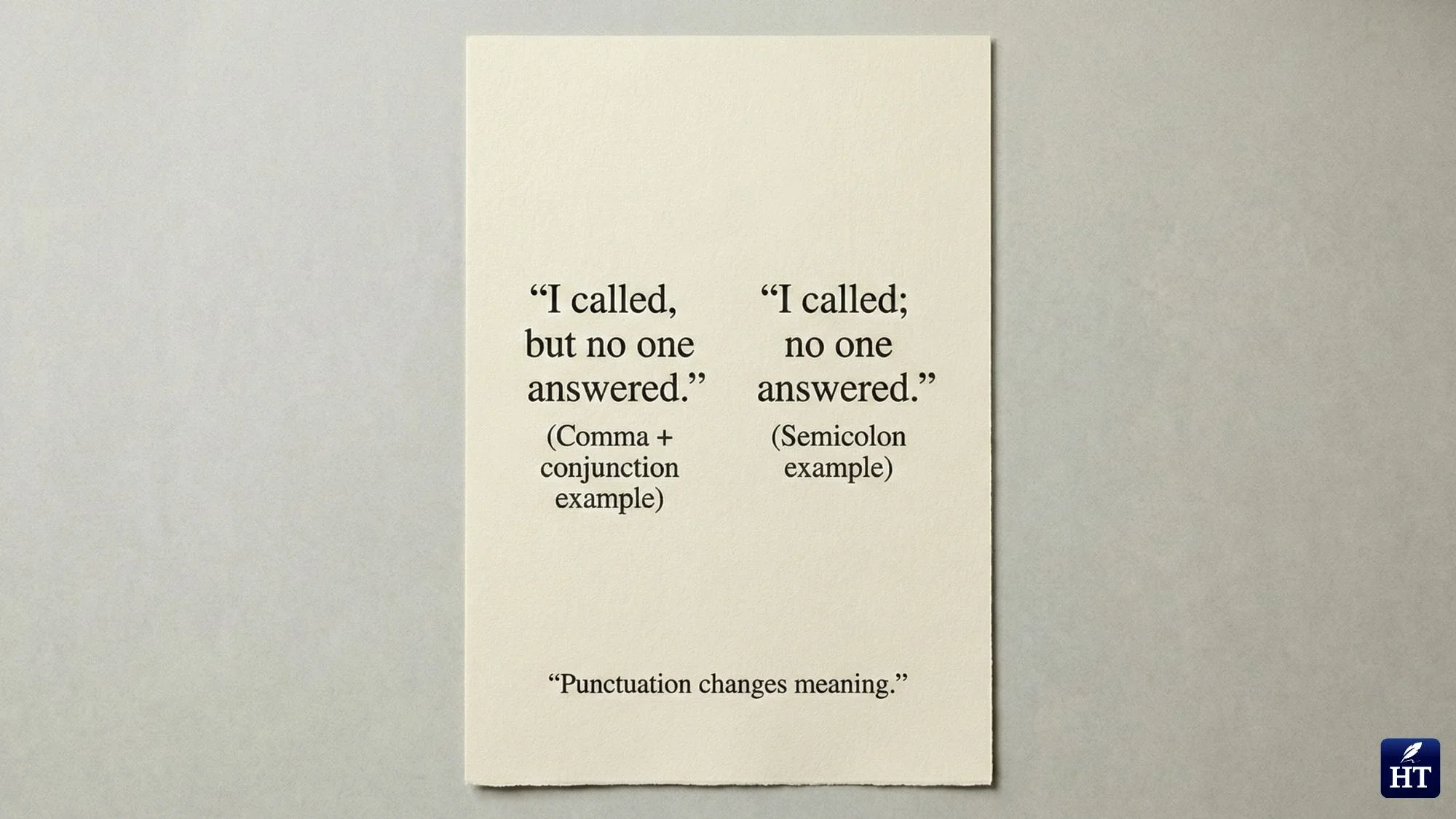
Punctuation is where many writers stumble with compound sentences. The rules are actually simple once you understand them, but getting them wrong creates errors that teachers specifically look for. Master these rules, and you'll avoid the most common grammatical mistakes.
• Comma + coordinating conjunction: Place a comma BEFORE the conjunction ("I was tired, so I went to bed early.")
• Semicolon alone: Use a semicolon between closely related clauses without a conjunction ("I was tired; I went to bed early.")
• Avoid comma splices: Never join two independent clauses with just a comma — this is a common error
• Avoid run-on sentences: Don't join independent clauses with no punctuation at all
Incorrect: "I was hungry, I made a sandwich." (comma splice) → Correct: "I was hungry, so I made a sandwich."
Compound Sentence Examples
The best way to understand compound sentences is to see them in action. Here are examples from everyday situations that students encounter:
1. "I finished my essay early, and I had time to review it before class."
2. "The library was closed, so we studied at the coffee shop instead."
3. "You can submit your assignment online, or you can hand it in during class."
4. "She wanted to join the team, but tryouts had already ended."
5. "The presentation was long, yet everyone stayed engaged until the end."
6. "I don't have a car, nor do I have a driver's license."
7. "Practice makes progress; perfection isn't the goal."
Common Mistakes and How to Avoid Them
Even strong writers make mistakes with compound sentences. Here are the errors I see most often — and how to fix them. Think of these as friendly coaching tips rather than criticism.
• Comma splices: Joining clauses with only a comma. Fix by adding a conjunction or using a semicolon.
• Missing conjunctions: Writing a run-on sentence with no connector. Add appropriate punctuation and/or conjunction.
• Overlong sentences: Stringing too many clauses together. Break into separate sentences for clarity.
• Mixing in dependent clauses: Adding "because" or "although" creates a complex sentence, not compound. Know the difference.
What Is a Compound - Complex Sentence?
Once you understand compound sentences, the next step is learning about compound-complex sentences. As the name suggests, a compound-complex sentence combines elements of both compound and complex sentences. It contains at least two independent clauses (the compound part) plus at least one dependent clause (the complex part).
Writers use compound-complex sentences when they need to express multiple related ideas with additional context or conditions. They're common in academic and professional writing, though they should be used strategically — too many can make writing feel dense. The Grammarly Blog offers additional examples for advanced learners.
• Definition: Two or more independent clauses + one or more dependent clauses
• Why writers use them: To show complex relationships between multiple ideas with added context
• Key identifier: Look for subordinating conjunctions (because, although, when, if) alongside coordinating conjunctions
Examples:
"Although I was tired (dependent), I finished my homework (independent), and I started studying for the test (independent)."
"She passed the exam (independent), and she celebrated with friends (independent) because she had worked so hard (dependent)."
Simple vs Compound vs Complex vs Compound - Complex Sentences
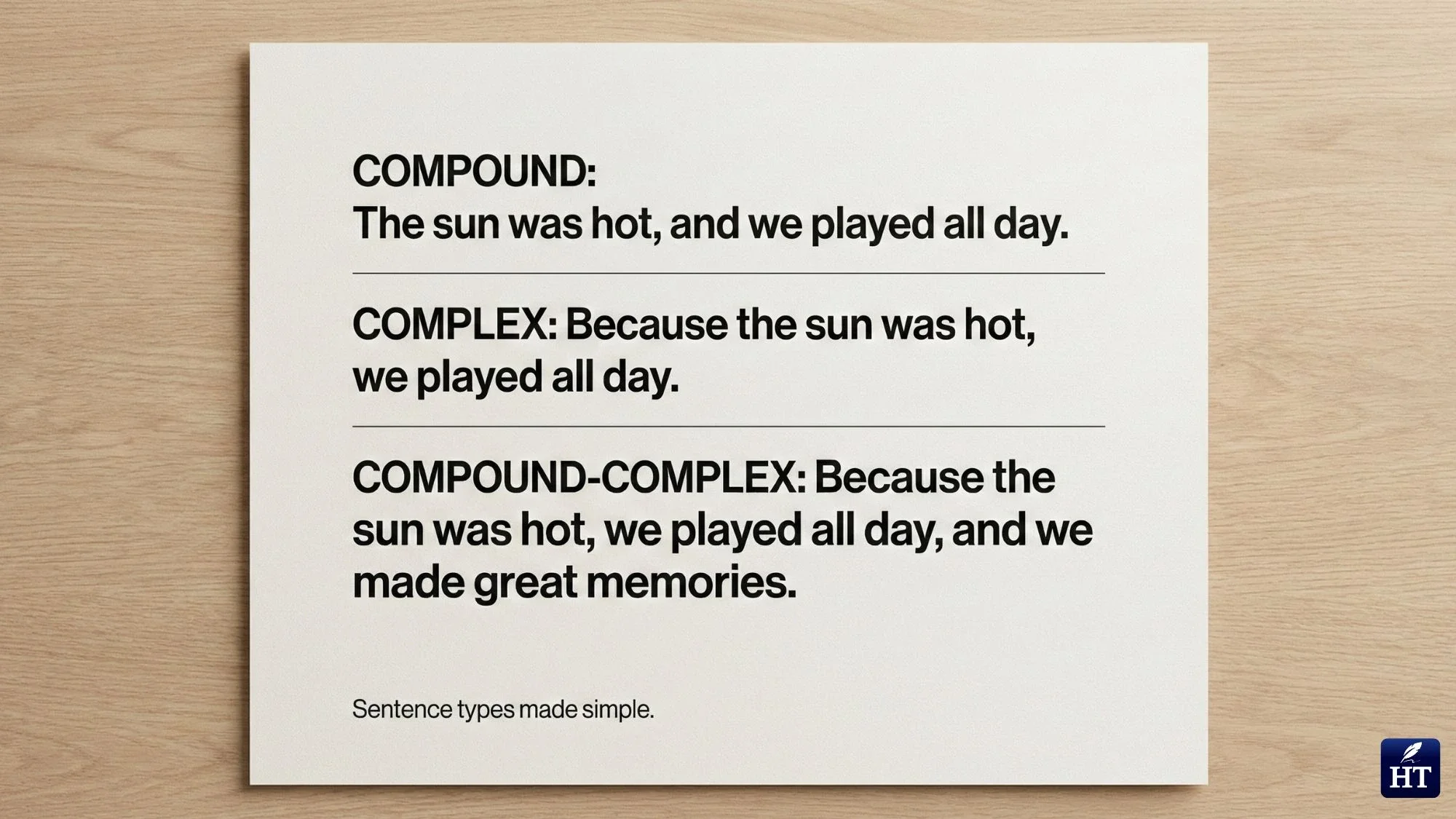
Students often search for the difference between compound and complex sentences, or ask about simple, compound, and complex sentence types. Here's a clear side-by-side breakdown to help you identify and use each type correctly. Understanding this comparison is essential for improving your writing variety.
• Simple sentence: One independent clause. Example: "She studied hard."
• Compound sentence: Two or more independent clauses. Example: "She studied hard, and she passed the test."
• Complex sentence: One independent clause + one or more dependent clauses. Example: "Because she studied hard, she passed the test."
• Compound-complex sentence: Two or more independent clauses + one or more dependent clauses. Example: "Because she studied hard, she passed the test, and she celebrated afterward."
The key difference between compound and complex sentences comes down to the type of clauses: compound sentences use only independent clauses, while complex sentences include at least one dependent clause that cannot stand alone.
Quick tip: If you see words like "because," "although," "when," "if," or "while," you're likely looking at a dependent clause — which means the sentence is complex or compound-complex, not simply compound.
Conclusion
Now you know the answer to "what is a compound sentence" — it's simply two complete thoughts joined together to create smoother, more connected writing. By combining independent clauses with coordinating conjunctions or semicolons, you show readers how your ideas relate to each other.
Remember the FANBOYS (for, and, nor, but, or, yet, so), place your comma before the conjunction, and make sure both clauses can stand alone. With a little practice, creating compound sentences will become second nature.
Keep practicing, and your writing will improve one sentence at a time. You've got this!