

What Is STEM Education and Why Is It Important?
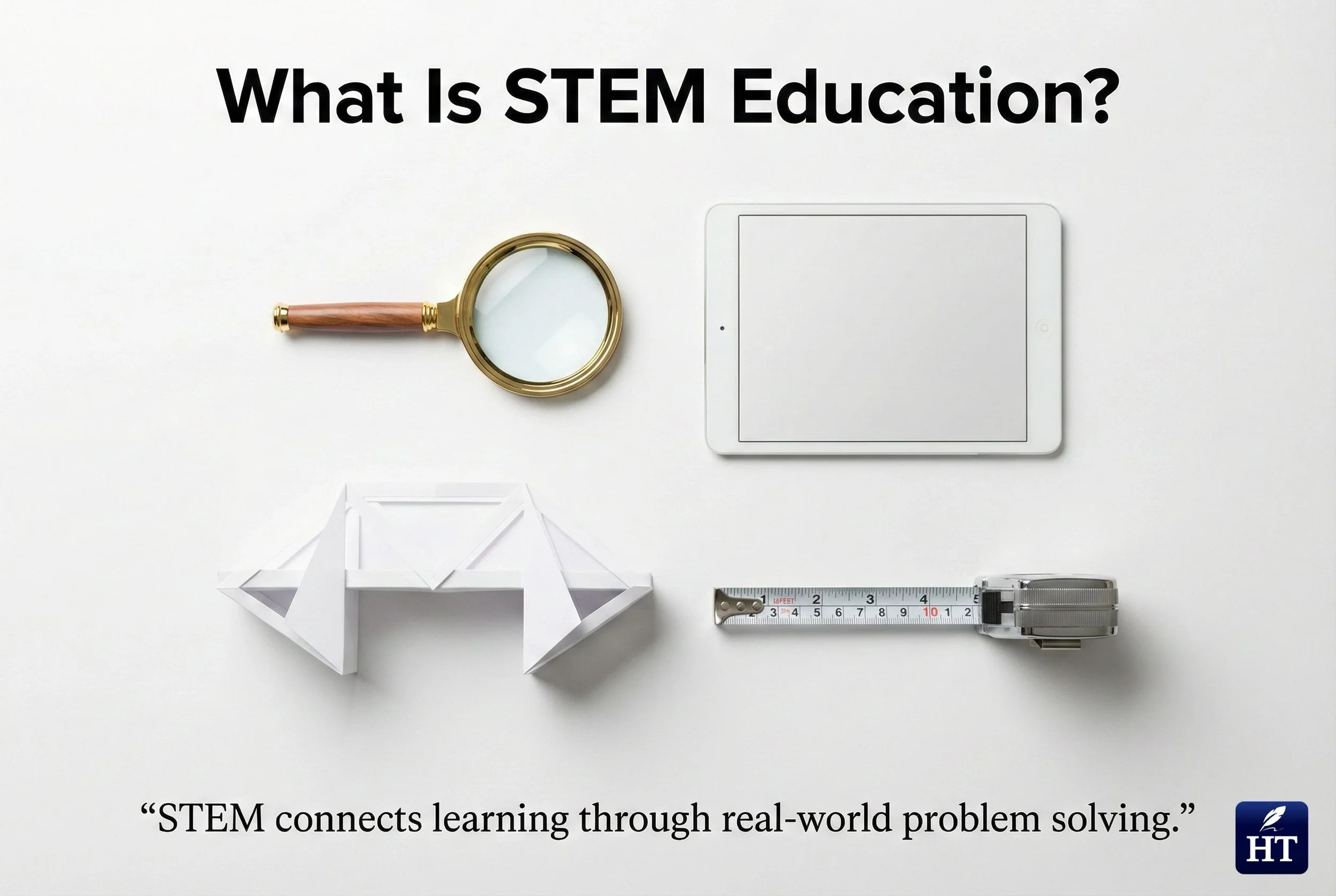
If you've ever searched "what is STEM education," you're not alone. The term appears everywhere — in school brochures, news articles, and conversations about preparing children for the future. Yet despite its popularity, STEM can sound technical and intimidating to parents, teachers, and students who simply want to understand what it means.
Here's the reassuring truth: STEM is simply an engaging, real-world approach to learning that blends Science, Technology, Engineering, and Math into connected experiences. Rather than memorizing isolated facts, students explore how things work, solve problems, and build skills they'll use throughout their lives.
This guide will explain STEM in simple language, show you why it matters for learning and careers, and help you understand how it works in real classrooms. Whether you're a parent exploring options for your child or a teacher looking to bring more hands-on learning into your practice, you'll find clear answers here.
“STEM education is a teaching approach that integrates science, technology, engineering, and mathematics into real-world, problem-solving learning. Students use inquiry, creativity, and hands-on projects to explore how things work rather than only memorizing facts. STEM helps build critical-thinking, teamwork, and future-ready skills needed in modern education and careers.
”
What Is STEM Education?
At its core, STEM education represents a shift in how we think about teaching and learning. Instead of treating science, technology, engineering, and math as separate subjects learned in isolation, STEM weaves them together through real-world challenges and projects. The goal isn't just to transfer knowledge — it's to develop thinkers, problem-solvers, and innovators.
Traditional education often asks students to absorb information and demonstrate understanding through tests. STEM education asks students to apply what they learn — to design, build, test, and improve. This approach mirrors how professionals actually work in scientific and technical fields, where solutions emerge through experimentation and collaboration rather than textbook memorization.
According to the U.S. Department of Education, STEM education prepares students for a world that increasingly demands technological literacy and analytical thinking across nearly every profession.
Meaning of STEM — Science, Technology, Engineering & Math
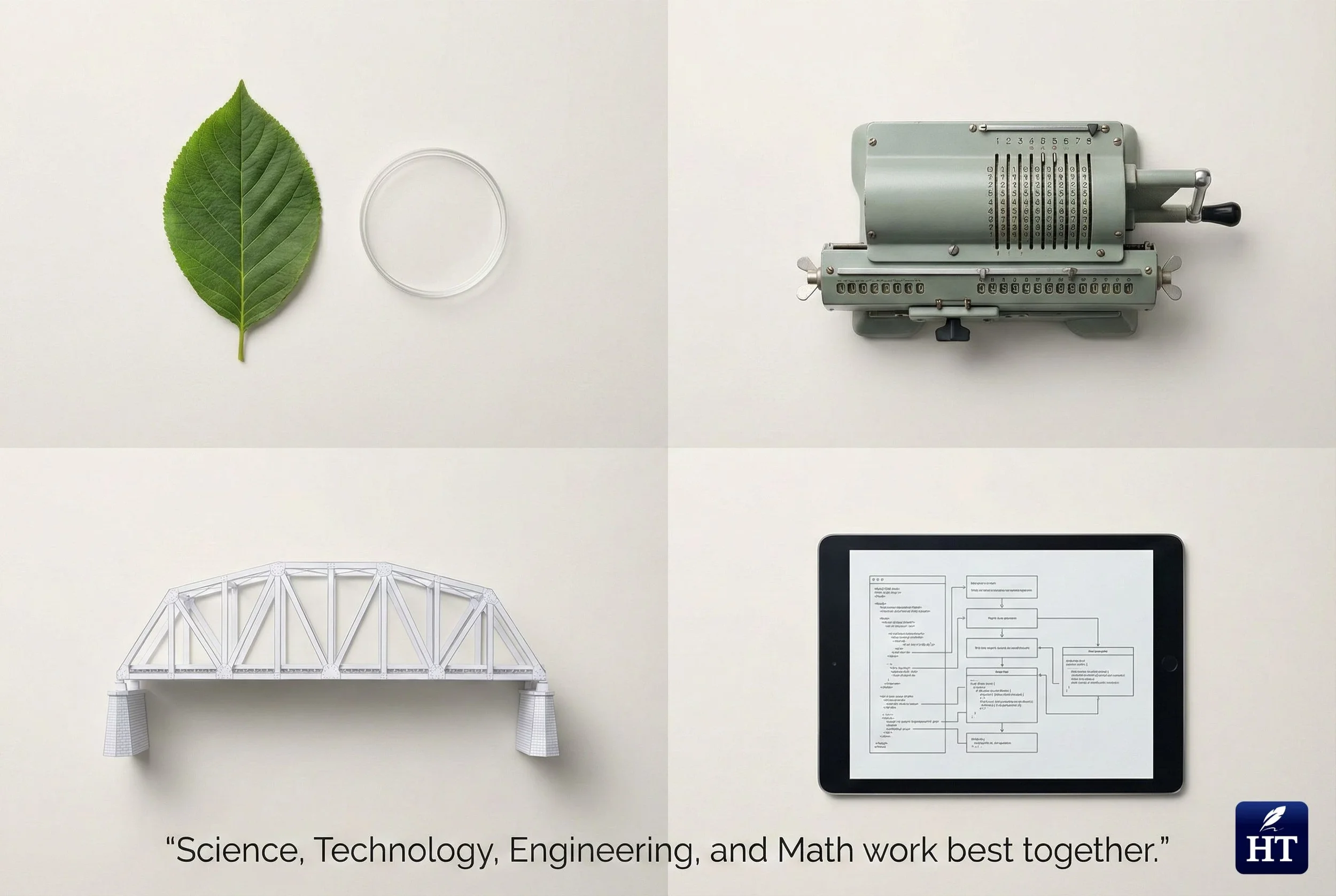
The acronym STEM represents four interconnected disciplines. While each has distinct characteristics, effective STEM education emphasizes how they work together rather than treating them as separate silos. A student designing a water filtration system, for example, uses scientific principles, technological tools, engineering design processes, and mathematical calculations — all within a single project.
• Science: Asking questions about the natural world and testing ideas through observation and experimentation
• Technology: Using tools, software, and digital resources to solve problems and communicate solutions
• Engineering: Designing, building, and improving solutions through systematic processes
• Math: Measuring, analyzing data, recognizing patterns, and reasoning logically
What Is STEM in Education?
It's important to understand that STEM is a teaching method, not just a collection of subjects. A school might offer science and math classes without truly providing STEM education if those classes rely solely on lectures and worksheets. True STEM learning centers on inquiry — students asking questions, investigating possibilities, and constructing understanding through direct experience.
Research from the National Science Foundation shows that inquiry-based STEM approaches significantly improve student engagement and retention compared to traditional instruction methods.
• Students investigate real problems that matter to them and their communities
• Learning is hands-on and practical, not abstract and theoretical
• Collaboration with peers is encouraged and valued
• Mistakes are treated as valuable learning opportunities, not failures
STEM Education Program
STEM education programs provide structured opportunities for students to engage in integrated learning. These programs vary widely — from dedicated STEM schools and magnet programs to after-school clubs and summer camps. What unites them is a commitment to project-based, hands-on learning that connects classroom concepts to real-world applications.
Many schools now feature dedicated spaces for STEM learning, often called maker spaces or innovation labs, where students can tinker, build, and experiment with materials and technology.
• Project-based classroom activities integrated into regular curriculum
• Coding and robotics programs teaching computational thinking
• STEM labs or maker spaces with tools for building and creating
• After-school STEM clubs and competitions
Key Principles of STEM Education
Regardless of the specific program or setting, effective STEM education shares common principles that distinguish it from traditional instruction. These principles create learning environments where students develop both knowledge and essential skills.
• Curiosity-driven learning: Student questions guide exploration and discovery
• Creativity and experimentation: Multiple solutions are possible and valued
• Real-world application: Learning connects to life beyond the classroom
• Teamwork and communication: Collaboration enhances learning outcomes
• Critical-thinking development: Students analyze, evaluate, and make decisions
STEM vs Traditional Education
Understanding the difference between STEM and traditional education helps clarify why this approach produces different outcomes. While traditional education has value — especially for foundational knowledge — STEM methods develop skills that standardized testing often misses.
• Less memorization, more exploration: Understanding replaces rote recall
• Open-ended questions: Problems have multiple valid approaches and solutions
• Hands-on learning: Students build, test, and create rather than just read and listen
• Collaboration over solo work: Group projects mirror real professional environments
Why Is STEM Education Important?
The importance of STEM education extends far beyond preparing students for careers in science and technology. While those pathways matter, STEM's deeper value lies in developing thinking skills, confidence, and adaptability that serve students in any field they choose to pursue.
Benefits for Students
Benefits
Students who engage in quality STEM education develop capabilities that support success across all areas of learning and life. These benefits emerge from the active, inquiry-based nature of STEM instruction rather than from the content alone.
Builds confidence: Successfully completing challenging projects develops self-efficacy
Inspires creativity: Open-ended challenges encourage innovative thinking
Improves problem-solving: Students learn systematic approaches to complex challenges
Encourages curiosity: Inquiry-based learning nurtures natural wonder about the world
Future Skills & Careers
The Bureau of Labor Statistics projects that STEM occupations will grow significantly faster than non-STEM fields over the coming decade. But beyond specific career preparation, STEM education develops transferable skills valuable in virtually any profession.
• Growing demand: Technology and engineering jobs continue expanding across industries
• Digital literacy: Understanding technology becomes essential in every field
• Global competitiveness: Nations investing in STEM education lead in innovation
• Innovation mindset: Creative problem-solving drives progress in every sector
How STEM Education Works in Real Classrooms
In practice, STEM classrooms look different from traditional learning environments. Students might be clustered around tables working on group projects, building prototypes, or conducting experiments. The teacher serves more as a facilitator and guide than a lecturer, asking questions that push thinking deeper rather than simply providing answers.
A typical STEM lesson might begin with a challenge: "Design a container that will keep an egg safe when dropped from 10 feet." Students brainstorm, sketch designs, gather materials, build prototypes, test their solutions, analyze what worked and what didn't, then improve their designs. Throughout this process, they naturally encounter principles of physics, apply mathematical reasoning, use engineering design processes, and potentially employ technology for research or documentation.
Common elements of STEM instruction include:
• Project-based learning: Extended challenges that require sustained effort and multiple skills
• Inquiry and experimentation: Students test hypotheses and learn from results
• Group collaboration: Teams work together, dividing tasks and combining strengths
• Reflection and presentation: Students share what they learned and how they solved problems
Examples of STEM Education Activities
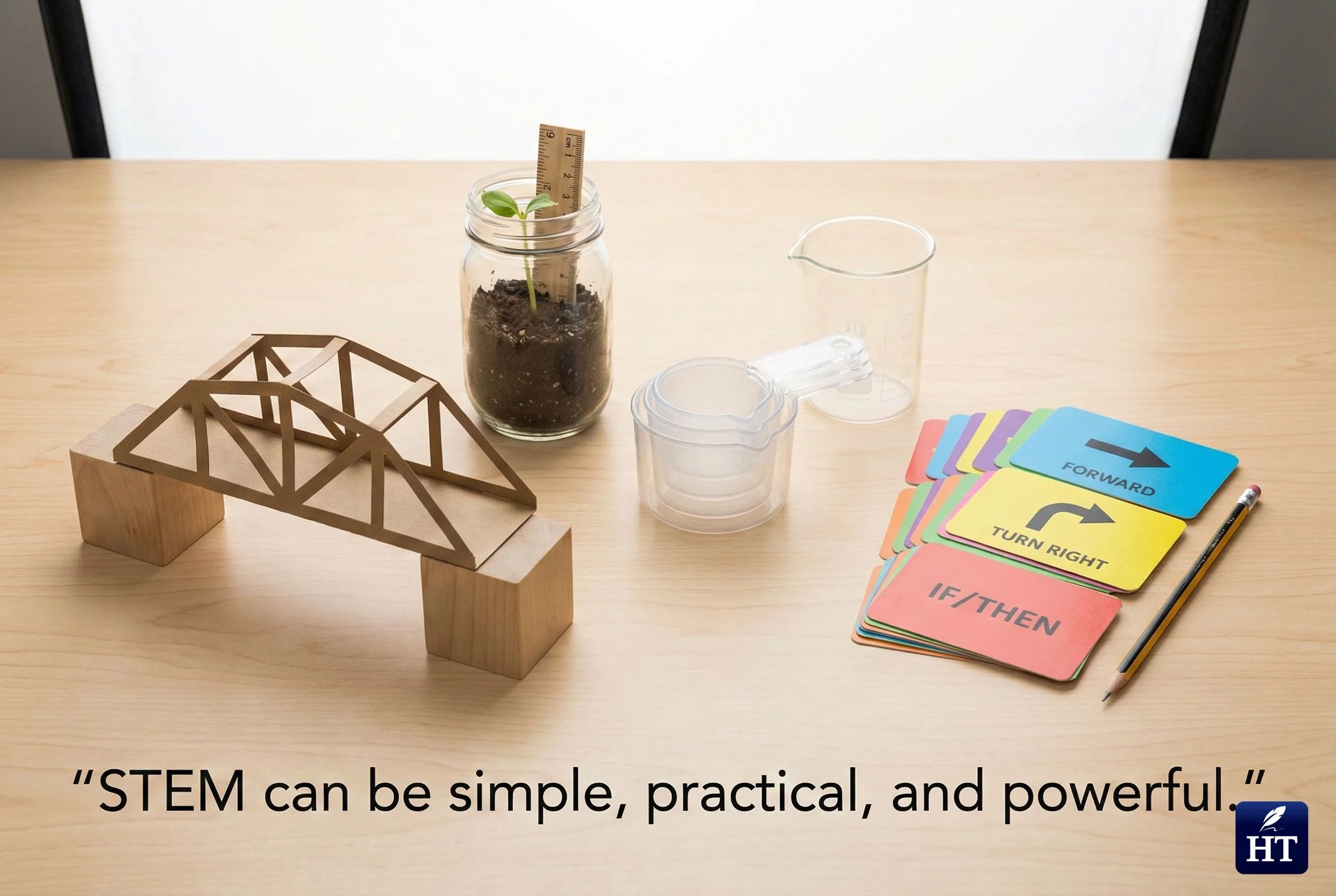
STEM activities can be simple or complex, low-tech or high-tech. What matters is that they engage students in authentic problem-solving that integrates multiple disciplines. Here are examples that teachers and parents can implement without extensive resources or specialized training.
Coding with block-based apps: Platforms like Scratch teach programming logic through visual, drag-and-drop interfaces
Building model bridges: Students design and construct bridges from simple materials, testing weight capacity
Plant growth experiments: Investigating how variables like light, water, and soil affect plant development
Math-based problem solving: Real-world challenges involving budgeting, measurement, or data analysis
Robotics kits: Building and programming simple robots to complete missions or navigate obstacles
Who Is STEM Education For?
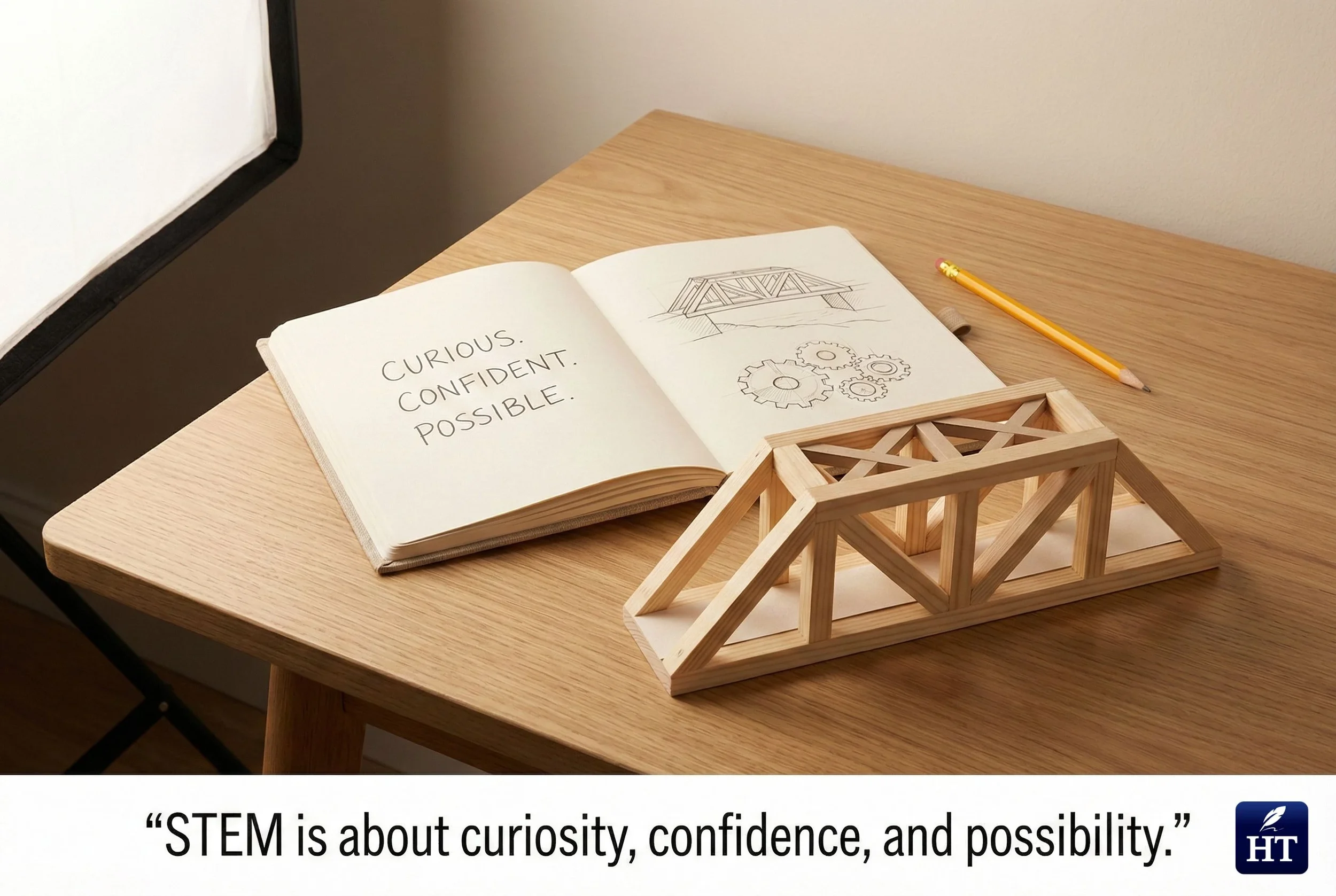
One of the most important truths about STEM education is that it's for everyone. Contrary to outdated stereotypes, STEM isn't reserved for students who excel in traditional math and science classes or those planning technical careers. The skills developed through STEM learning — critical thinking, creativity, collaboration, and problem-solving — benefit all students regardless of their eventual paths.
STEM education is particularly valuable for students who struggle with traditional instruction. The hands-on, project-based nature of STEM often engages learners who find lectures and worksheets uninspiring. When learning connects to real problems and allows for multiple approaches, students who might otherwise disengage often thrive.
• Elementary students: Building foundational curiosity and problem-solving habits
• Middle school students: Exploring interests and developing deeper analytical skills
• High school students: Preparing for college and career pathways
• Adult learners: Developing new skills for career transitions
• Career professionals: Upskilling to remain competitive in changing industries
FAQs
What is STEM education in simple words?
STEM education is a way of teaching that combines science, technology, engineering, and math through hands-on projects and real-world problem-solving. Instead of learning these subjects separately through textbooks, students work on challenges that use all four areas together, building skills they'll need for future learning and careers.
Why is STEM important for students?
STEM develops critical thinking, creativity, and problem-solving skills that apply across all areas of life. It prepares students for a technology-driven world, builds confidence through hands-on success, and teaches collaboration and persistence. These capabilities serve students regardless of their eventual career choices.
What is the STEM education program?
A STEM education program is any structured opportunity for integrated, hands-on learning in science, technology, engineering, and math. Programs range from dedicated STEM schools and classroom curricula to after-school clubs, summer camps, and online courses. They share a focus on project-based learning and real-world application.
Is STEM only for advanced students?
Absolutely not. STEM education benefits all learners regardless of academic level. The hands-on, inquiry-based approach often engages students who struggle with traditional instruction. Good STEM programs can be adapted for different abilities, and the focus on creativity and problem-solving means every student can contribute meaningfully.
What skills does STEM education teach?
STEM education develops critical thinking, problem-solving, creativity, collaboration, and communication skills. Students also build technical skills like coding, data analysis, and design thinking. Perhaps most importantly, STEM teaches persistence and resilience — learning to view failures as valuable steps toward success.
What is the difference between STEM and normal education?
Traditional education often emphasizes memorization, individual work, and single correct answers. STEM education focuses on hands-on exploration, collaboration, and open-ended problem-solving. While traditional methods teach content, STEM methods develop both content knowledge and practical skills through real-world application and experimentation.
What careers are related to STEM?
STEM careers span countless fields including software development, engineering, healthcare, data science, environmental science, architecture, and research. However, STEM skills also apply in non-traditional areas like business analytics, digital marketing, and project management. The problem-solving and technical literacy STEM develops are valuable in virtually any profession.
Conclusion
Understanding what is STEM education opens doors to a more engaging, effective approach to learning. At its heart, STEM is about curiosity — asking questions, exploring possibilities, and discovering how things work. It's about building confidence through hands-on success and developing skills that will serve students throughout their lives.
Whether you're a parent seeking enrichment opportunities, a teacher looking to transform your classroom, or a student curious about your own learning path, STEM offers something valuable. The skills developed through quality STEM education — critical thinking, creativity, collaboration, and problem-solving — are exactly what our rapidly changing world demands.
Ready to explore more ways to support student success? Visit hyetutors.com for additional educational resources, tutoring services, and guidance on helping learners reach their full potential.