

What Is the Fibonacci Sequence? Explanation, Uses & Examples

If you’ve ever Googled “what is the Fibonacci sequence,” you’re in good company. We hear this question constantly from students who’ve encountered it in class, felt a little lost, and figured there must be a simpler way to understand it. There is — and the good news is, once it clicks, you’ll start seeing this pattern everywhere. This guide walks you through the Fibonacci sequence step-by-step, with real examples, a simple formula, and a few surprises from the natural world that make this one of the most fascinating topics in all of mathematics.
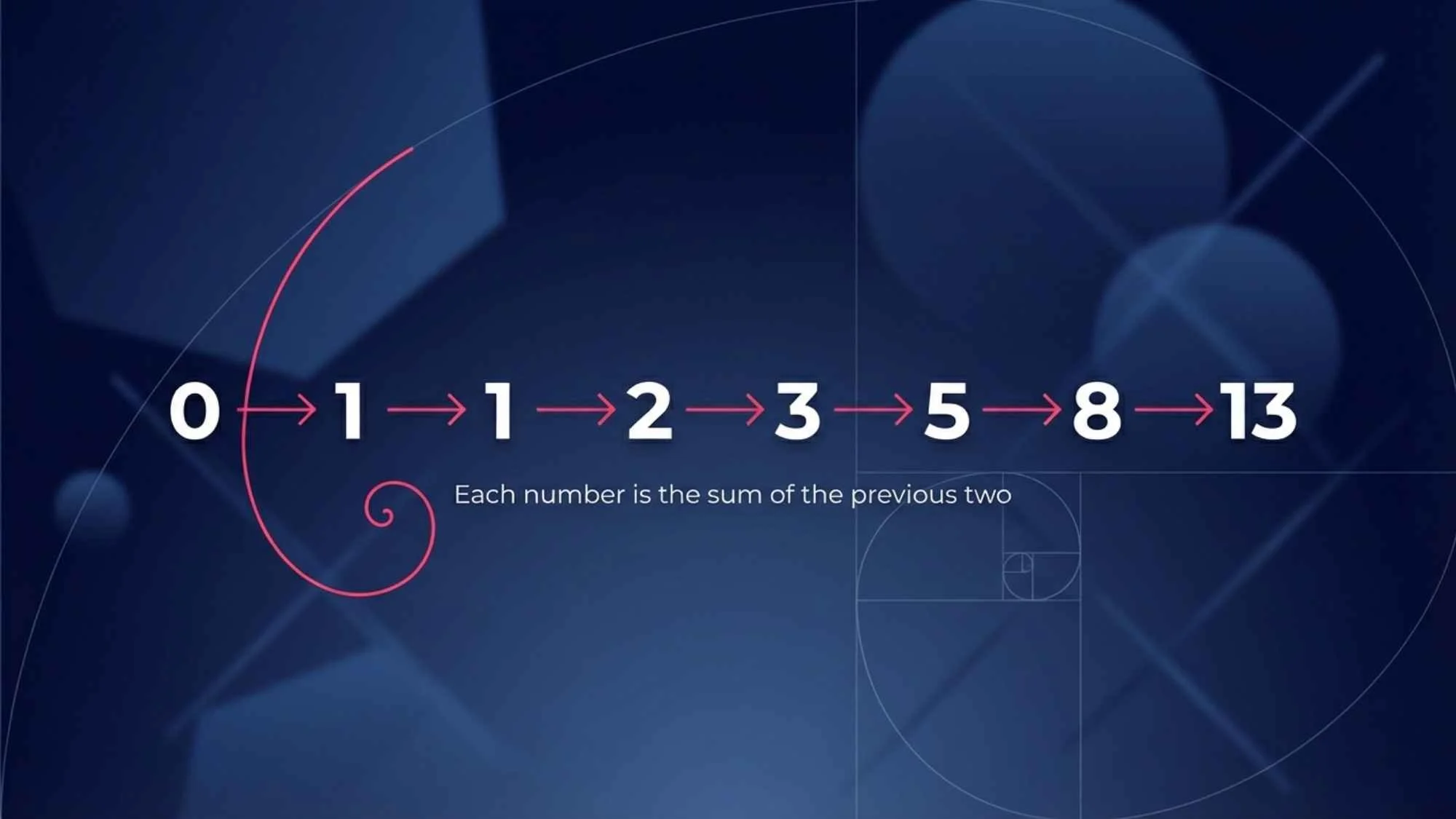
Fibonacci Sequence
The Fibonacci sequence is a series of numbers where each number is the sum of the two numbers before it. It typically begins with 0 and 1, and from there the pattern builds itself:
0, 1, 1, 2, 3, 5, 8, 13, 21, 34, 55…
That’s it. One rule, endlessly applied. What makes this sequence remarkable isn’t the rule itself — it’s where that rule shows up: in flower petals, spiral shells, the branching of trees, and even in financial modeling. But let’s start at the very beginning.
What Is the Fibonacci Sequence?
Before we look at any numbers, let’s talk about what’s actually happening. The Fibonacci sequence is a pattern — a rule that tells you how to build the next number from the ones you already have. Think of it like a recipe:
Start with two ingredients: 0 and 1
To make the next number, add the two you just used
Keep going — forever, if you want
That’s genuinely all there is to it. Each number depends on the two before it. Simple rule. Powerful outcome. We’ve worked with students who struggled for weeks with this concept, not because it’s hard, but because their textbook jumped straight to notation without ever explaining the idea. Once we slow it down, it usually takes about five minutes to make sense of.
The First Numbers in the Fibonacci Sequence
Let’s watch the sequence build in real time:
| Step | Calculation | Result |
|---|---|---|
| Start | — | 0 |
| Start | — | 1 |
| Step 3 | 0 + 1 | 1 |
| Step 4 | 1 + 1 | 2 |
| Step 5 | 1 + 2 | 3 |
| Step 6 | 2 + 3 | 5 |
| Step 7 | 3 + 5 | 8 |
| Step 8 | 5 + 8 | 13 |
Follow along with your finger if it helps — trace from the two numbers being added to the result. That physical engagement makes a real difference for a lot of learners.
The Fibonacci Formula (Simple Version)
Mathematicians express the Fibonacci rule as a formula:
Fₙ = Fₙ₋₁ + Fₙ₋₂
Here’s what each part means:
Fₙ = the number you’re trying to find (the nth number in the sequence)
Fₙ₋₁ = the number just before it
Fₙ₋₂ = the number before that
This kind of formula is called a recursive formula — “recursive” just means it refers back to earlier values to generate new ones. You don’t need to memorize this notation. What matters is that you understand the pattern: each number is the sum of the two before it.
Why the Fibonacci Sequence Is Easier Than It Looks
One reason students overthink this: the name sounds intimidating. “Fibonacci” sounds like advanced calculus. It isn’t.
The entire concept rests on a single operation — addition
There are no square roots, exponents, or variables to solve for
A middle schooler with a pencil can generate the first 20 numbers in under three minutes
The complexity comes later — in how mathematicians use the sequence — but the sequence itself is beautifully approachable
How to Find Fibonacci Numbers (Step-by-Step)
Manual Method (Adding Numbers)
Write down 0
Write down 1
Add the last two numbers and write the result
Add the new last two numbers and write the result
Repeat as many times as needed
Example Walkthrough
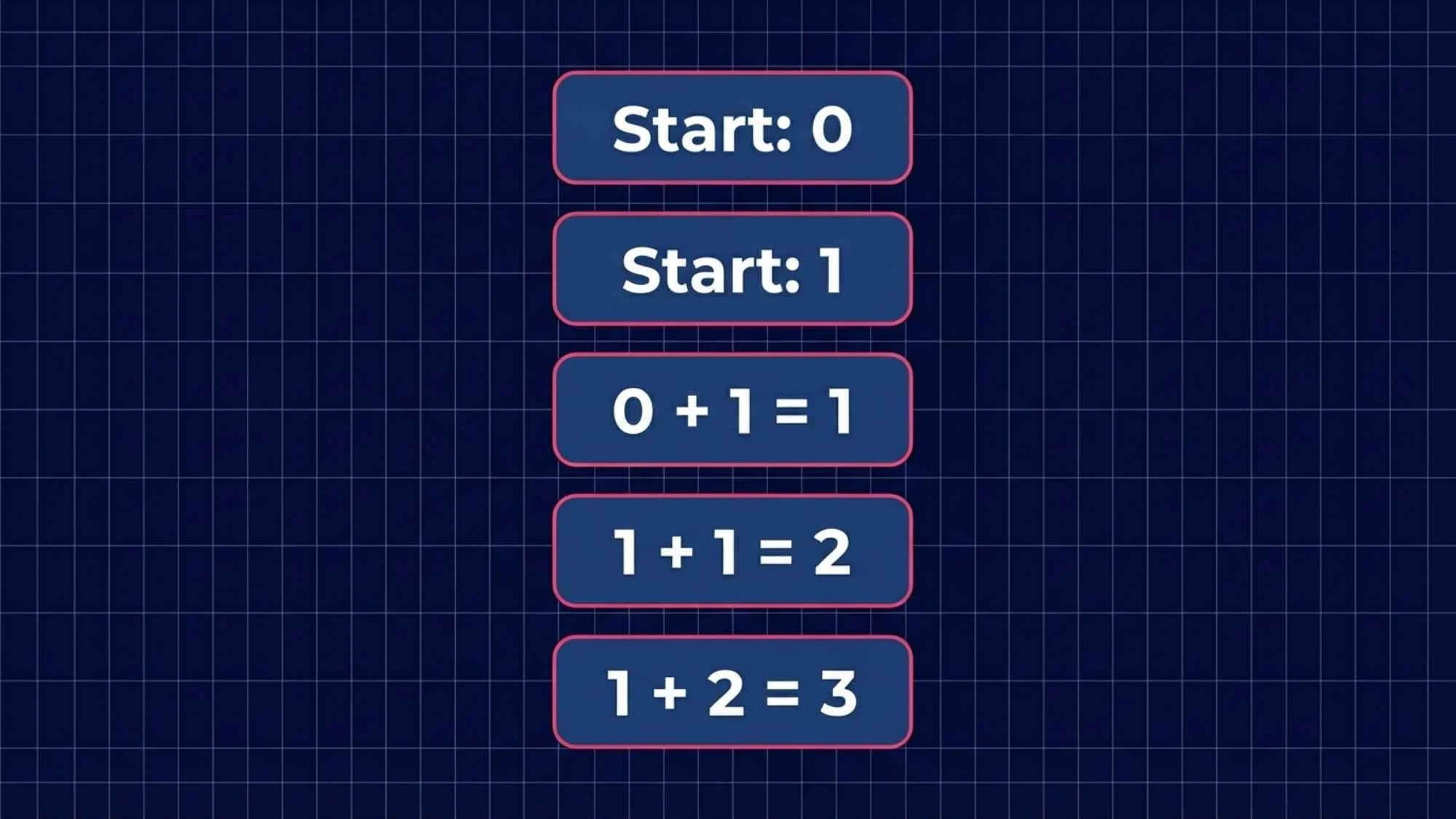
Let’s generate the first 10 Fibonacci numbers together:
Start: 0
Start: 1
0 + 1 = 1
1 + 1 = 2
1 + 2 = 3
2 + 3 = 5
3 + 5 = 8
5 + 8 = 13
8 + 13 = 21
13 + 21 = 34
Result: 0, 1, 1, 2, 3, 5, 8, 13, 21, 34
Notice that no step is harder than the one before it. Every calculation uses the same rule. That consistency is part of what makes Fibonacci numbers so satisfying to work with.
Real-Life Examples of the Fibonacci Sequence
This is where it gets genuinely exciting. According to this article from the Smithsonian, the Fibonacci sequence appears throughout the natural world with striking regularity:
Sunflower seeds — spiral outward in opposing directions, almost always 34 one way and 55 the other. Both are Fibonacci numbers.
Flower petals — lilies have 3, buttercups have 5, delphiniums have 8.
Pinecones — spiraling scales typically follow an 8-and-13 Fibonacci pattern.
Nautilus shells — grow in a logarithmic spiral closely related to Fibonacci geometry.
Tree branching — the way branches split from a trunk often follows Fibonacci proportions.
Human body proportions — the lengths of finger bones and facial feature spacing echo Fibonacci ratios.
Why does nature “choose” Fibonacci? The short answer is efficiency. Fibonacci-based spirals allow plants to pack the maximum number of seeds into the minimum space. It’s mathematics in service of survival.
Fibonacci Sequence and the Golden Ratio
Here’s a deeper connection worth knowing about. If you take any two consecutive Fibonacci numbers and divide the larger by the smaller, something interesting happens:
5 ÷ 3 = 1.666…
8 ÷ 5 = 1.600
13 ÷ 8 = 1.625
34 ÷ 21 = 1.619…
89 ÷ 55 = 1.618…
The ratio keeps getting closer and closer to 1.618 — a number mathematicians call the Golden Ratio, often written as φ (phi).
As this article from Live Science explains, the Golden Ratio has been called “the world’s most beautiful number.” It appears in the proportions of the Parthenon in Athens, in Leonardo da Vinci’s paintings, in the design of the iPhone, and in the spiral structure of galaxies. Artists and architects have intentionally used it for centuries because compositions based on the Golden Ratio feel naturally pleasing to the human eye.
Common Mistakes Students Make
We’ve tutored hundreds of students through Fibonacci, and the same slip-ups appear again and again:
Forgetting the starting numbers — The sequence begins with 0 and 1, not 1 and 1. Check which convention your class uses.
Adding the wrong pair — Always add the most recent two numbers. Students sometimes accidentally skip back three steps.
Misreading the formula — Fₙ₋₁ means “one step back,” not “negative one.” The subscript notation trips people up.
Overcomplicating it — The most common mistake is assuming that because this is a famous concept, it must be hard. Trust the simple rule.
A good check: once you’ve written out your sequence, verify each number by confirming it equals the sum of the two before it. If it doesn’t, you know exactly where the error crept in.
Why Learning the Fibonacci Sequence Matters
Beyond the classroom, Fibonacci is genuinely useful. As this article from Britannica notes, Fibonacci numbers appear throughout mathematics, computer science, and nature in ways that make them more than an academic curiosity:
Pattern recognition — Working with Fibonacci trains the brain to spot recursive patterns, a critical skill in higher mathematics.
Foundation for sequences and series — Often a student’s first encounter with recursive definitions, important in calculus and discrete math.
Computer science and algorithms — A classic teaching example in programming, frequently used in coding interviews.
Financial modeling — Fibonacci retracement levels are used by traders to predict price movements in stock markets.
Logical thinking — Following a rule iteratively, checking your work, and building a sequence all strengthen mathematical reasoning broadly.
We’ve had students come back to us years later — now studying engineering or computer science — and tell us that Fibonacci was the first time math “felt like something real.” That moment of recognition matters.
Need Help With Math Concepts Like Fibonacci? HYE Tutors Can Help
Understanding the Fibonacci sequence in theory is one thing. Applying it confidently on a test, homework set, or coding assignment is another. That gap between “I think I get it” and “I definitely get it” is exactly where HYE Tutors excels.
Our tutors hold degrees from top universities — including Berkeley, Harvard, UCLA, and MIT — and we specialize in turning confusing concepts into clear, step-by-step understanding. We’ve worked with students who felt completely lost in math and, within a few sessions, were confidently tackling topics they used to avoid.
What we offer:
• 1-on-1 personalized math tutoring
• Patient, encouraging tutors who meet students where they are
• Sessions tailored to your child’s school curriculum
• Support for middle school, high school, SAT/ACT math, and beyond
📞 Book a personalized math session today and build the confidence your student deserves; Book Here
FAQs
What is the Fibonacci sequence in simple terms?
The Fibonacci sequence is a list of numbers where each number equals the sum of the two numbers before it. Starting with 0 and 1, the sequence goes: 0, 1, 1, 2, 3, 5, 8, 13, and so on.
What is the formula for the Fibonacci sequence?
The formula is Fₙ = Fₙ₋₁ + Fₙ₋₂. To find any number in the sequence, add the two numbers that come before it.
Where is Fibonacci used in real life?
Fibonacci numbers appear in nature (flower petals, pinecones, sunflower seeds), in art and architecture (the Golden Ratio), and in computer science (recursive algorithms). Traders also use Fibonacci retracement levels in financial analysis.
Why does the sequence start with 0 and 1?
Starting with 0 and 1 is the standard mathematical convention, established so the recursive rule works cleanly from the very beginning. Some versions start with 1, 1 — but the pattern behaves the same either way from the third term onward.
Is Fibonacci important in math?
Yes. Fibonacci is foundational for understanding recursive sequences, which appear throughout higher mathematics, computer science, and data structures. It’s also one of the most concrete introductions students get to pattern-based thinking.
How do you calculate Fibonacci numbers?
Start with 0 and 1. Add them to get 1. Add the last two numbers (1 + 1) to get 2. Continue adding the most recent two: 2 + 3 = 5, 3 + 5 = 8, and so on. No shortcut needed — the pattern is consistent and easy to follow.
Conclusion
The Fibonacci sequence is proof that mathematics doesn’t have to be complicated to be profound. One rule — add the last two numbers — produces a pattern that winds its way through sunflowers, shells, ancient architecture, and modern algorithms. If you’ve been searching for “what is the Fibonacci sequence,” we hope this guide gave you not just an answer, but a genuine appreciation for how elegant math can be.
The best way to get comfortable with Fibonacci is practice. Write out the first 15 numbers from scratch, check each one, then try explaining the rule to someone else. And if you’re still finding certain math concepts slippery, remember: that’s not a reflection of your ability. It’s usually a sign that the explanation hasn’t been right yet. That’s something a great tutor can fix.
Ready to make math click? Reach out to HYE Tutors today and let’s get started.