

What Is the Pythagorean Theorem Used For?
When will I ever use this in real life?" If you've sat through a math class wondering exactly that about the Pythagorean theorem, you're in very good company. But here's the thing — this is one of the most genuinely useful formulas in all of mathematics. Understanding what the Pythagorean theorem is used for isn't just a school exercise. It's the key to understanding how the world is measured, built, and navigated. By the end of this article, you'll see it differently.
Let's break it down — clearly, practically, and without the intimidation.
“The Pythagorean theorem is used to calculate the distance between two points and to find missing side lengths in right triangles. It is applied across construction, navigation, engineering, physics, and computer graphics — any time accurate measurement is needed and direct measurement isn’t possible.
”
What Is the Pythagorean Theorem Used For?
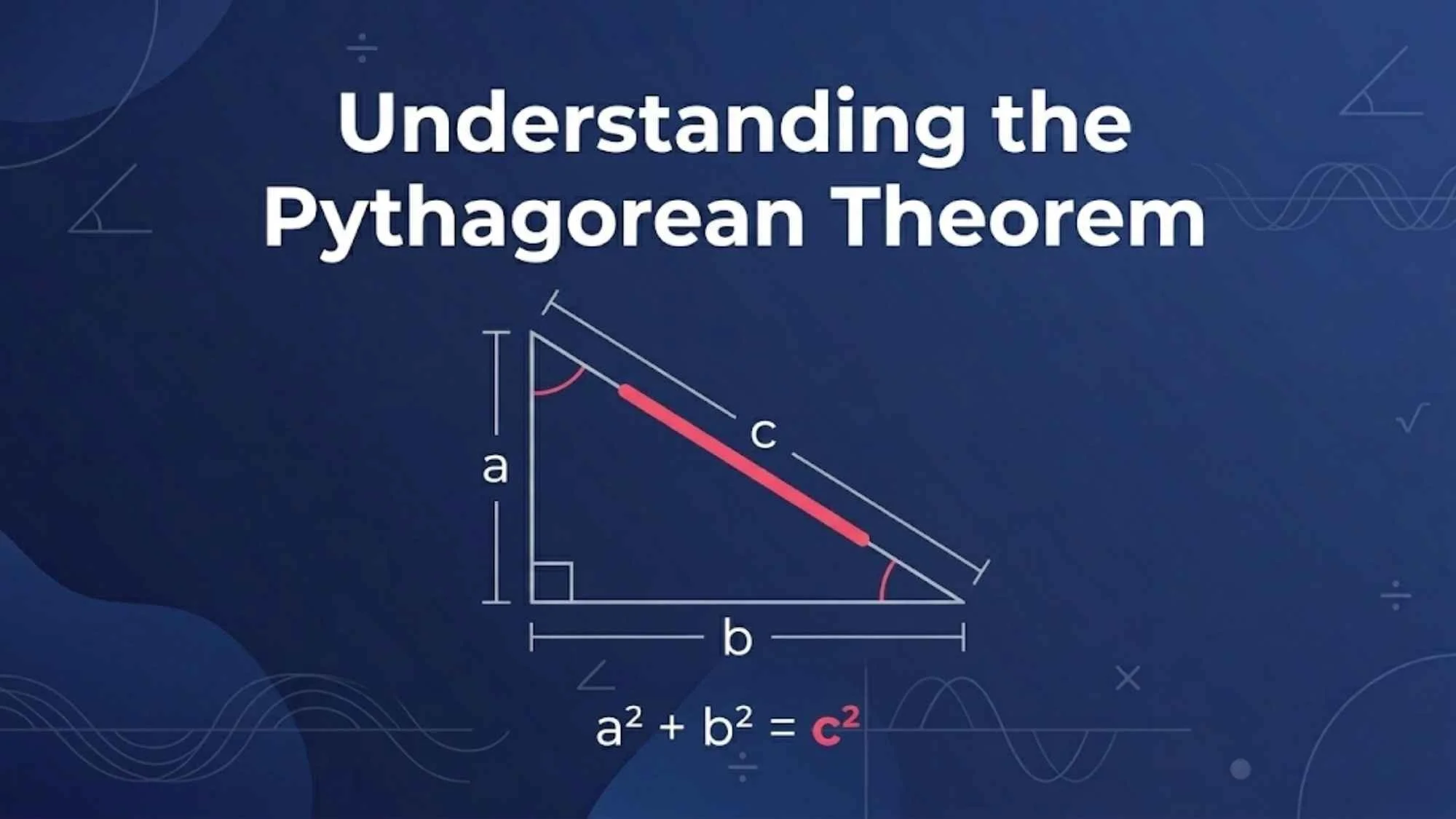
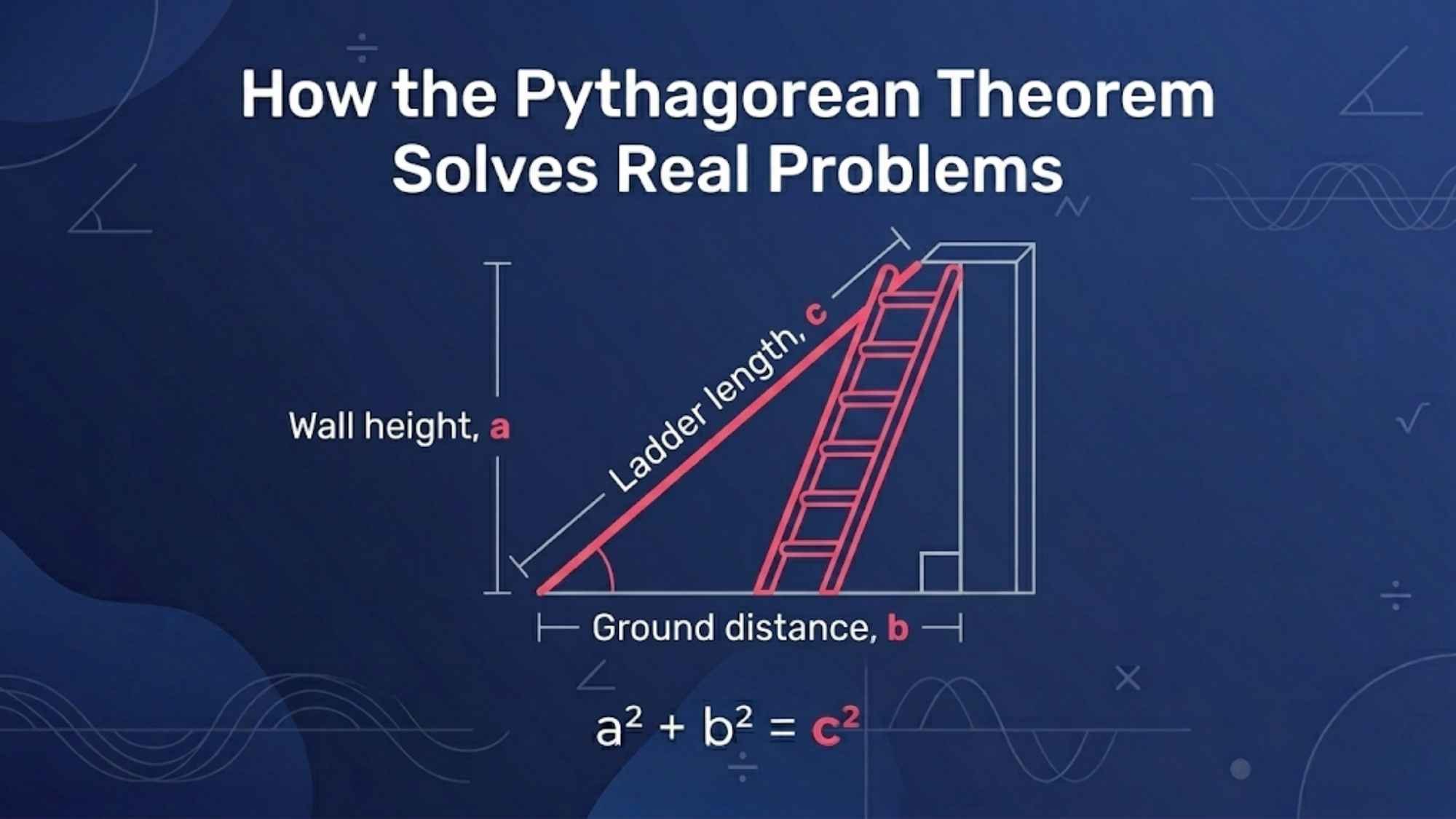
The Pythagorean theorem states that in any right triangle, the square of the longest side (the hypotenuse) equals the sum of the squares of the other two sides: a² + b² = c². Simple enough on paper — but the real power of this formula lies in how far it reaches beyond the classroom.
Finding Distance Between Two Points
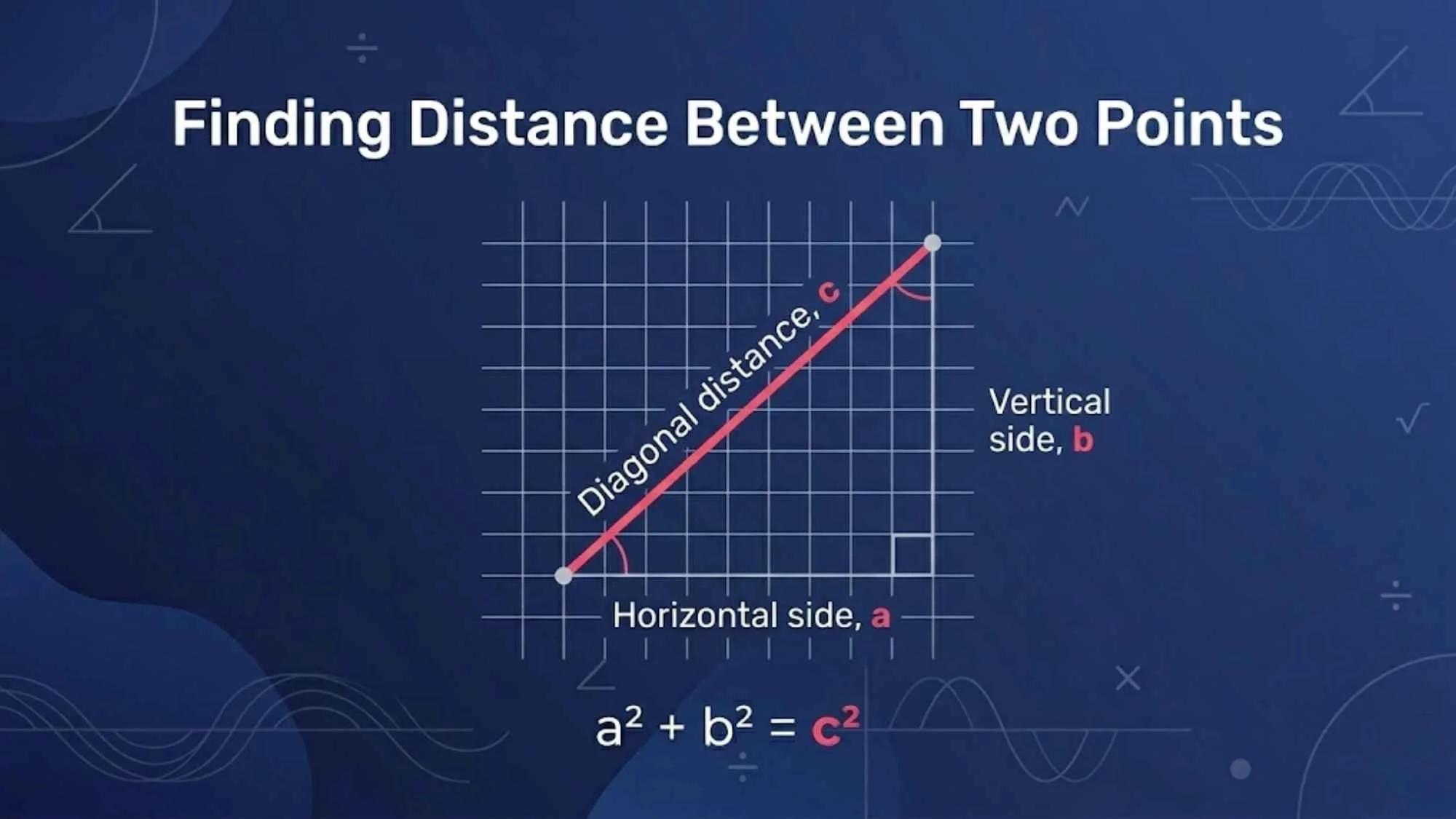
At its core, the theorem answers one fundamental question: how far is it from here to there? Whenever you need to measure a straight-line distance — especially a diagonal one — the Pythagorean theorem is your tool. This makes it the direct foundation of the distance formula used in coordinate geometry.
Real-world uses include:
Calculating distances on maps and GPS systems
Measuring screen diagonals in pixels (your TV's "inch" size is its diagonal)
Planning urban grids and city blocks
Computing distances across sports fields and athletic tracks
Used in Construction and Architecture
Before a single brick is laid, builders rely on the Pythagorean theorem to make sure everything is square. Creating a perfectly right-angle corner — the foundation of every room, building, and bridge — depends on this formula. The classic example builders use is the 3-4-5 triangle: if three sides of a triangle measure 3, 4, and 5 feet respectively, the corner is guaranteed to be exactly 90 degrees. Roof slope calculations, rafter lengths, and even ladder positioning all follow the same mathematical logic. A small error in measurement can mean costly structural corrections later — so professionals don't guess. They calculate.
Navigation and GPS Technology
Every time your phone gives you directions, invisible math is at work. Aircraft pilots use the theorem to calculate the most efficient flight paths. Marine navigators determine position and displacement across open water using the same principle. Even drone routing algorithms depend on it. Modern GPS triangulation systems use geometric relationships — rooted in the Pythagorean theorem — to pinpoint your location to within a few feet anywhere on Earth.
Engineering, Physics, and Technology
The theorem is a quiet engine powering modern systems you use every day. Engineers use it to analyze force vectors — understanding how forces push and pull in different directions. Electrical engineers calculate signal paths through circuits. Robotics engineers program arm movements using triangle geometry. Mechanical designers calculate part dimensions to ensure components fit together precisely. You interact with this math every single day without ever noticing — and that's exactly how good engineering works.
Computer Graphics, Gaming, and Virtual Reality
The digital worlds in your favorite video games are built on geometry. Game engines use the Pythagorean theorem constantly — for rendering distances between objects, detecting collisions between characters and environments, calculating realistic shadow angles, and building 3D models. Game programming and virtual reality development are among the most math-intensive careers in technology — and the Pythagorean theorem is one of their core building blocks.
Real-Life Examples You'll Actually Recognize
Here's where the math gets genuinely satisfying. Consider a few everyday scenarios:
Buying a TV: A 55-inch TV refers to the diagonal screen measurement — calculated using the Pythagorean theorem from the height and width.
Placing a ladder safely: To know if your ladder reaches a window and sits at a safe angle, you need the height of the wall, the distance from the base, and the theorem connects them.
Finding the shortest path: Walking diagonally across a rectangular park is always shorter than walking two sides — the theorem tells you exactly how much shorter.
Measuring a field: Farmers and landscapers use it to calculate true diagonal measurements across rectangular plots.
Frequently Asked Questions
What is the Pythagorean theorem used for in real life?
It's used in construction to square foundations, in GPS and navigation to calculate distances, in game development for collision detection, and in everyday tasks like finding the shortest path across a field or sizing a TV screen.
Why is the Pythagorean theorem important?
It is one of the most fundamental tools in mathematics because it connects geometry to real-world measurement. It underpins the distance formula, trigonometry, physics, and engineering.
When do you use the Pythagorean theorem?
Any time you are working with a right triangle and need to find a missing side length. In practice, this applies whenever you need to measure a diagonal distance accurately.
What are the uses of the Pythagorean theorem in technology?
In computing and technology, it is used in 3D rendering, GPS triangulation, robotics motion planning, game collision detection, and computer-aided design.
The Takeaway
Once you understand what the Pythagorean theorem is used for, you'll start seeing it everywhere — in the buildings you walk through, the apps you open, and the games you play. This isn't abstract math. It's the language used to measure, design, and navigate the world. More importantly, mastering this concept unlocks the door to coordinate geometry, trigonometry, physics, and beyond. Think of it less as a school requirement and more as a tool — one of the sharpest in mathematics. And like any good tool, the more you understand it, the more useful it becomes.
Want to deepen your understanding? Explore more at Math Is Fun's Pythagorean Theorem guide — or book a session with an HYE Tutor to work through it one-on-one.
