

What is the Best Pre-Med Major? Biology vs. Alternatives

Students planning for medical school often ask what the best pre med majors are and whether biology is the only path forward. It is a fair question — and the answer might surprise you.
There is no single required major for medical school, but some majors prepare students more naturally for the required coursework and the MCAT exam. The good news is that medical schools evaluate applicants based on prerequisite course completion, GPA, clinical experience, and personal qualities — not just a major.
In this guide, HYE Tutors will help you understand the most common pre-med majors, explore alternative major options that medical schools accept, and give you a framework for choosing the path that best fits your goals and strengths.
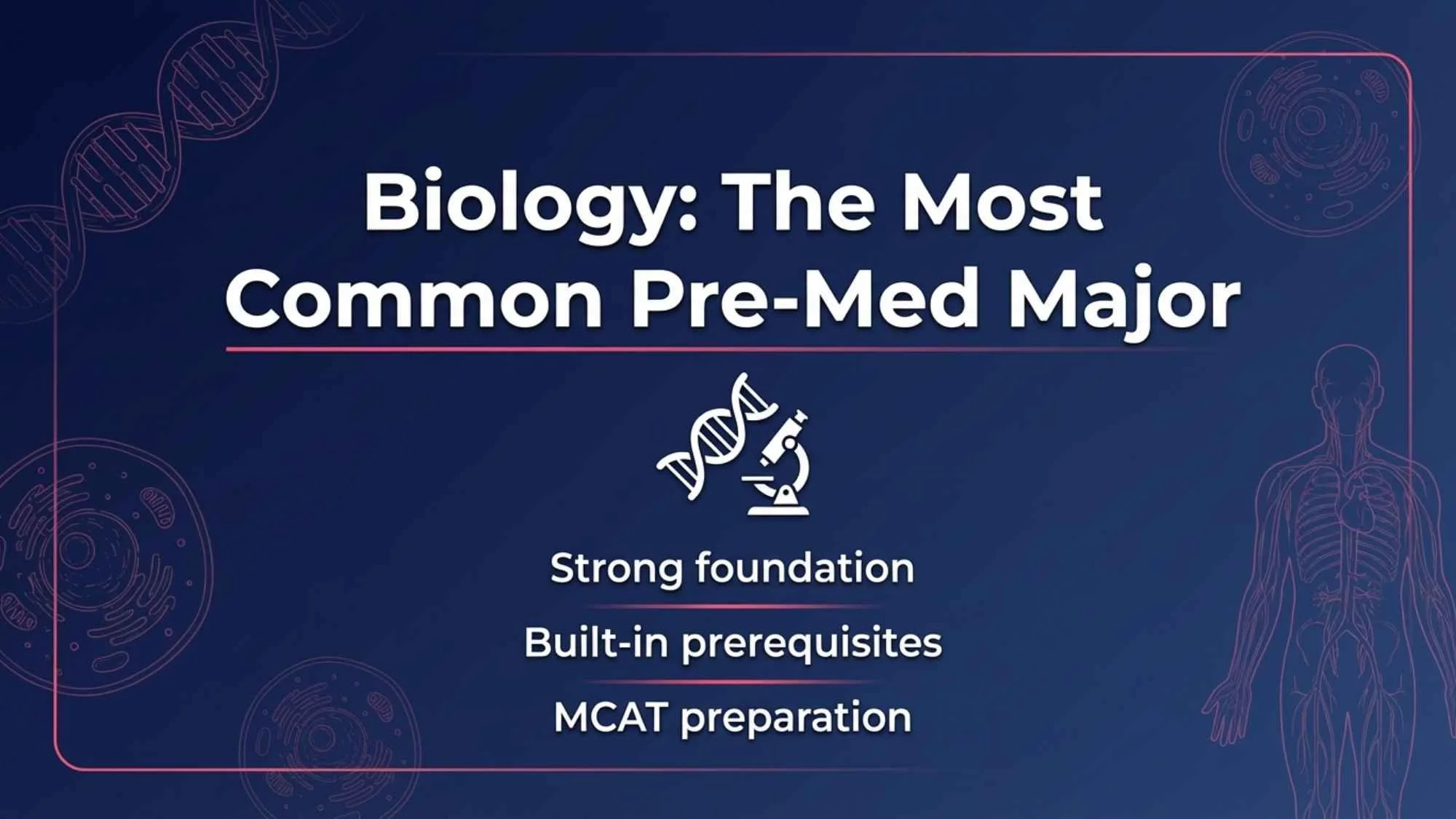
The Best Pre-Med Majors:
The best pre med majors are typically biology, chemistry, biochemistry, or neuroscience because they include many of the prerequisites required by medical schools. However, students can major in almost any subject — including psychology, engineering, or sociology — as long as they complete required courses such as biology, chemistry, physics, and organic chemistry. Medical schools value strong academic performance and preparation more than a specific major.
Best Pre Med Majors for Medical School
It is important to understand from the start that “pre-med” is not a major — it is a career track. Students can pursue pre-med goals while studying in a wide range of academic disciplines. That said, some majors naturally include the science prerequisites medical schools require, which is why certain choices are more popular among aspiring physicians.
Below is a look at the most common and effective major options for students on the pre-med path.
| Major | Pre-Med Suitability | Key Advantage |
|---|---|---|
| Biology | Very High | Many prerequisites built-in, great MCAT prep |
| Chemistry / Biochemistry | High | Deep science foundation, strong MCAT performance |
| Neuroscience | High | Brain-focused, excellent for research interests |
| Psychology | Moderate | Great for patient care; requires extra science courses |
| Public Health | Moderate | Broad health perspective; supplement with sciences |
| Mathematics / Statistics | Moderate | Strong analytical skills; requires all science prereqs |
| Biomedical Engineering | Moderate–High | Technical edge; appeals to research-focused programs |
Biology — The Most Common Pre-Med Major
Biology is consistently the most popular major among pre-med students, and for good reason. A biology degree builds a strong foundation in the life sciences — the very subject matter that underpins medicine. Most biology programs naturally include many of the prerequisite courses medical schools require, making degree planning more straightforward.
Core courses often built into a biology major include:
Cell biology and molecular biology
Genetics
Human physiology and anatomy
Microbiology
Biology also provides excellent preparation for the MCAT, particularly the biological and biochemical foundations sections. According to the Association of American Medical Colleges (AAMC), biological sciences majors consistently make up the largest group of medical school applicants. For students who enjoy the life sciences, biology is a natural and strategically sound choice.
Chemistry and Biochemistry Majors
Chemistry and biochemistry are strong alternatives to biology that are equally well-regarded by medical schools. A chemistry major gives students a deep understanding of the chemical reactions that drive biological processes — knowledge that becomes directly relevant in pharmacology, physiology, and clinical medicine.
Key courses commonly included in these majors are:
Organic chemistry (a medical school prerequisite that chemistry majors master early)
Physical chemistry
Biochemistry — covering proteins, enzymes, metabolism, and molecular biology
Biochemistry in particular bridges the gap between chemistry and biology, making it one of the most well-rounded pre-med options available. Students who enjoy understanding how the body works at a molecular level often find biochemistry to be the ideal preparation for both the MCAT and medical school coursework.
Alternative Pre-Med Majors (Non-Science Options)
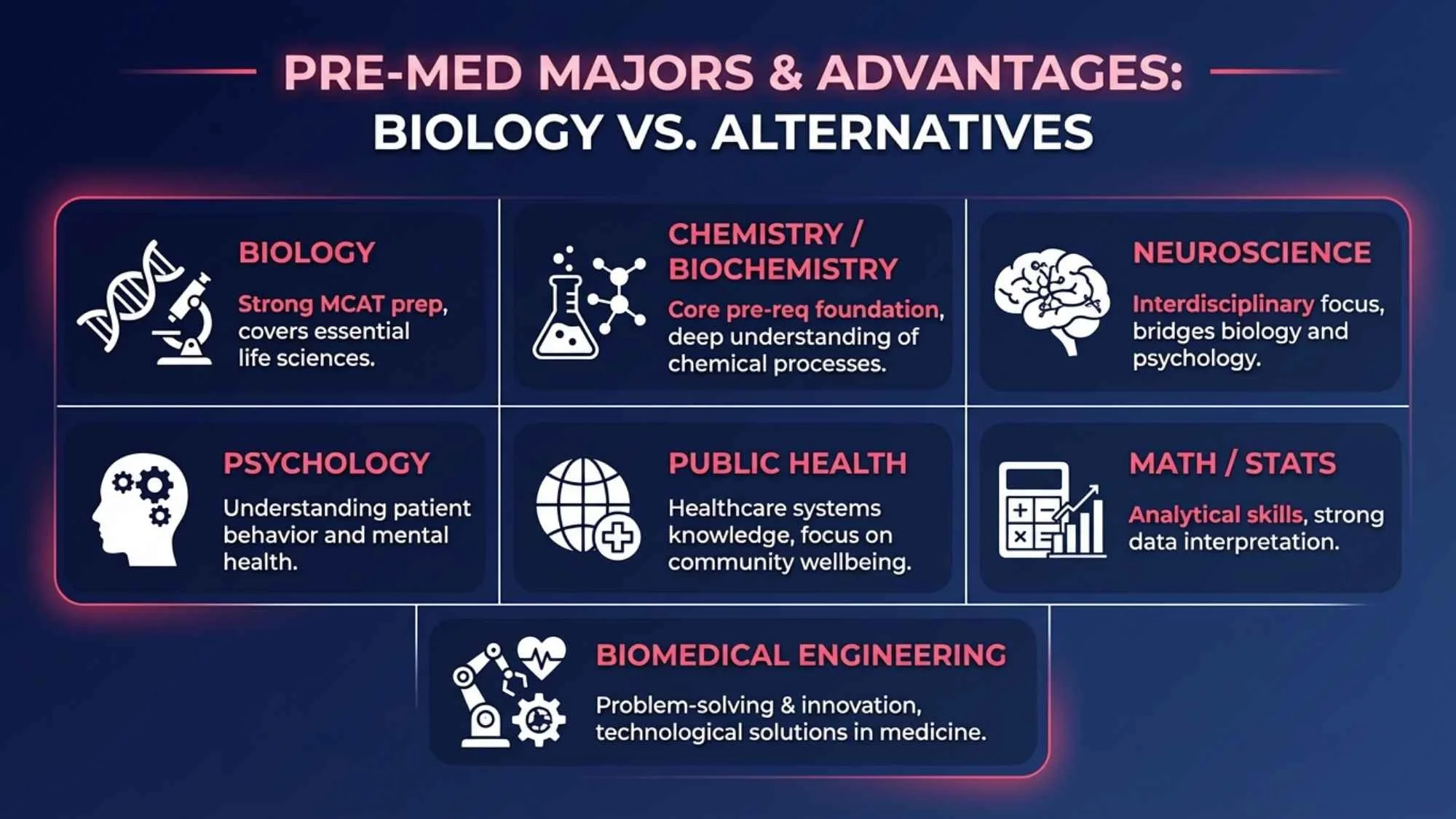
Medical schools welcome students from a surprisingly wide range of academic backgrounds. Majoring in a non-traditional subject can actually strengthen a medical school application by demonstrating intellectual breadth and a unique perspective on healthcare.
Popular alternative pre-med majors include:
Psychology — Provides a deep understanding of human behavior and mental health, which is increasingly valued in patient-centered care.
Public Health — Offers a broad view of healthcare systems, epidemiology, and community health.
Biomedical Engineering — Appeals to students interested in research, medical technology, or surgery.
Mathematics and Statistics — Builds strong analytical skills valued in research-focused medical programs.
Sociology — Develops understanding of social determinants of health and healthcare disparities.
The key requirement for any of these paths is that students must still complete all medical school prerequisite science courses, regardless of their major. Choosing an alternative major is a valid strategy, but it requires careful academic planning from the start of college.
Planning your path to medical school but unsure which major is best?
Our pre-med advisors and tutors help students build a strategy that works.
→ Talk With a Pre-Med TutorPre-Med Course Requirements for Medical School
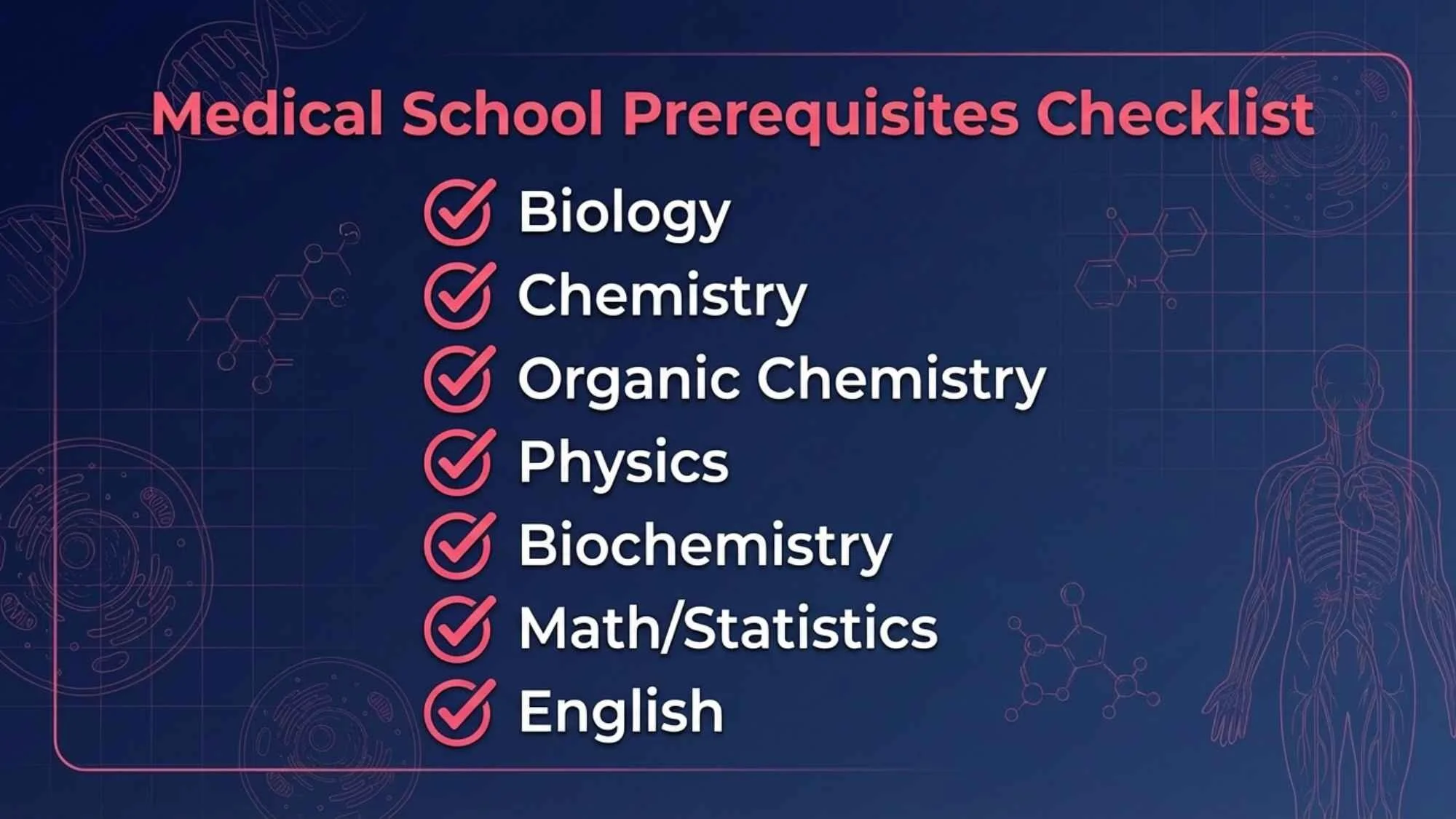
Regardless of which major a student selects, medical schools require the completion of specific prerequisite science courses. These requirements are fairly consistent across most medical programs in the United States. According to the AAMC’s official guidance, the core prerequisites typically include:
General biology (two semesters with lab)
General chemistry (two semesters with lab)
Organic chemistry (two semesters with lab)
Physics (two semesters with lab)
Biochemistry (one semester)
English or writing-intensive coursework
Mathematics or statistics
One of the main reasons students choose science majors such as biology or biochemistry is that these prerequisite courses are already woven into the degree requirements. This makes it easier to complete both degree and pre-med requirements simultaneously without overloading a schedule.
Beyond course completion, students must also prepare seriously for the MCAT exam. The MCAT tests biology, chemistry, biochemistry, psychology, and critical reasoning. Strong performance on the MCAT is one of the most important factors in medical school admissions, making early and consistent science preparation essential.
Need help preparing for challenging science courses like organic chemistry or biology
HYE Tutors provides expert support in all core pre-med subjects.
→ Get Academic Tutoring SupportHow to Choose the Best Pre-Med Major for You
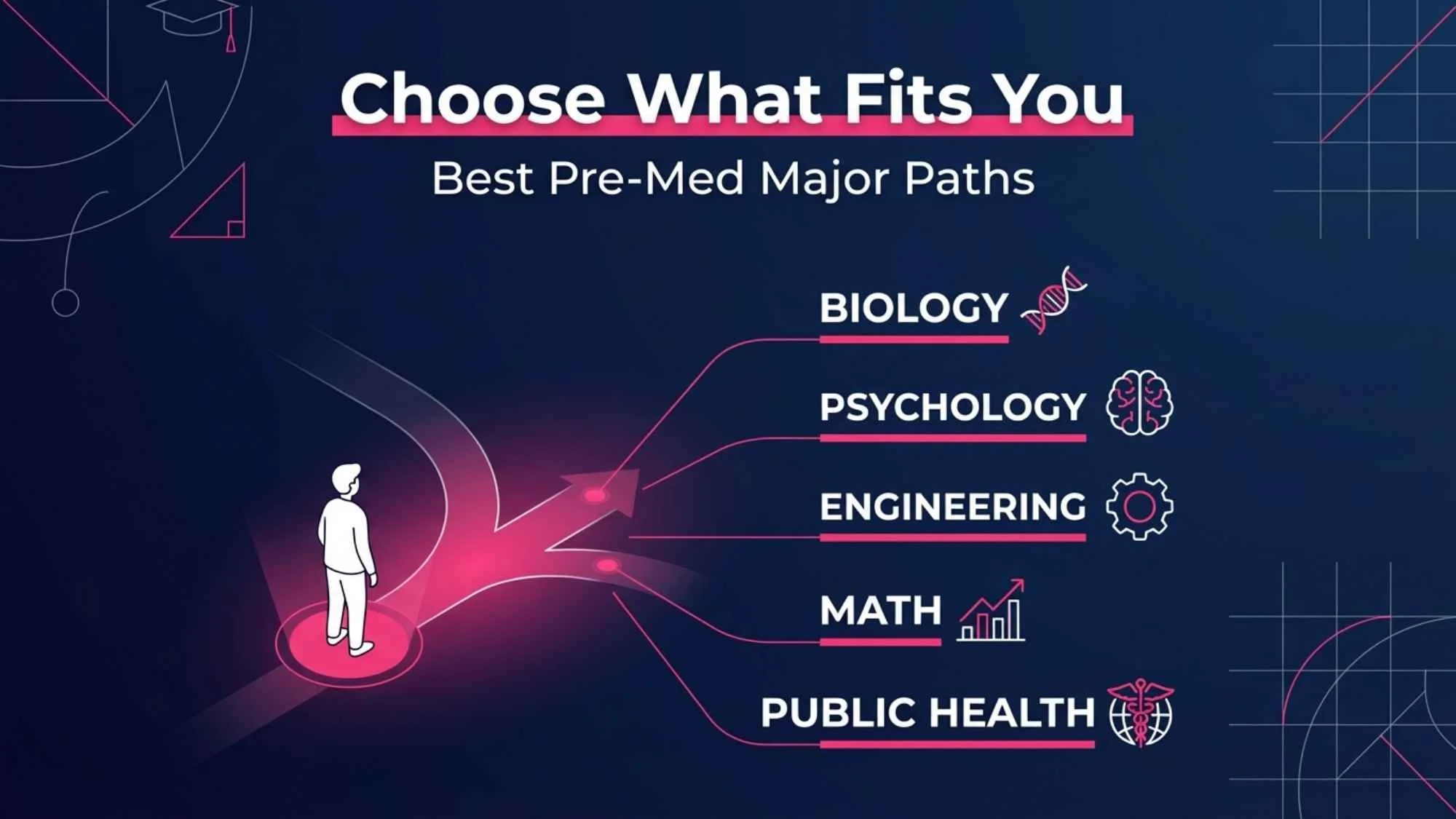
Choosing the right pre-med major is a deeply personal decision. The “best” major is ultimately the one that plays to your strengths, keeps your GPA competitive, and genuinely interests you. Here are the key factors to consider:
Academic strengths: If you excel in life sciences, biology or biochemistry may come naturally. If you are stronger in math or engineering, a quantitative major may serve you better.
Personal interests: Medical schools want well-rounded candidates. Studying something you are passionate about can make you a more compelling applicant — and help you maintain motivation through demanding coursework.
GPA potential: A lower GPA in a traditional science major can hurt an application more than a strong GPA in an unconventional major. Choose a path where you can genuinely excel.
Prerequisite planning: Whichever major you choose, map out how you will complete all required science prerequisites within your four years. This takes proactive planning, ideally starting in your first year of college.
As Princeton Review notes, students who choose majors they enjoy tend to earn higher GPAs — and GPA is one of the most weighted factors in medical school admissions.
Common Mistakes Students Make When Choosing a Pre-Med Major
Many pre-med students fall into avoidable traps when selecting their major. Here are the most common mistakes to watch out for:
Believing biology is the only option: This is a myth. Medical schools receive and accept applicants from dozens of different majors every year.
Choosing a major solely because it is “traditional”: Picking biology or chemistry without genuine interest can lead to lower motivation and, ultimately, a weaker GPA.
Ignoring GPA difficulty: Some science majors are notoriously demanding. A 3.9 GPA in psychology may serve an applicant better than a 3.3 in biochemistry.
Not planning prerequisite courses early: Students who wait until junior or senior year to begin prerequisite courses can find themselves overwhelmed or unable to graduate on time.
Working with an academic advisor or pre-med tutor from the start of college can help students avoid these pitfalls and build a well-structured path to medical school.
FAQs
What are the best pre med majors for medical school?
The most common and strategically strong pre-med majors are biology, biochemistry, chemistry, and neuroscience, as they include many medical school prerequisites. However, students can major in any field as long as they complete required science courses such as biology, chemistry, organic chemistry, and physics.
Do you have to major in biology to be pre-med?
No, you do not have to major in biology to pursue medical school. Medical schools accept applicants from a wide variety of majors, including psychology, public health, engineering, and mathematics. What matters is completing all prerequisite science courses and maintaining a strong GPA and MCAT score.
What major has the highest acceptance rate to medical school?
According to AAMC data, students who major in physical sciences or mathematics often have some of the highest medical school acceptance rates, despite being a smaller applicant pool. Biology majors apply in the largest numbers. Strong GPA and MCAT scores matter far more than any specific major in determining acceptance.
Is psychology a good pre-med major?
Yes, psychology is a legitimate pre-med major. It provides valuable insight into human behavior and mental health, which is increasingly important in patient-centered medicine. Psychology majors must plan carefully to complete all required science prerequisites, but many successful medical school applicants have chosen this path.
Conclusion
There is no single answer to the question of what the best pre med majors are — and that is actually good news. Students have more flexibility than many realize. Biology, chemistry, and biochemistry remain the most popular choices because they naturally align with medical school prerequisites, but many successful medical school applicants have come from psychology, public health, engineering, and beyond.
What medical schools care about most is strong academic performance, completion of prerequisite courses, solid MCAT preparation, and a genuine commitment to medicine. With thoughtful planning, the right academic support, and a major that plays to your strengths, the path to medical school is absolutely within reach.
If your student is planning for medical school, expert tutoring can help them succeed in pre-med courses.
HYE Tutors supports students through every step of the pre-med journey.
→ Start Learning With a Tutor