

Does Pythagorean Theorem Work on All Triangles?

If you've ever wondered whether the does pythagorean theorem work on all triangles — you're not alone. It's one of the most common misconceptions in geometry. Many students learn the famous formula a² + b² = c² and assume it works everywhere. But the type of triangle you're working with determines which formula applies. The good news? Once you understand the rule, you'll never mix it up again.
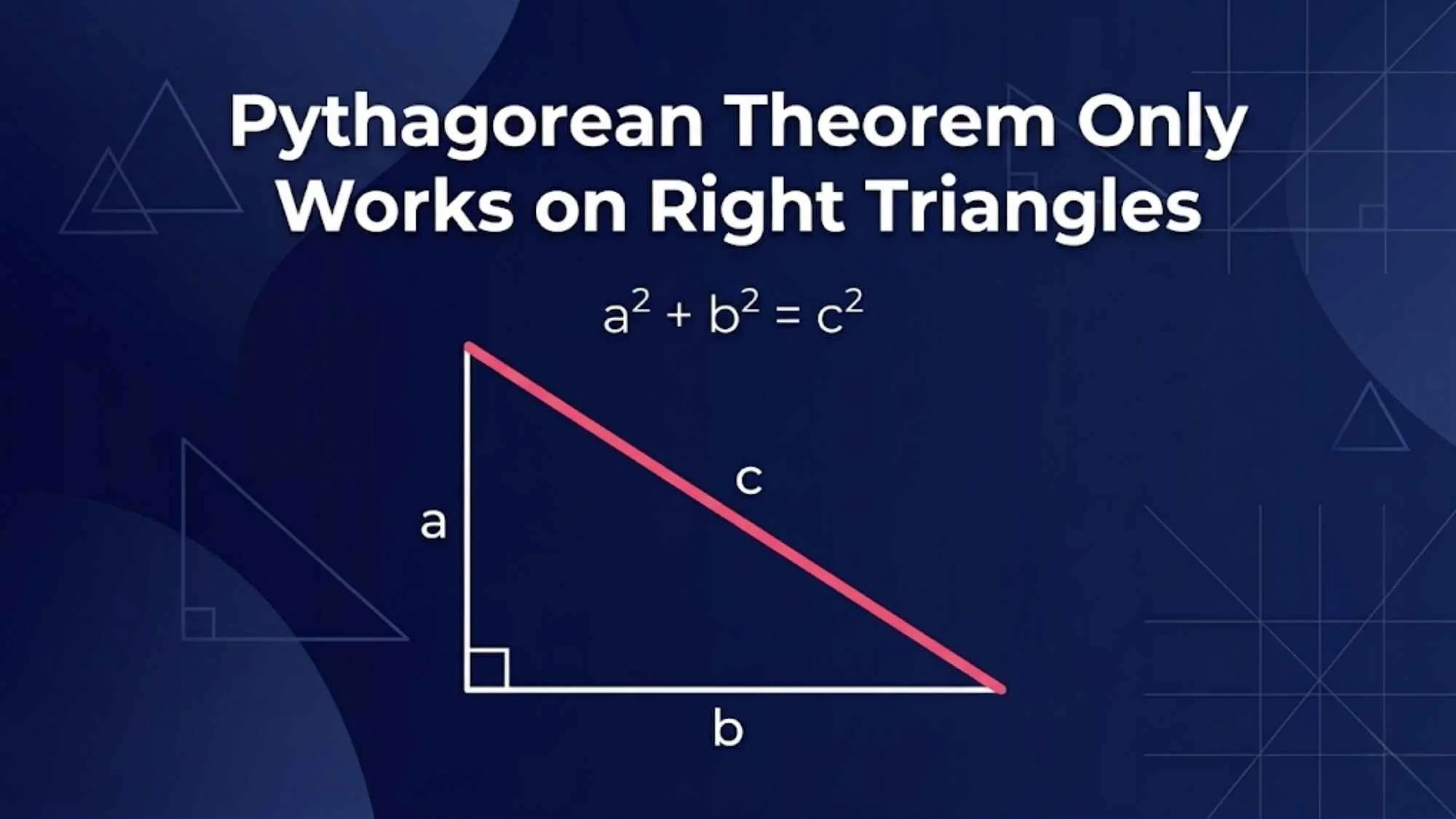
Pythagorean Theorem applies only to right triangles
The Pythagorean theorem does not work on all triangles. It applies only to right triangles — those with exactly one 90° angle. It relates the two shorter sides (legs) to the longest side (hypotenuse) using a² + b² = c². For all other triangle types, you'll need a different formula, such as the Law of Cosines.
Does Pythagorean Theorem Work on All Triangles?
The short answer is no — and understanding why gives you a much stronger foundation in geometry. Let's clear up the misconception by looking at what the theorem actually says, why it's tied to 90° angles, and what formulas cover the triangles it can't handle.
What the Pythagorean Theorem Actually Says
In plain English: in a right triangle, the square of the longest side equals the sum of the squares of the other two sides. The formula is:
a² + b² = c² where c is the hypotenuse (the side opposite the 90° angle), and a and b are the two legs.
The hypotenuse is always the longest side and always sits across from the right angle. The theorem only holds when that 90° angle exists. Remove it, and the relationship between the sides changes completely.
Image 2
Why It Only Works for Right Triangles
The formula depends on perpendicular sides — sides that meet at exactly 90°. That perpendicularity is what creates the precise geometric relationship the theorem describes. When the angle changes, the squares drawn on each side no longer align the way the theorem requires. Think of it this way:
A right angle creates a predictable, fixed distance relationship between the three sides.
Without a 90° angle, the sides "tilt" — and the neat a² + b² = c² balance breaks.
Non-right triangles need formulas that account for the actual angle measurements.
For a deeper look at why this works geometrically, Khan Academy's proof of the Pythagorean theorem is a great visual resource.
Can You Use It on Acute or Obtuse Triangles?
This is where students often trip up. Let's be direct:
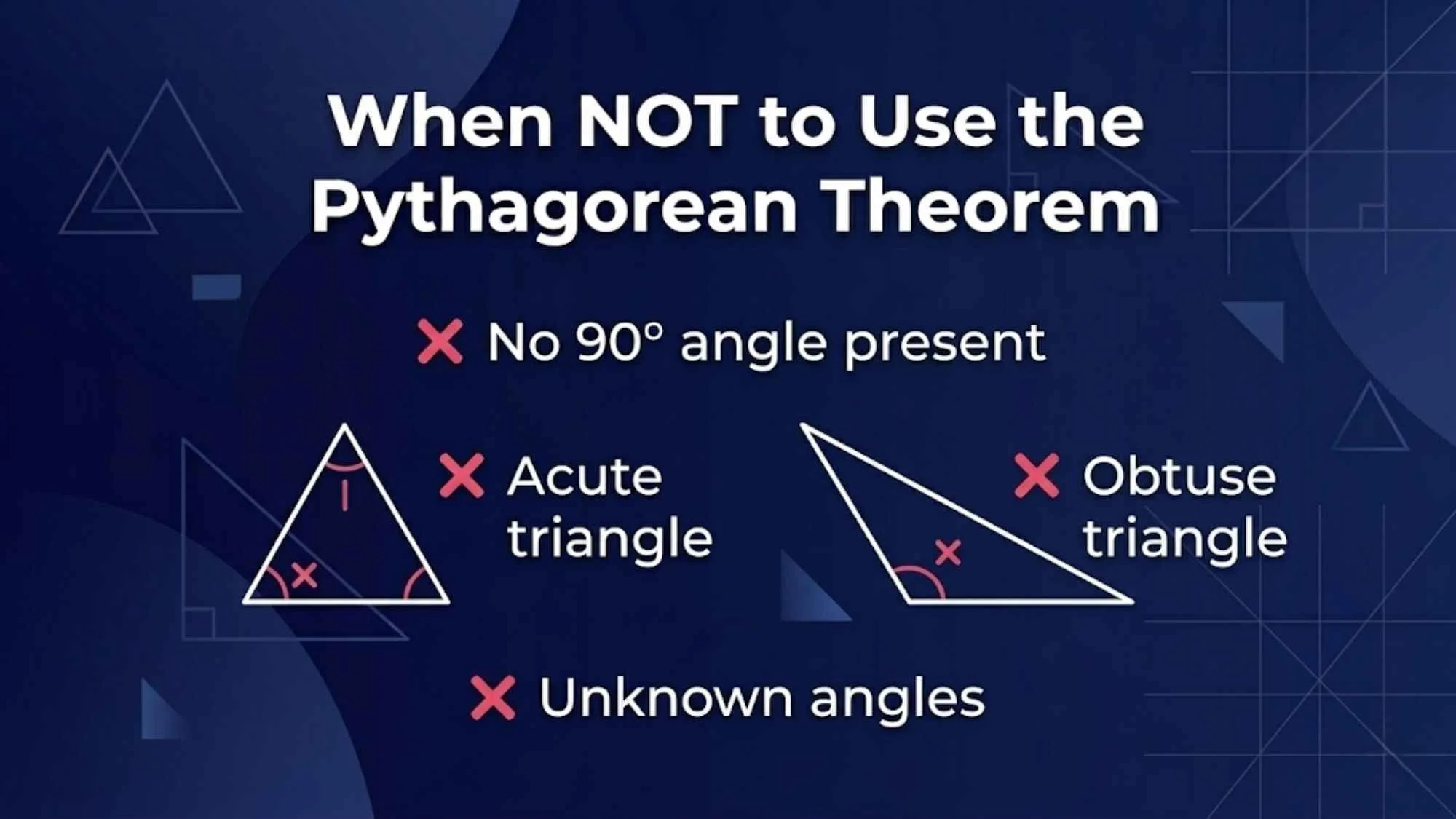
Acute triangle: all angles are less than 90°. The theorem does NOT apply.
Obtuse triangle: one angle is greater than 90°. The theorem does NOT apply.
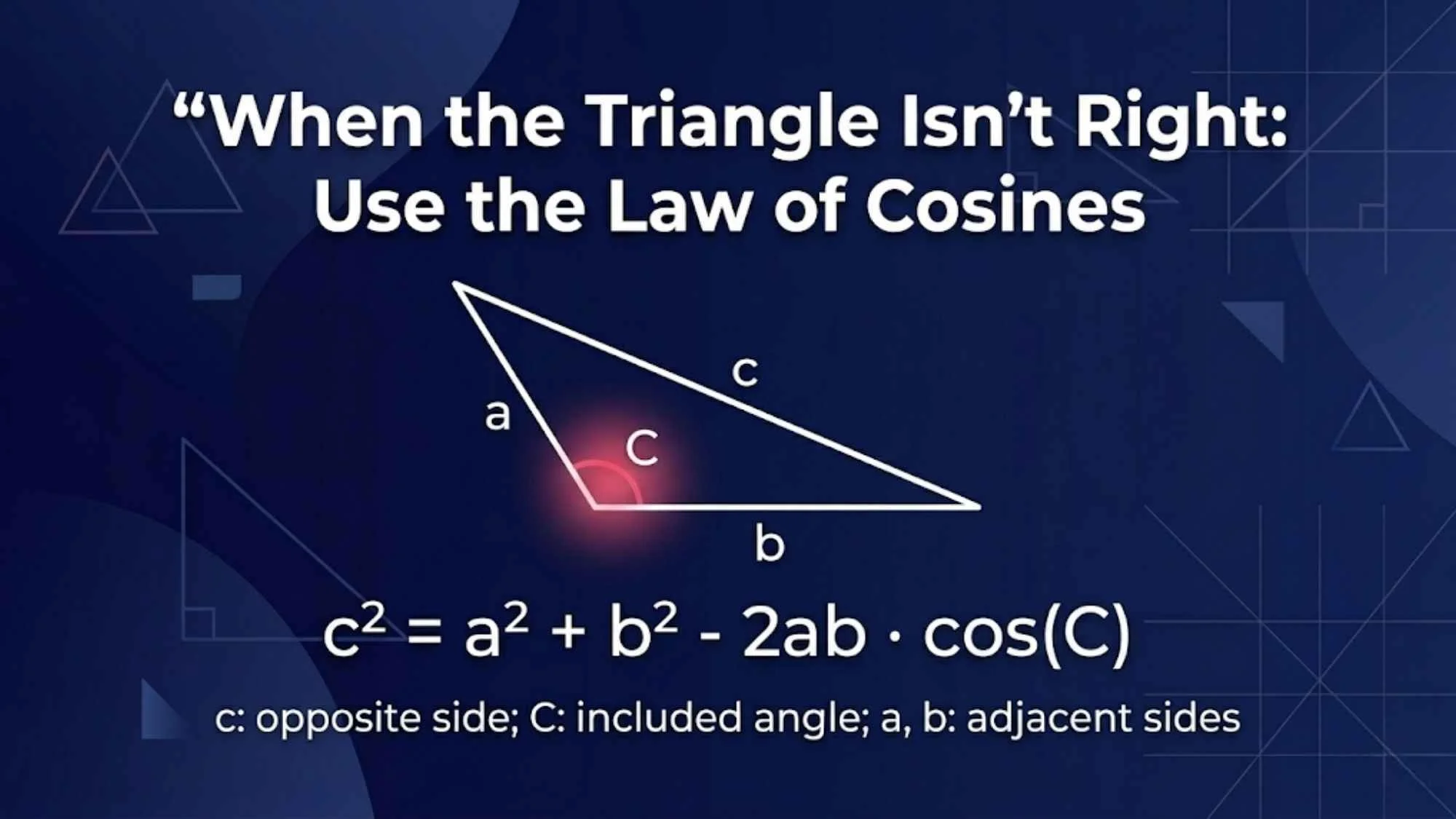
The theorem does not apply to either type. For these triangles, the correct tool is the Law of Cosines, which extends the Pythagorean idea to handle any angle. The Math is Fun explanation of the Law of Cosines breaks this down in a very beginner-friendly way.
What to Use Instead — Law of Cosines
Think of the Law of Cosines as the Pythagorean theorem's more flexible sibling. It works for any triangle — including right triangles — because it factors in the actual angle between two sides. It connects all three side lengths and one angle measurement, giving you the power to solve triangles the Pythagorean theorem simply can't handle.
You don't need to master it today, but knowing it exists is a sign of real mathematical growth. Your goal right now: always identify your triangle type first.
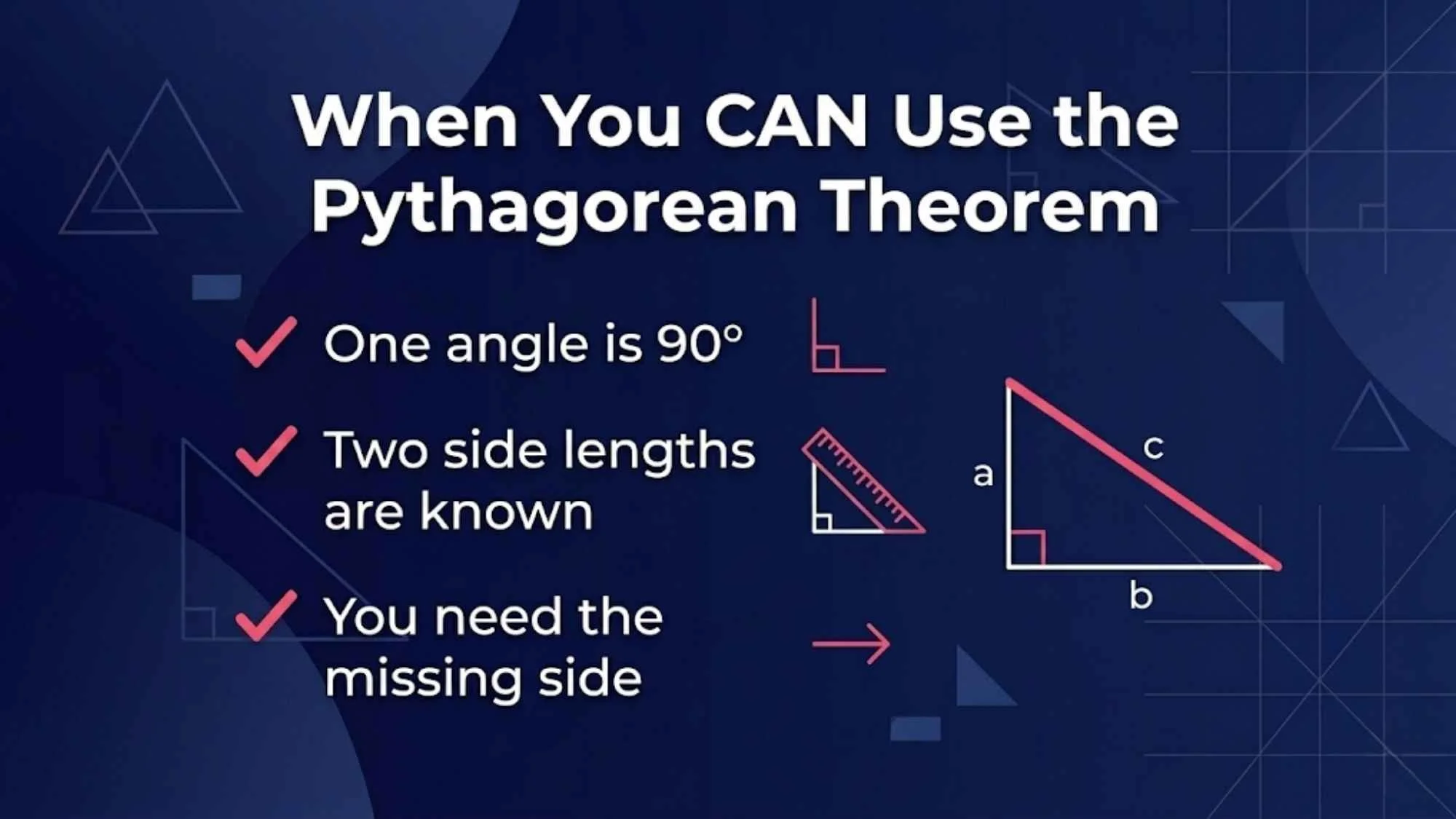
How to Tell If You Can Use the Pythagorean Theorem
Not sure which formula to reach for? Use this quick checklist before you start any triangle problem.
✅ Use the Pythagorean theorem when:
One angle is exactly 90° (look for the small square symbol in diagrams)
You already know two of the three side lengths
You need to find the missing third side
❌ Do NOT use it when:
There is no right angle present
The angle measurements are unknown or non-90°
The triangle is scalene (all sides different) with no confirmed right angle
“📌 Quick Rule: “If there is no right angle, pause — you likely need a different formula.”
For a comprehensive overview of all triangle types, this guide from CK-12 on classifying triangles is an excellent starting point.
Common Mistakes Students Make
Confusion here is completely normal — even strong math students fall into these traps. Here are the four most common mistakes, and how to avoid them:
Assuming all triangles follow the theorem. Always confirm you have a right triangle first.
Mislabeling the hypotenuse. The hypotenuse is always opposite the right angle — not just the longest-looking side.
Forgetting to check for a right angle. Look for the small square symbol in diagrams, or confirm a 90° label in the problem.
Applying the formula automatically. Slow down. Identify the triangle type before choosing a formula.
Every mathematician — at every level — has made these exact mistakes. The difference is that you now know to watch for them. For extra practice problems, IXL's Pythagorean theorem exercises offer instant feedback and are great for building confidence.
Conclusion
So — does the Pythagorean theorem work on all triangles? No. It works only for right triangles, and that's exactly what makes it so elegant and reliable within that specific context.
The key habit to build is this: before grabbing a formula, identify your triangle type first. Is there a 90° angle? Use a² + b² = c². No right angle? Reach for the Law of Cosines or another appropriate method. This simple step is the mark of a student who truly understands geometry — not just memorizes formulas.
At HYE Tutors, we believe math clarity comes from understanding the why behind every rule. If you're still unsure about does pythagorean theorem work on all triangles or want more hands-on support, our tutors are ready to help you build lasting confidence.
✍️ Written by the HYE Tutors Math Team — experienced math educators dedicated to helping students simplify geometry concepts and build genuine confidence in mathematics.
