

The Order of Planets from the Sun
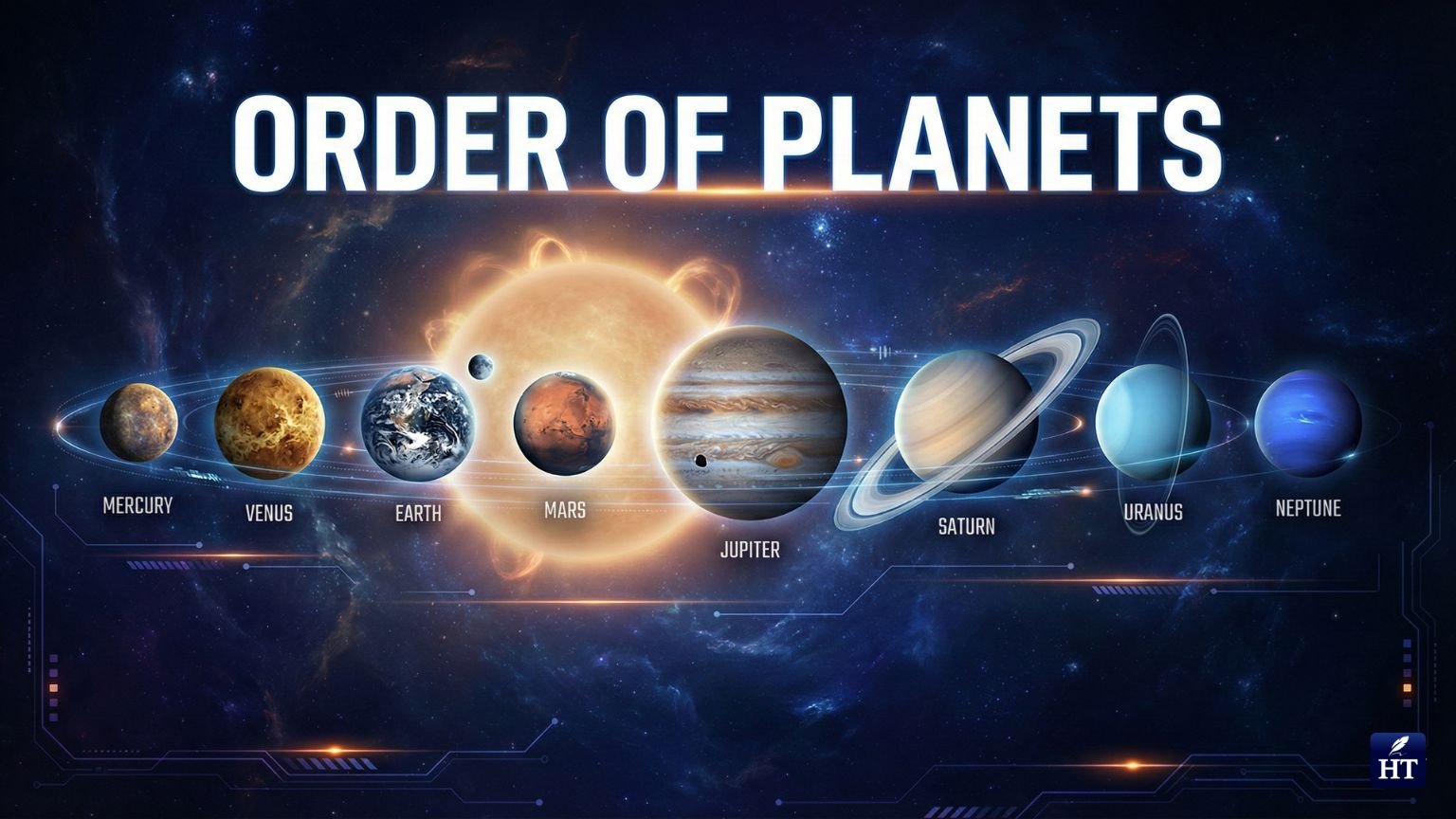
If you're looking for the order of planets from the Sun, you're joining countless students who know the planet names but struggle to remember their correct sequence. Many learners confuse the order with size rankings, temperature differences, or importance, leading to frustration during tests or casual conversations about space. The good news is that the solar system follows a fixed, scientifically defined order based on each planet's distance from our Sun.
This comprehensive guide will provide the accurate list of planets in order, explain why this sequence matters in astronomy, show you the distances that determine this arrangement, teach you simple memory tricks, and clarify common misconceptions like Pluto's status. Whether you're studying for an exam, helping your child with homework, or simply curious about our solar system, you'll find clear, reliable answers here. Let's explore the planetary order with the clarity of a science classroom and none of the confusion.
Order of Planets from the Sun
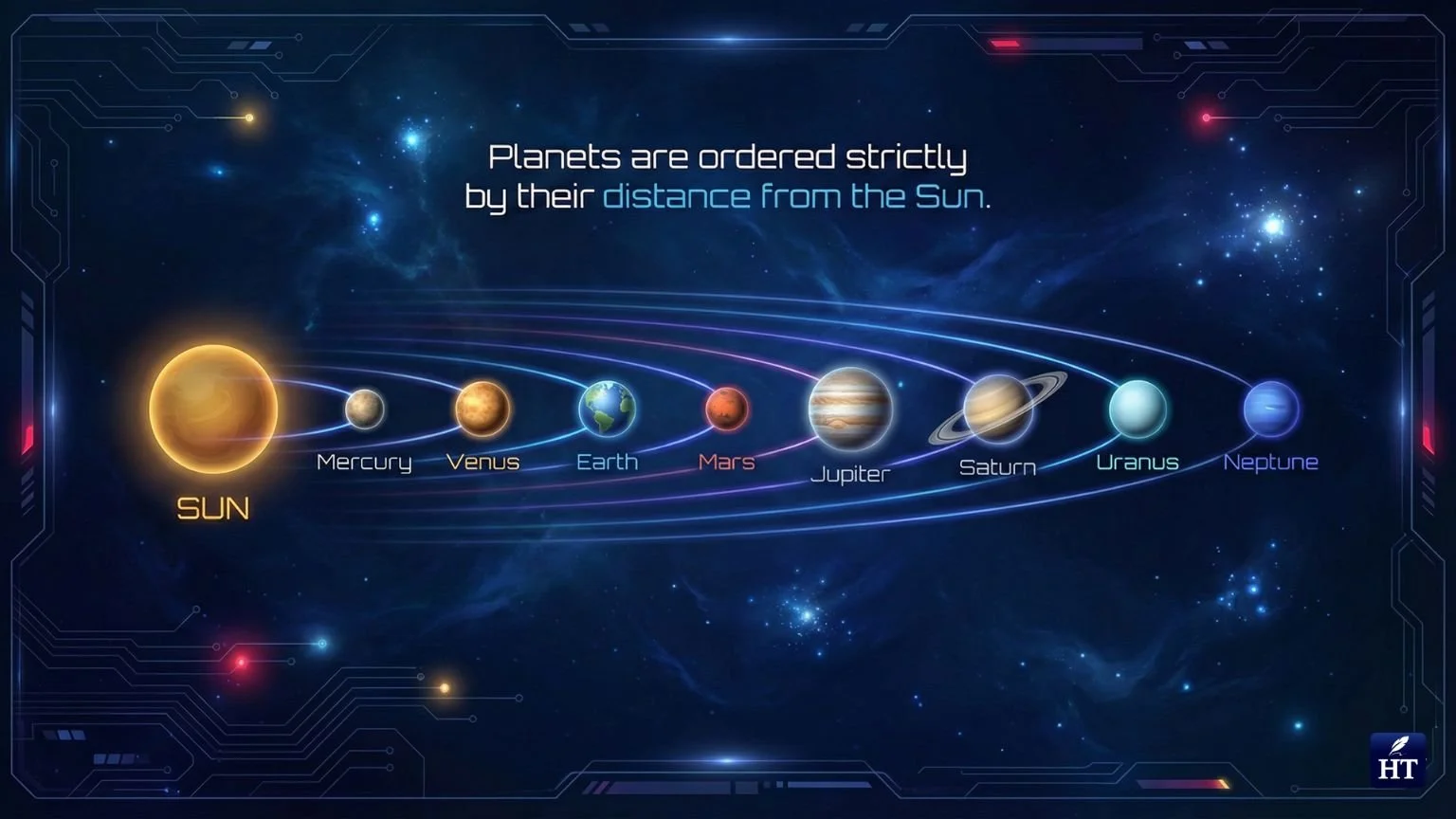
The order of planets from the Sun is: Mercury, Venus, Earth, Mars, Jupiter, Saturn, Uranus, and Neptune. This order is based on each planet's distance from the Sun, starting with the closest and ending with the farthest. Pluto is not included because it is classified as a dwarf planet.
The Order of Planets from the Sun
Planets are ordered strictly by their distance from the Sun, not by size, mass, temperature, or discovery date. This fundamental principle of planetary science means that the sequence you learn remains constant and universal—astronomy textbooks, NASA resources, and science curricula worldwide all use the same order because it reflects the physical reality of our solar system.
Understanding why scientists use distance as the organizing principle requires recognizing how our solar system formed approximately 4.6 billion years ago. The Sun formed first from a collapsing cloud of gas and dust, and the remaining material formed a rotating disk around it. Planets coalesced from this disk at various distances, with their orbital paths determined by gravitational forces and the distribution of material. Each planet settled into a stable orbit at a specific average distance from the Sun, and these orbital distances define the planetary order we use today.
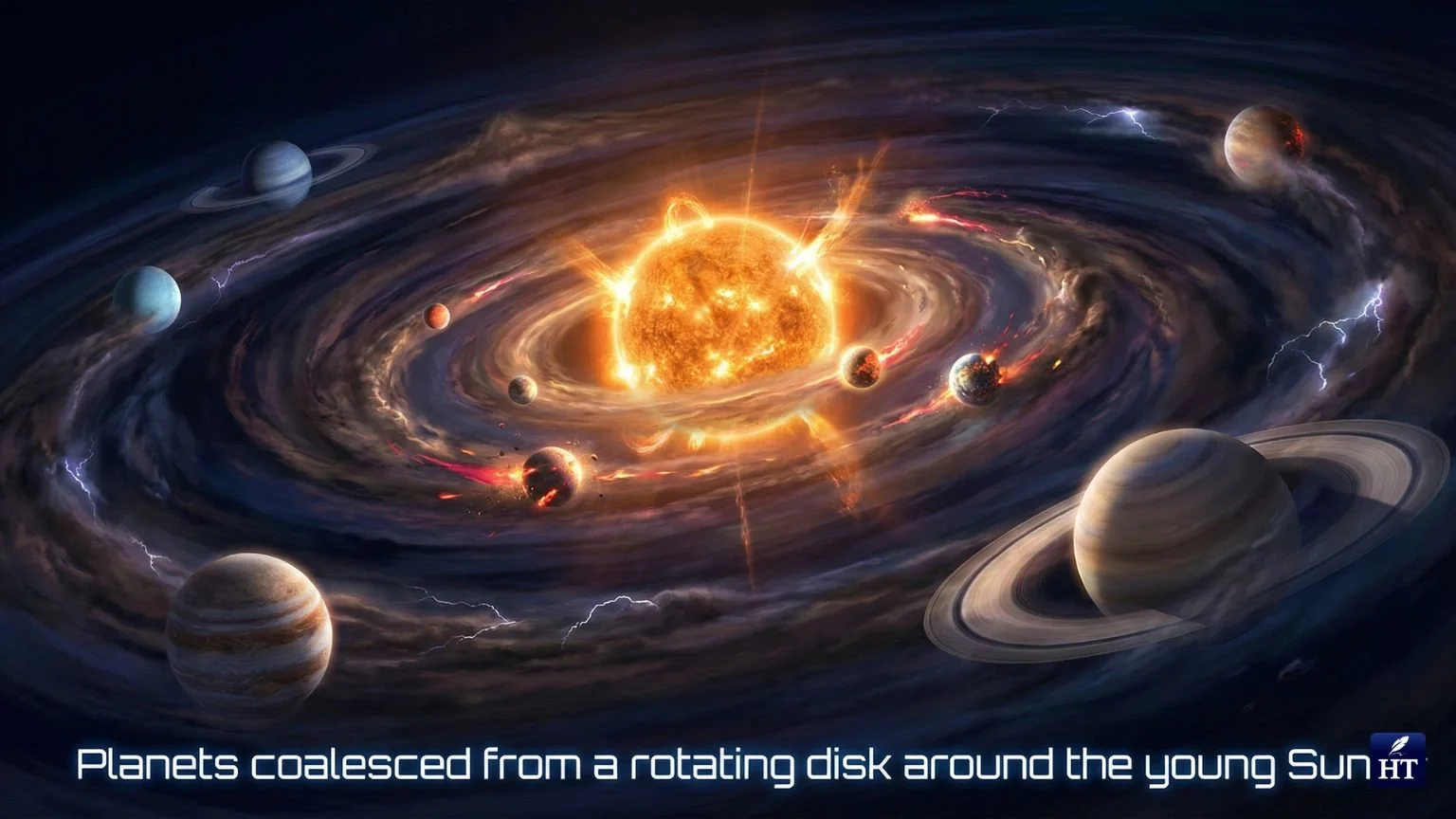
Why distance from the Sun determines order:
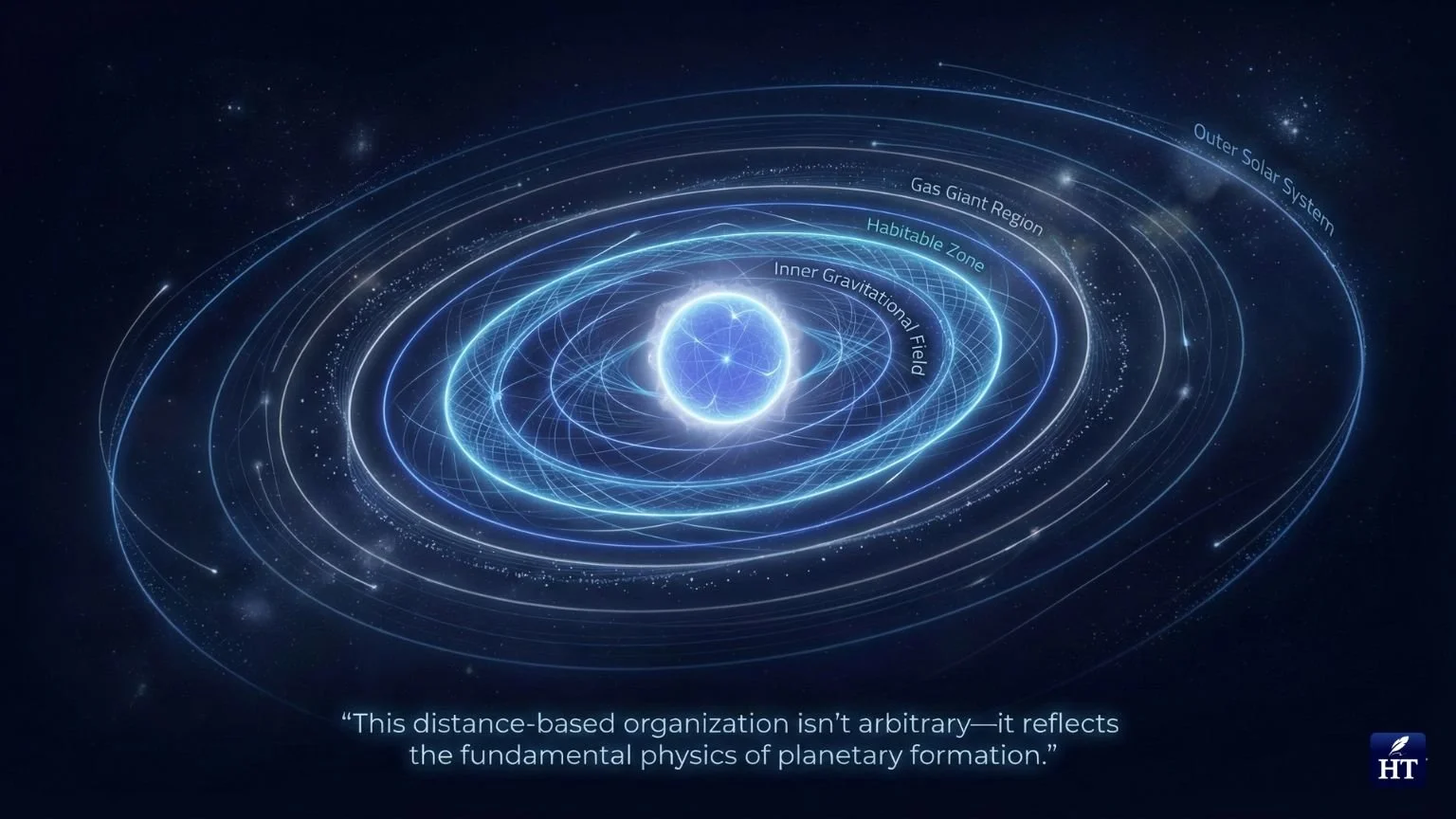
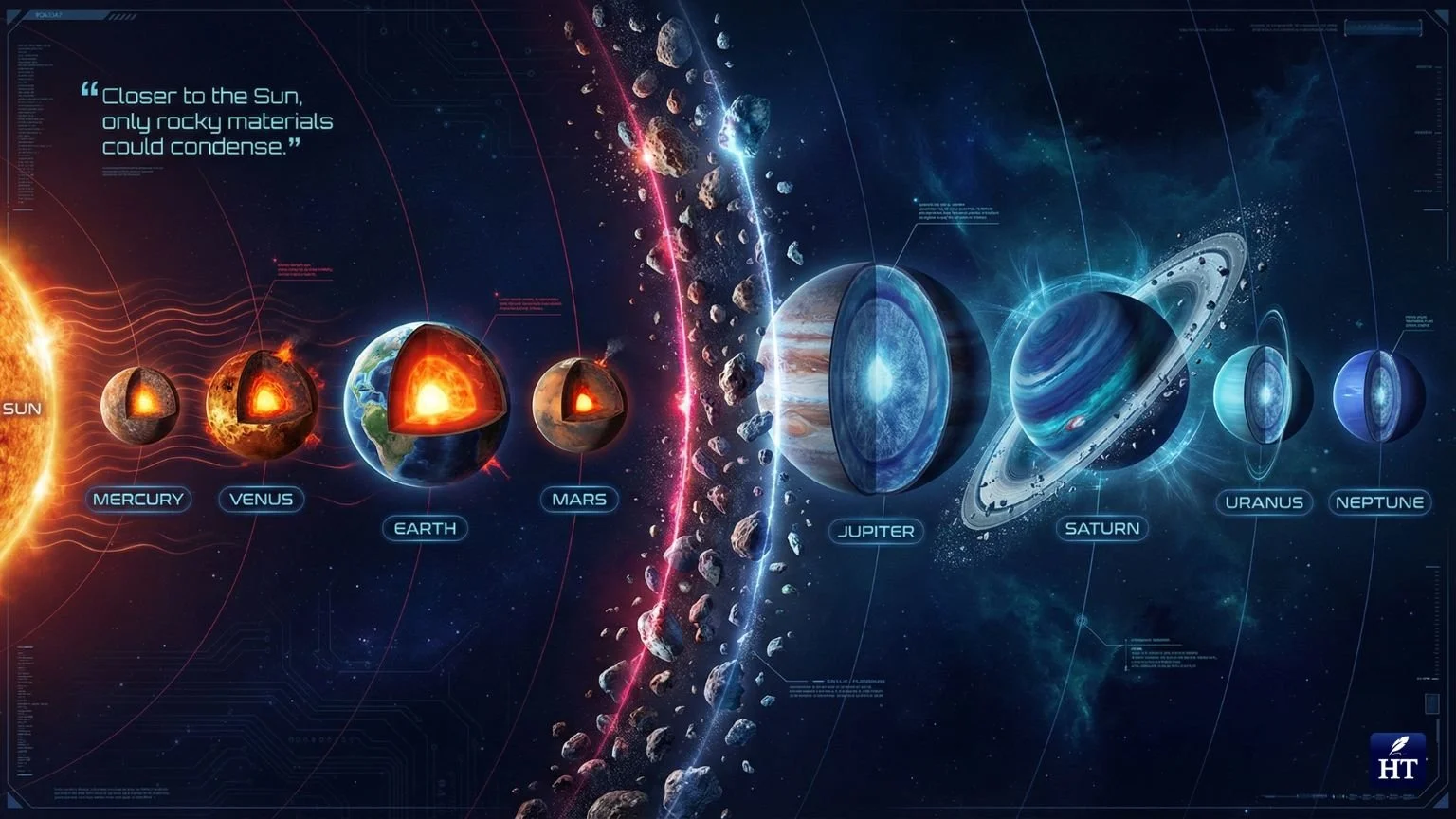
The Sun's gravitational influence weakens with distance, creating distinct orbital zones where different types of planets could form. Closer to the Sun, where temperatures were higher, only rocky materials could condense, forming the small, dense terrestrial planets. Farther out, where it was cooler, ice and gas could accumulate, allowing the formation of massive gas giants and ice giants. This distance-based organization isn't arbitrary—it reflects the fundamental physics of planetary formation.
Key principles of planetary order:
Planets orbit the Sun in elliptical paths at different average distances
Each planet's position is determined by where it formed in the solar nebula
The order has remained stable for billions of years
Gravitational interactions maintain each planet in its orbital zone
Let's examine the complete list and explore what makes each position significant.
List of Planets in Order from the Sun
This is the official and universally accepted list used in astronomy education, scientific publications, and space agency documentation worldwide. Every student, scientist, and educator learns the same sequence because it represents observable astronomical reality.
The eight planets in order from the Sun:
Mercury – Closest planet to the Sun, smallest of the eight planets
Venus – Second planet from the Sun, hottest planet due to greenhouse effect
Earth – Third planet and the only known world harboring life
Mars – Fourth planet, known as the Red Planet due to iron oxide on its surface
Jupiter – Fifth and largest planet, a massive gas giant
Saturn – Sixth planet, famous for its spectacular ring system
Uranus – Seventh planet, a tilted ice giant rotating on its side
Neptune – Eighth and farthest planet, a deep blue ice giant
Important note: This list contains only the eight officially recognized planets. Dwarf planets like Pluto, Eris, Ceres, Makemake, and Haumea orbit the Sun but are classified separately and not included in the primary planetary order.
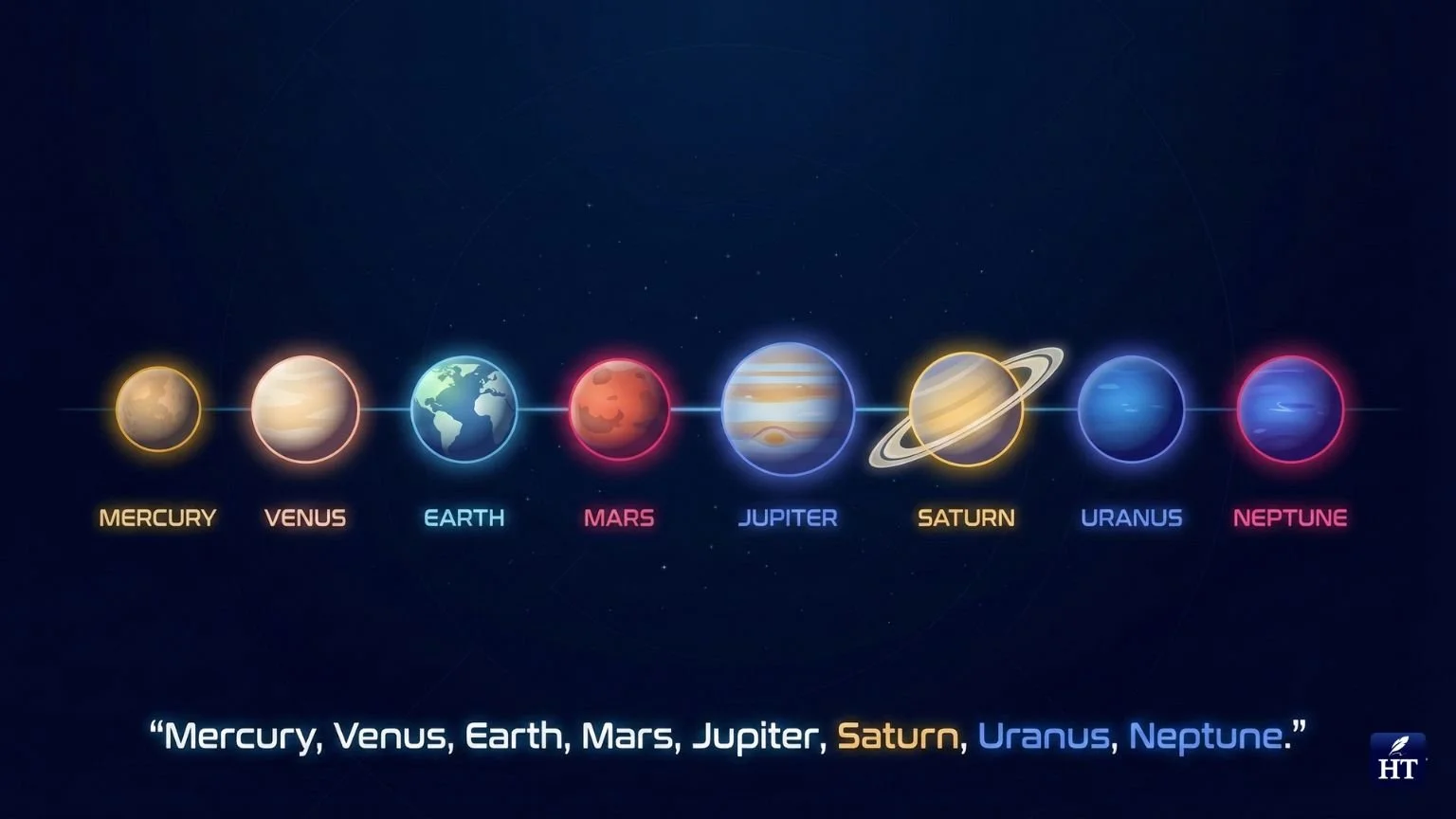
How to remember this: The first letter of each planet—M, V, E, M, J, S, U, N—forms the basis for memory devices (mnemonics) that students use worldwide to recall the sequence quickly.
Why This Is the Correct Order of the Planets
The planetary order is determined by average orbital distance from the Sun, measured and confirmed through centuries of astronomical observation. This isn't a matter of opinion, convention, or cultural preference—it's a physical measurement verified by telescopes, spacecraft missions, and mathematical calculations.
When we say "distance from the Sun," we're referring to each planet's average orbital distance, also called the semi-major axis of its elliptical orbit. Because planetary orbits are ellipses rather than perfect circles, planets are sometimes closer to or farther from the Sun than their average distance, but the average provides a consistent basis for ordering.
Why this order is definitive:
Based on average distance from the Sun: Precise measurements using astronomical techniques confirm each planet's mean orbital radius
Confirmed by astronomical observations: Telescopes, radar measurements, and spacecraft missions have verified these distances with extraordinary accuracy
Used by NASA and international space agencies: All space exploration missions, educational materials, and scientific publications use this order
Taught consistently in science education: From elementary school through university astrophysics, this sequence is standard worldwide
Historical validation: Since the invention of the telescope and especially since the space age, every observation has confirmed this ordering
The International Astronomical Union (IAU), the global authority on astronomical nomenclature and classification, recognizes these eight planets in this exact order as the complete set of major planets in our solar system.
Inner Planets vs Outer Planets
The eight planets are commonly grouped into two categories based on their position relative to the asteroid belt and their fundamental composition. This grouping helps students understand not only the order but also why planets at different distances have such different characteristics.
The asteroid belt, located between Mars and Jupiter, serves as a natural boundary separating the inner and outer planets. This division isn't just convenient—it reflects real differences in how these planets formed and what they're made of.
Inner planets (terrestrial planets):
Mercury, Venus, Earth, Mars
Rocky surfaces composed primarily of silicate rock and metals
Closer to the Sun with orbital distances under 2 AU
Smaller in size compared to outer planets
Higher densities due to rocky composition
Fewer or no moons (Earth has 1, Mars has 2, Mercury and Venus have none)
Outer planets (giant planets):
Jupiter, Saturn, Uranus, Neptune
Gas giants (Jupiter and Saturn) composed mainly of hydrogen and helium
Ice giants (Uranus and Neptune) containing water, ammonia, and methane ices
Farther from the Sun with orbital distances beyond 5 AU
Much larger in size than terrestrial planets
Many moons and often ring systems
This division helps explain why Mercury is nothing like Jupiter despite both being planets—their formation environments and distances from the Sun created fundamentally different worlds.
Planets in Order of Distance from the Sun (With Approximate Distances)
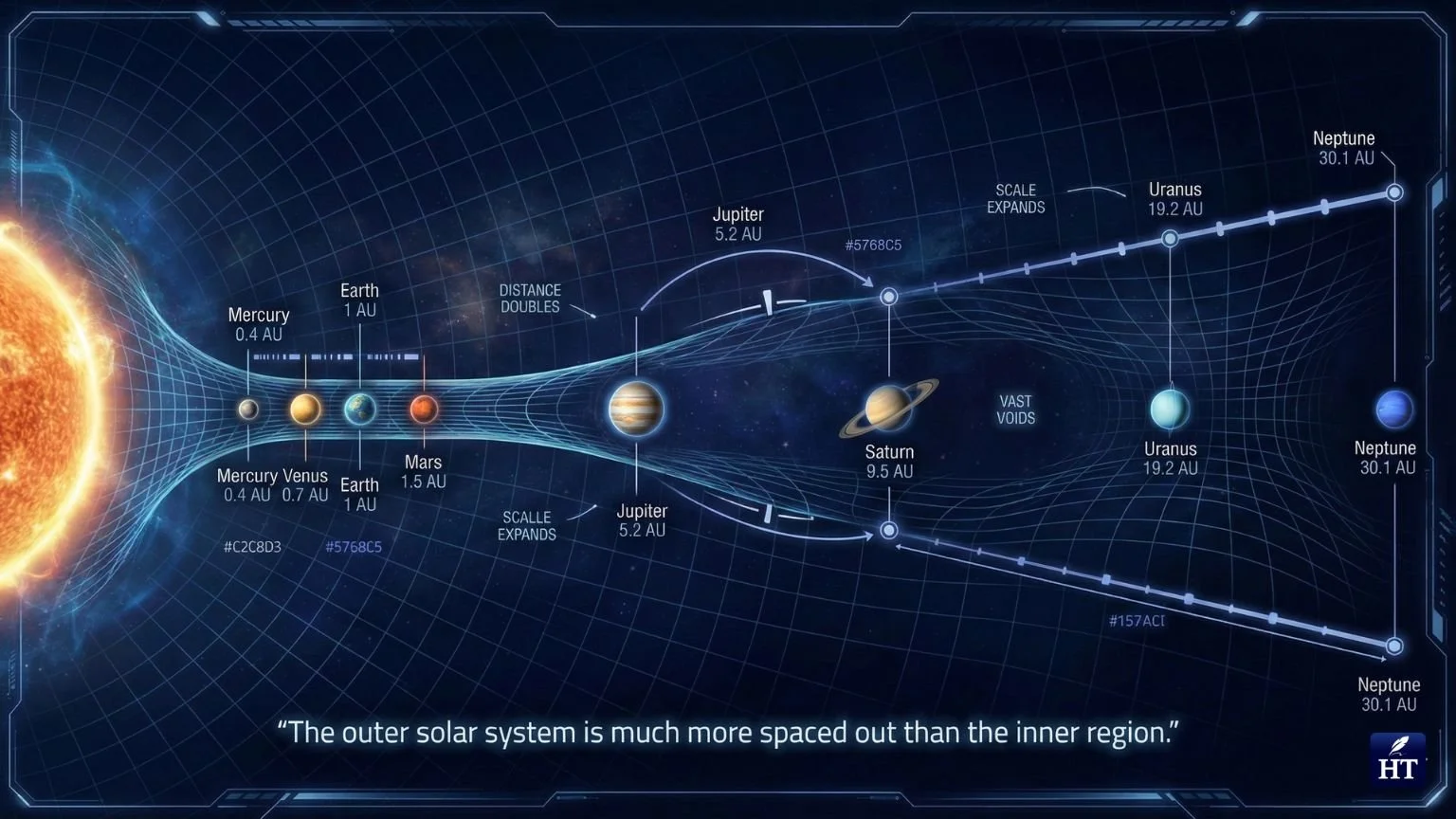
Distance from the Sun is measured in Astronomical Units (AU), where 1 AU equals the average distance from Earth to the Sun, approximately 93 million miles or 150 million kilometers. Using AU makes it easier to understand planetary distances without dealing with enormous numbers.
Important clarification: These distances represent average orbital distances, not exact daily distances. Because planets orbit in ellipses, their actual distance from the Sun varies slightly throughout their year. The numbers below show the semi-major axis of each orbit.
Planetary distances from the Sun:
Mercury – ~0.39 AU (about 36 million miles / 58 million km)
Venus – ~0.72 AU (about 67 million miles / 108 million km)
Earth – 1 AU (about 93 million miles / 150 million km) — by definition
Mars – ~1.52 AU (about 142 million miles / 228 million km)
Jupiter – ~5.2 AU (about 484 million miles / 778 million km)
Saturn – ~9.5 AU (about 886 million miles / 1.43 billion km)
Uranus – ~19.8 AU (about 1.8 billion miles / 2.87 billion km)
Neptune – ~30 AU (about 2.8 billion miles / 4.5 billion km)
What these numbers reveal:
Notice how the gaps between planets increase as you move outward. Mercury to Venus is about 0.33 AU, but Uranus to Neptune is about 10 AU. The outer solar system is much more spaced out than the inner region, reflecting the different conditions under which planets formed at various distances from the young Sun.
A Simple Way to Remember the Order of the Planets
Mnemonics are memory devices that use the first letter of each planet's name to create an easy-to-remember sentence. Generations of students have used these tools to ace astronomy tests and recall planetary order instantly.
The most popular modern mnemonic:
"My Very Educated Mother Just Served Us Noodles"
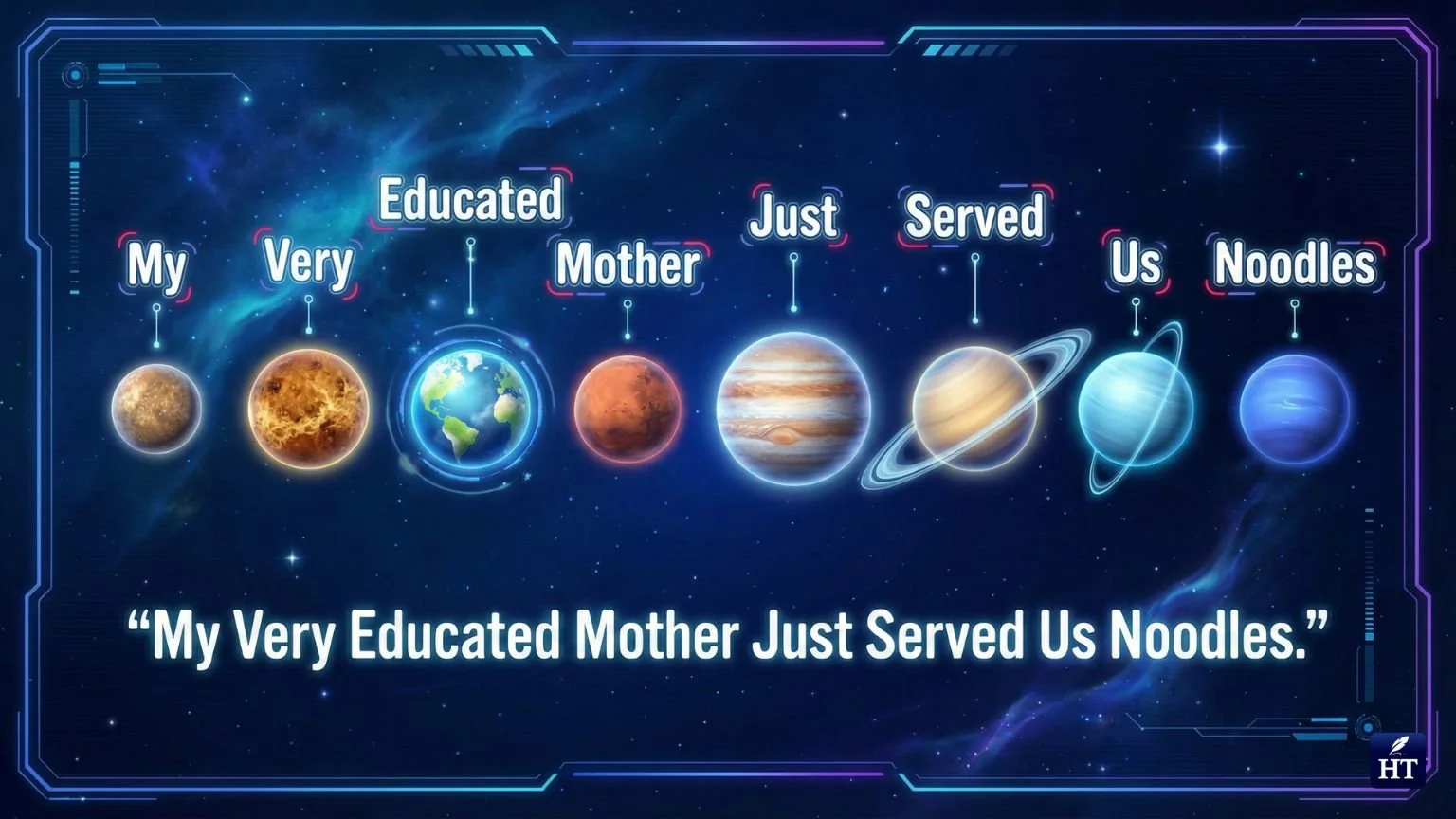
Each word's first letter corresponds to a planet in order:
My = Mercury
Very = Venus
Educated = Earth
Mother = Mars
Just = Jupiter
Served = Saturn
Us = Uranus
Noodles = Neptune
Why this works:
Each word represents a planet in correct order from closest to farthest
Creates a memorable sentence easier to recall than abstract planet names
Useful for exams and quick recall when you need the sequence fast
Widely taught in schools worldwide
Alternative approach: Some learners prefer creating their own personal mnemonic using words meaningful to them. As long as the first letters follow M-V-E-M-J-S-U-N, any sentence works.
Note on outdated mnemonics: Before 2006, many students learned mnemonics ending with "...Pizzas" or "...Pickles" for Pluto. These are now obsolete since Pluto's reclassification, though some people still remember them fondly.
Common Mistakes About the Order of the Planets
Students frequently make these errors when trying to recall or understand planetary order. Recognizing these misconceptions helps you avoid them and strengthens your understanding of how the solar system actually works.
Confusing size with distance:
Mistake: Thinking Jupiter comes first because it's the largest planet
Reality: Jupiter is fifth in order despite being the biggest; size and distance are unrelated
Remember: Order is determined solely by distance from the Sun, not by planet size
Thinking Earth is closer than Venus:
Mistake: Assuming our home planet must be closest to the Sun
Reality: Earth is third; both Mercury and Venus orbit closer to the Sun
Remember: Venus is actually Earth's closest planetary neighbor and second from the Sun
Including Pluto as the ninth planet:
Mistake: Using outdated information from before 2006
Reality: Pluto is classified as a dwarf planet and not part of the eight-planet order
Remember: The planetary order ends with Neptune; Pluto orbits beyond Neptune but in a different category
Mixing temperature order with distance order:
Mistake: Thinking the hottest planet (Venus) must be closest to the Sun
Reality: Mercury is closest but Venus is hottest due to its thick atmosphere creating extreme greenhouse effect
Remember: Temperature depends on multiple factors including atmosphere, not just distance
Assuming planets are always the same distance from the Sun:
Mistake: Thinking planetary distances are fixed and constant
Reality: Planets follow elliptical orbits, so distance varies throughout their year
Remember: We use average orbital distance to determine order, not instantaneous position
Thinking outer planets are all the same type:
Mistake: Calling all outer planets "gas giants"
Reality: Jupiter and Saturn are gas giants; Uranus and Neptune are ice giants with different compositions
Remember: Planetary composition varies even among the outer planets
Why Pluto Is Not Included in the Order of the Planets
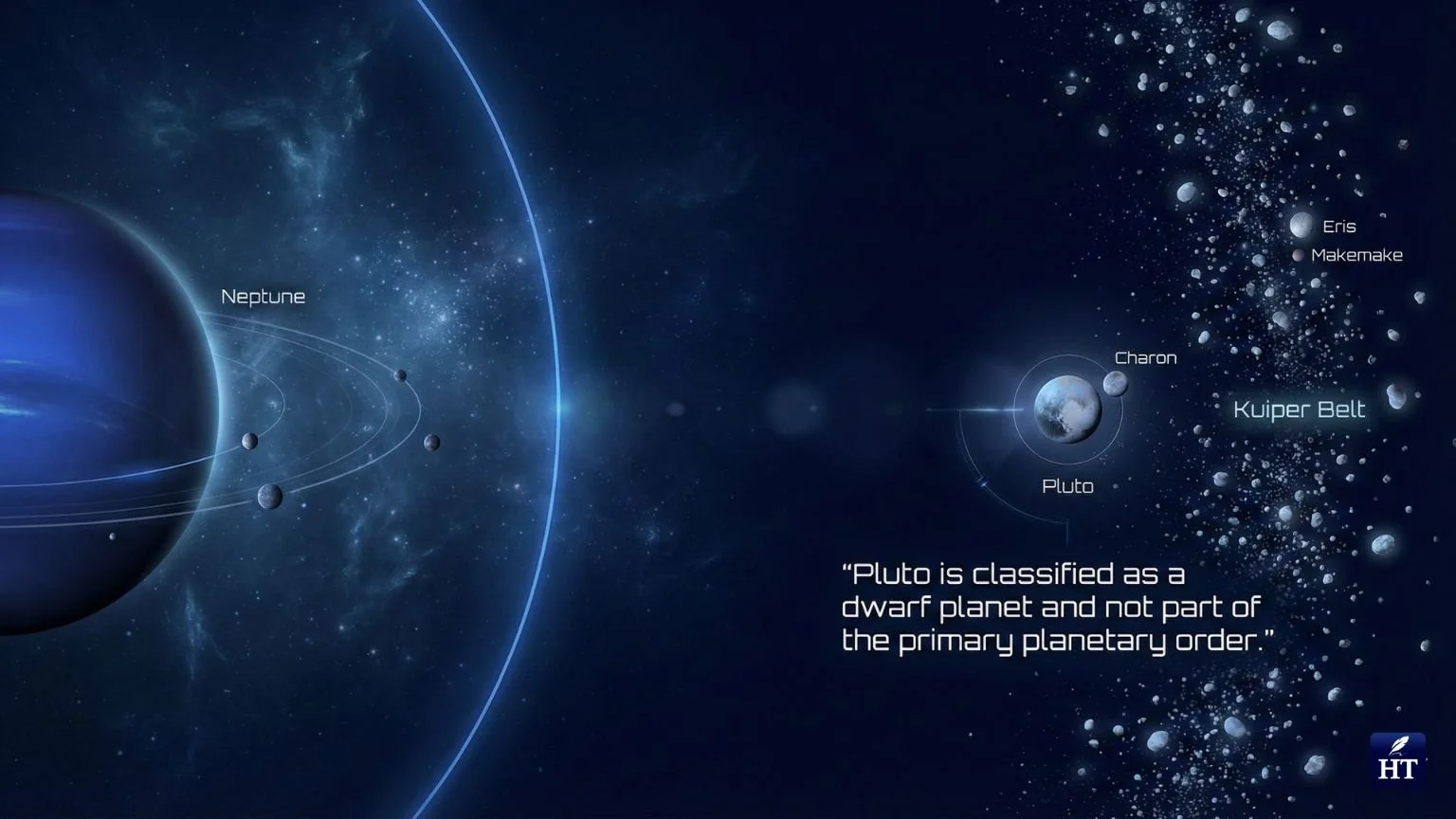
In 2006, the International Astronomical Union (IAU) reclassified Pluto as a dwarf planet, removing it from the official list of planets in our solar system. This decision was based on refined scientific criteria for what qualifies as a planet, not on arbitrary judgment or Pluto's size alone.
The three criteria for planetary status:
Must orbit the Sun
Must have sufficient mass for self-gravity to form a nearly round shape
Must have "cleared the neighborhood" around its orbit
Pluto meets the first two criteria but fails the third. Its orbit intersects with the Kuiper Belt, a region filled with thousands of similar icy objects, meaning Pluto hasn't gravitationally dominated its orbital zone the way the eight planets have.
Pluto's current status:
Not cleared its orbital path – Shares its orbital neighborhood with many other objects
Classified as a dwarf planet – A distinct category defined by the IAU in 2006
Still part of the solar system – Remains an important object of scientific study
Not part of the eight-planet order – No longer counted among the primary planets
Why this matters for learning:
Materials published before 2006 list nine planets including Pluto, which can confuse students using older textbooks or resources. Current astronomy education, NASA materials, and scientific publications recognize eight planets. When discussing the "order of planets from the Sun," Pluto is not included unless specifically discussing dwarf planets or historical context.
Other dwarf planets: Pluto isn't alone in this category. Eris, Ceres, Makemake, and Haumea are also officially recognized dwarf planets, with potentially hundreds more awaiting discovery and classification in the outer solar system.
FAQs
What is the order of planets from the Sun?
The order of planets from the Sun is Mercury, Venus, Earth, Mars, Jupiter, Saturn, Uranus, and Neptune. This sequence is based on each planet's average distance from the Sun, starting with the closest (Mercury at 0.39 AU) and ending with the farthest (Neptune at 30 AU). This order has been confirmed through astronomical observations and is recognized internationally.
What are the planets in order of distance from the Sun?
Listed by distance from closest to farthest: Mercury (0.39 AU), Venus (0.72 AU), Earth (1 AU), Mars (1.52 AU), Jupiter (5.2 AU), Saturn (9.5 AU), Uranus (19.8 AU), and Neptune (30 AU). An Astronomical Unit (AU) equals Earth's average distance from the Sun, approximately 93 million miles. These distances represent average orbital radii since planetary orbits are elliptical.
Is Earth the third planet from the Sun?
Yes, Earth is the third planet from the Sun. Mercury is first (closest), Venus is second, and Earth is third at an average distance of 1 AU (93 million miles or 150 million kilometers). Earth's position in the habitable zone allows liquid water to exist on its surface, making it the only known planet to support life.
Why is Mercury the closest planet to the Sun?
Mercury is the closest planet to the Sun because it formed in the innermost region of the solar nebula, where only rocky material could condense due to high temperatures. Its average orbital distance is about 0.39 AU (36 million miles). Despite being closest to the Sun, Mercury isn't the hottest planet—Venus is, due to its thick atmosphere creating a runaway greenhouse effect.
Is Pluto part of the order of planets?
No, Pluto is not part of the order of planets. In 2006, the International Astronomical Union reclassified Pluto as a dwarf planet because it has not cleared its orbital neighborhood of other objects. The current order of planets includes only eight major planets from Mercury to Neptune. Pluto remains part of our solar system but in a different classification category.
How many planets are there in the solar system?
There are eight planets in the solar system: Mercury, Venus, Earth, Mars, Jupiter, Saturn, Uranus, and Neptune. This count has been standard since 2006 when Pluto was reclassified as a dwarf planet. The solar system also contains five officially recognized dwarf planets (including Pluto), numerous moons, asteroids, comets, and other smaller objects orbiting the Sun.
Conclusion
Understanding the order of planets from the Sun provides a foundational framework for exploring our solar system. The eight planets—Mercury, Venus, Earth, Mars, Jupiter, Saturn, Uranus, and Neptune—follow a fixed sequence determined by their orbital distances from our star. This order isn't arbitrary or changeable; it reflects billions of years of gravitational stability and the physical conditions under which our solar system formed.
Whether you're memorizing the sequence with "My Very Educated Mother Just Served Us Noodles" or studying the specific distances in Astronomical Units, remember that planetary order is based solely on distance from the Sun, not on size, temperature, or importance. From Mercury's scorched surface just 36 million miles from the Sun to Neptune's icy realm nearly 3 billion miles away, each planet occupies its unique place in our cosmic neighborhood.
Ready to explore more astronomy and science concepts? Visit HYE Tutors for comprehensive guides on the solar system structure, planetary characteristics, space exploration, astronomical measurements, and science fundamentals designed to deepen your understanding of the universe.
References:
NASA Solar System Exploration – Official NASA resource on planetary science
International Astronomical Union – Official explanation of Pluto's reclassification
National Geographic: Planets – Educational overview of planetary characteristics